

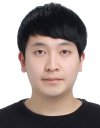
 Juheon Lee
· 2 previous affiliations
- SupertoneSince 2023
- Researcher · Since 2023
- Seoul National University2018–2022
- PhD student · 2018–2022
1 other author named Juheon Lee: Juheon Lee (Meta (United States) · 2 papers)
Research Overview
Juheon Lee focuses on audio and speech synthesis, cross-modal generation, and the disentanglement of acoustic features. His trajectory spans from early work in music-driven choreography generation to advanced architectures for expressive singing voice and speech synthesis. Most recently, his research addresses continuous emotional control and self-supervised representations in generative audio models.
Research Trajectory
Lee's early research explored music information retrieval and cross-modal generation. In 2018, he developed a convolutional neural network approach for music analysis in Cover Song Identification Using Song-to-Song Cross-Similarity Matrix with Convolutional Neural Network. This system utilized cross-similarity matrices to generate representation vectors, enabling the measurement of distances between candidate songs through ranking methods based on cosine distance and vector correlation. Concurrently, he expanded into cross-modal generation, mapping audio inputs directly to fluid human movement. He introduced an autoregressive encoder-decoder network trained on a curated dataset of K-pop music videos in Listen to Dance: Music-driven choreography generation using Autoregressive Encoder-Decoder Network. This work contributed to the research direction of Rhythmic Synchronization in Cross-Modal Generation and intersected with the broader area of Semantic Alignment in Co-speech Gesture Synthesis.
He continued advancing music-driven motion synthesis the following year with Automatic Choreography Generation with Convolutional Encoder-decoder Network. This architecture further explored temporal modeling techniques for choreography, aligning with research in the area of Dilated Causal Convolutions for Temporal Sequence Modeling. Around this time, his focus shifted toward generative audio, specifically singing voice synthesis. He presented an end-to-end architecture in Adversarially Trained End-to-End Korean Singing Voice Synthesis System, which utilized phonetic enhancement masking and conditional adversarial training. The system featured a mel-synthesis network to generate spectrograms from lyrics and symbolic melodies, paired with a super-resolution network to upsample the output into linear spectrograms.
A major theme in his subsequent work is the disentanglement of acoustic features to achieve finer control over generated audio. In Disentangling Timbre and Singing Style with Multi-Singer Singing Synthesis System, he defined singer identity through independent concepts of timbre and style, using a specialized encoder to condition separate decoders for each attribute. Expanding beyond singing to general speech, he collaborated on the NANSY framework in Neural Analysis and Synthesis: Reconstructing Speech from Self-Supervised Representations. Rather than relying on traditional information bottlenecks—which often degrade reconstruction quality—this system employed an information perturbation strategy. By perturbing formants, pitch, and frequency responses in the input signal, the synthesis networks learned to selectively extract essential attributes to reconstruct the speech. This contribution advanced the research direction of Differentiable Digital Signal Processing for Neural Audio Synthesis and touched upon challenges in the area of Authenticity and Safety in Zero-Shot Speech Synthesis.
Returning to singing voice synthesis, he addressed the challenge of capturing time-varying expressions—such as breathing and intensity—without exhaustive manual labeling. The resulting system, detailed in Expressive Singing Synthesis Using Local Style Token and Dual-path Pitch Encoder, utilized self-supervised Local Style Tokens. It also incorporated a Dual-path Pitch Encoder that allowed users to toggle between coarse MIDI-based generation and fine-grained fundamental frequency manipulation. Building on these disentanglement techniques, he later participated in research targeting emotional expressiveness in text-to-speech models. The 2023 paper Semi-supervised Learning for Continuous Emotional Intensity Controllable Speech Synthesis with Disentangled Representations proposed a method to control the continuous intensity of emotions. By disentangling features like emotion and speaker identity, the model successfully learned intermediate emotional intensities, contributing to the broader field of Adversarial Training to Prevent Over-smoothing in Speech Synthesis.
Current Directions
The most recent papers in the evidence indicate a focus on fine-grained controllability and expressiveness in speech and singing voice synthesis. Recent work investigates the use of self-supervised and semi-supervised learning to capture nuanced, time-varying acoustic features—such as emotional intensity and breathing—without relying on heavily annotated datasets. A central open problem in this research is the effective disentanglement of latent representations, ensuring that attributes like emotion, timbre, and pitch can be manipulated independently and continuously to generate highly naturalistic human audio.
Profile updated
Loading new papers…
Other researchers whose papers cluster into the same research directions — a proxy for overlapping technical interests and shared intellectual neighborhoods.
See something wrong? Report a mistake