

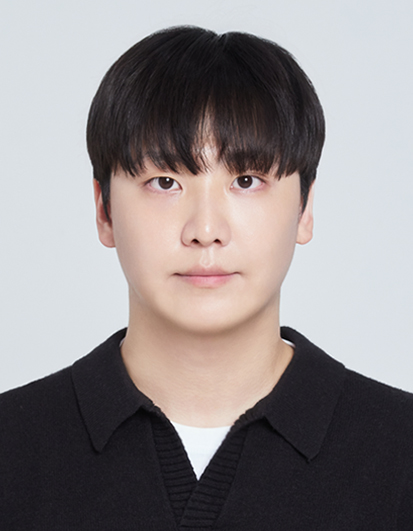
 Hyung-Seok Oh
3 previous affiliations
- Machine Learning Researcher · 2023
- Korea University2021
- PhD student · 2021
- Konkuk University2017–2021
- Bachelor's degree, Department of Computer Science and Engineering · 2017–2021
Research Overview
Hyung-Seok Oh focuses on speech synthesis, digital signal processing, and the application of generative modeling to acoustic signals. His work primarily addresses the challenges of naturalness and controllability in text-to-speech (TTS) systems, with a specific emphasis on prosody modeling, emotion representation, and voice style transfer. Recently, his research has shifted toward the development of Deep Complex Valued Neural Networks for Phase Sensitive Learning, exploring how complex-valued architectures can more effectively model the wave-like properties of audio signals compared to traditional real-valued networks.
Research Trajectory
The temporal evolution of Oh’s research reflects a transition from classical signal processing and fuzzy logic systems toward modern deep learning and generative frameworks. His earliest recorded work in 2007 and 2008 focused on medical informatics, specifically the use of neuro-fuzzy classification for speckle noise removal in ultrasound imaging. This early phase established a foundation in noise reduction and signal enhancement, though the domain was medical rather than acoustic.
Following a significant gap in the available corpus, Oh’s work reappears in 2023 with a concentrated focus on speech synthesis. This period marks a shift into expressive TTS, where he began addressing the limitations of autoregressive models in capturing long-term prosodic dependencies. His work during this time introduced diffusion-based approaches to generate latent prosody vectors, aiming to improve both the inference speed and the expressive quality of synthetic speech. He also participated in the development of zero-shot voice style transfer (VST) systems, which seek to clone the voice characteristics of novel speakers without requiring text transcripts or extensive fine-tuning.
In 2024 and 2025, Oh’s research deepened its focus on the nuances of human expression. He contributed to the development of spherical emotion vectors, a method designed to model the intensity and style of emotions more fluidly than discrete labels. This period also saw an expansion into singing voice conversion (SVC), where he utilized wavelet transforms to disentangle melodic content from stylistic vibrato. His most recent work, extending into 2026, moves into the fundamental architecture of neural vocoders, advocating for Complex Valued Neural Networks for Wave Physics. This direction suggests a move away from treating audio as scalar intensity grids and toward a physics-informed approach that treats signals as complex waves.
Current Directions
Oh’s current research is characterized by three primary pillars: generative prosody modeling, controllable emotional synthesis, and complex-valued architectural innovation.
In the realm of prosody, Oh continues to refine diffusion-based latent generators. By moving away from traditional autoregressive methods, which often suffer from slow inference and difficulty in maintaining long-term coherence, he utilizes diffusion models to capture the complex distribution of prosodic features. This approach allows for more varied and natural-sounding speech that better reflects the rhythmic and intonational patterns of human language.
His work on emotional controllability addresses the "average style" problem in TTS, where models often produce a generic version of a specific emotion. By implementing spherical emotion vectors and utilizing pseudo-labels for arousal, valence, and dominance, Oh’s methods allow for finer manipulation of emotional intensity. This is further extended by integrating Large Language Models (LLMs) to reason about conversational context, ensuring that the synthesized emotion is appropriate for the dialogue's flow.
The most recent and technically distinct direction in Oh’s portfolio is the adoption of complex-valued neural networks (CVNNs). While standard deep learning models operate on real numbers, Oh’s recent work argues that audio signals, which are inherently oscillatory, are better represented in the complex domain. By treating real and imaginary components as unified algebraic entities, his current models aim to improve phase consistency in waveform generation, leading to higher-quality audio synthesis with reduced computational overhead.
Representative Work
The active artificial neural network by a neuro-fuzzy classification for speckle noise removal in medical ultrasound image represents Oh’s early contributions to signal processing. This work utilized a neuro-fuzzy system to address the granular noise inherent in ultrasound imaging. By combining the learning capabilities of neural networks with the linguistic interpretability of fuzzy logic, the system aimed to enhance image quality for better clinical diagnosis, establishing Oh’s early interest in adaptive classification and noise reduction.
DiffProsody: Diffusion-Based Latent Prosody Generation for Expressive Speech Synthesis With Prosody Conditional Adversarial Training marks a significant point in Oh’s transition to generative speech modeling. As the first author, Oh proposed a diffusion-based latent prosody generator to overcome the long-term dependency issues of autoregressive models. The framework incorporates prosody conditional adversarial training, where a discriminator is used to ensure the generated prosody vectors result in natural and expressive speech. This work demonstrated that diffusion models could effectively synthesize the varied intonations required for high-quality TTS.
EmoSphere-TTS: Emotional Style and Intensity Modeling via Spherical Emotion Vector for Controllable Emotional Text-to-Speech addresses the limitations of categorical emotion labels in speech synthesis. As a second author, Oh contributed to a model that uses a Cartesian-spherical transformation to map emotion pseudo-labels (arousal, valence, and dominance) into a continuous spherical space. This allows the system to synthesize speech with nuanced variations in emotional intensity, moving beyond the "average" emotional styles typical of previous models.
HierVST: Hierarchical Adaptive Zero-shot Voice Style Transfer involves Oh’s participation in the development of an end-to-end zero-shot VST model. The system utilizes hierarchical variational inference and self-supervised representations to transfer the voice style of unseen speakers without needing text transcripts. Oh’s contribution to this work supported the development of a hierarchical adaptive generator that sequentially produces pitch representations and waveform audio, improving the acoustic capacity of the model for novel speakers.
VibE-SVC: Vibrato Extraction with High-frequency F0 Contour for Singing Voice Conversion explores the specific challenges of singing voice conversion. As the second author, Oh helped develop a framework that uses Discrete Wavelet Transform (DWT) to disentangle vibrato from the underlying melody. By separating the pitch contour into low-frequency (melody) and high-frequency (style) components, the model enables the precise transfer of a source singer's vibrato to a target singer's voice, maintaining naturalness and speaker identity.
Toward Complex-Valued Neural Networks for Waveform Generation represents Oh’s most recent first-author work in the field of neural vocoders. He introduced ComVo, a vocoder based on the inverse Short-Time Fourier Transform (iSTFT) that fully utilizes complex-valued neural networks for both generation and discrimination. This approach treats audio signals as complex entities rather than independent real-valued channels. The work also introduced a block-matrix computation scheme that reduced training time by 25% while achieving superior synthesis quality, signaling a new methodological direction in his research.
Profile updated
Loading new papers…
Other researchers whose papers cluster into the same research directions — a proxy for overlapping technical interests and shared intellectual neighborhoods.
See something wrong? Report a mistake