

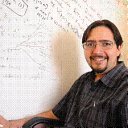
 Jose Blanchet
· 5 previous affiliations
- Stanford UniversitySince 2017
- Full Professor · Since 2020
- Professor · 2017–2020
- Doctor of Philosophy (PhD), Operations Research
- Amazon (United States)Since 2024
- Amazon Scholar · Since 2024
- Yahoo DSP2017–2024
- Machine Learning for Digital Advertising Consultant · 2017–2024
- Feniks2020–2021
- Co-Founder · 2020–2021
- Columbia University2008–2017
- Full Professor · 2015–2017
- Professor · 2008–2017
Research Overview
Jose Blanchet focuses on applied probability, distributionally robust optimization, and the theoretical foundations of reinforcement learning. His trajectory spans early work in large deviations and importance sampling to recent advancements in robust decision-making under uncertainty and quantum algorithms for stochastic simulation. Currently, he investigates optimal sample complexity in reinforcement learning, multi-agent learning dynamics, and causal inference for extreme events.
Research Trajectory
Blanchet's early research established foundational results in applied probability and stochastic simulation. His 2006 work on State-dependent importance sampling and large deviations provided rigorous methods for analyzing rare events in complex systems. Building on this probabilistic foundation, he later contributed to online learning algorithms, participating in the development of Online EXP3 Learning in Adversarial Bandits with Delayed Feedback (2019). This research addressed scenarios where feedback is delayed by an unknown number of rounds, advancing the broader area of Sequential Decision Making under Feedback Latency by proving that modified EXP3 algorithms can achieve bounded regret even with missing information.
A major theme in Blanchet's trajectory is distributionally robust optimization (DRO) and its application to reinforcement learning (RL), particularly in bridging the "sim-to-real" gap. With collaborators, he explored these challenges in Distributionally Robust Q-Learning (2022), which contributed to the research directions of Unbiased Estimation for Non-linear Robust Bellman Operators and Dual Reformulations for Robust Reinforcement Learning. He also provided theoretical grounding for common machine learning practices, demonstrating in Dropout Training is Distributionally Robust Optimal (2023) that dropout acts as a minimax solution against adversarial data corruption in generalized linear models.
In parallel, Blanchet refined the theoretical limits of RL sample complexity. He established new bounds in Optimal Sample Complexity of Reinforcement Learning for Uniformly Ergodic Discounted Markov Decision Processes (2023), moving beyond worst-case pessimism to show faster learning rates for naturally stabilizing systems, thereby advancing the area of Reinforcement Learning Without Mixing Time Oracles. He further investigated the fundamental hardness of robust policy learning in Distributionally Robust Reinforcement Learning with Interactive Data Collection: Fundamental Hardness and Near-Optimal Algorithms (2024). This work introduced the OPROVI-TV algorithm to overcome the "curse of support shift" when training environments fail to expose critical states.
By 2025, Blanchet's research expanded the accessibility and scope of robust optimization. His group released DRO: A Python Library for Distributionally Robust Optimization in Machine Learning, providing a unified open-source framework for dozens of DRO methods. He also applied robust estimation to rare events, developing frameworks for causal inference in Estimation of Treatment Effects in Extreme and Unobserved Data. By integrating Extreme Value Theory, this work enabled the estimation of intervention effects on high-impact phenomena, such as financial crashes, where data is inherently scarce.
His investigations into stochastic systems and multi-agent dynamics yielded several key insights. He introduced a scalable, data-driven approach in Deep Learning for Markov Chains: Lyapunov Functions, Poisson's Equation, and Stationary Distributions, utilizing neural networks to analyze the stability of complex systems with infinite state spaces. In game theory, he bridged static and dynamic perspectives with Robust Equilibria in Continuous Games: From Strategic to Dynamic Robustness, proving that strategically robust equilibria are precisely those that learning algorithms can reliably find in noisy environments. He further characterized these dynamics in Multi-Agent Learning under Uncertainty: Recurrence vs. Concentration, revealing a dichotomy where noise either pushes players away from equilibrium in zero-sum games or concentrates them tightly in strongly monotone games.
Most recently, Blanchet has advanced quantum computing algorithms for stochastic simulation. He tackled the challenge of nested expectations in Non-linear Quantum Monte Carlo (2025) and subsequently developed near-quadratic speedups over classical methods in Optimal Quantum Speedups for Repeatedly Nested Expectation Estimation (2026) by derandomizing the Multilevel Monte Carlo framework. His recent work also encompasses generative modeling and experimental design. He oversaw the development of ABC: Any-Subset Autoregression via Non-Markovian Diffusion Bridges in Continuous Time and Space (2026), a novel diffusion model for continuous stochastic processes like video and weather forecasting. Additionally, he investigated the systematic biases of difference-in-means estimators in dynamic systems, proposing robust methodologies in Conservative Inference in Switchback Experiments (2026).
Current Directions
Recent work investigates the intersection of quantum computing and stochastic simulation, specifically focusing on achieving optimal quantum speedups for repeatedly nested expectation estimation. Blanchet is also actively exploring multi-agent learning dynamics, characterizing how noise and uncertainty influence convergence and equilibrium stability in continuous games. Additionally, his current research addresses causal inference and experimental design in complex environments, ranging from estimating treatment effects in extreme, data-scarce scenarios to correcting intertemporal biases in switchback experiments for dynamic systems. Finally, he is advancing generative modeling techniques, developing non-Markovian diffusion bridges for continuous-time and continuous-space processes.
Profile updated
Loading new papers…
Other researchers whose papers cluster into the same research directions — a proxy for overlapping technical interests and shared intellectual neighborhoods.
See something wrong? Report a mistake