

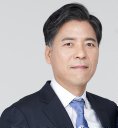
 Jongeun Choi
· 5 previous affiliations
- Yonsei UniversitySince 2019
- Professor, School of Mechanical Engineering · Since 2020
- Department Chair, Department of Vehicle Convergence Engineering (now Mobility Systems Eng.) · 2019–2023
- University of California, Berkeley1999–2023
- Visiting Scholar · 2023
- Doctor of Philosophy - PhD, Control/Dynamics/Statistics · 2002–2006
- Master's degree, Controls/Dynamics/Statistics · 1999–2002
- Full Professor · 2023
- PhD student · 2002–2006
- MS student · 1999–2002
- Individual1992–2020
- Associate Professor · 2016–2020
- Undergrad student · 1992–1998
- Michigan State University2006–2016
- Associate Professor · 2012–2016
- Assistant Professor · 2006–2012
Research Overview
Jongeun Choi focuses on systems and control, machine learning, and robotics. His early work addressed robust control and distributed learning for multi-agent systems and mobile sensor networks. More recently, his research investigates symmetry-aware learning, deep reinforcement learning, and Bayesian methods to improve the sample efficiency and generalization of autonomous systems.
Research Trajectory
The early phase of Choi’s research concentrated on robust control methodologies and the coordination of multi-agent systems. His initial investigations into linear time-invariant systems yielded Synthesis of multiple robust controllers for parametric uncertain LTI systems, which tackled the design of controllers that optimize worst-case performance by partitioning convex polytopic uncertainty regions. This foundational interest in complex system regulation naturally extended to distributed networks, leading to Distributed learning and cooperative control for multi-agent systems. Building on these distributed paradigms, he developed algorithms for mobile sensing agents operating without prior statistical information about their environments. In Learning Coverage Control of Mobile Sensing Agents in One-Dimensional Stochastic Environments, he introduced an approach utilizing diffeomorphic function learning with kernels to manage the usage probability of individual agents while maintaining overall network topology.
In the early 2010s, his focus expanded to incorporate Bayesian methods and Gaussian processes for spatial and temporal modeling in sensor networks. Collaborative work in this period explored how limited memory and computational power in mobile networks could be mitigated. Mobile Sensor Network Navigation Using Gaussian Processes With Truncated Observations provided a theoretical foundation for nonparametric Gaussian process regression using truncated data, demonstrating that predictions could remain accurate while significantly reducing computational overhead. This was further refined in Sequential Bayesian Prediction and Adaptive Sampling Algorithms for Mobile Sensor Networks, which formulated a fully Bayesian approach to spatio-temporal regression, allowing exact predictive distributions to be computed in constant time. Concurrently, he applied control theoretic principles to biological analysis, as seen in Solutions to the Inverse LQR Problem With Application to Biological Systems Analysis.
As his trajectory progressed, Choi began integrating advanced geometric methods into control systems, contributing to the research direction of Geometric Control on the Special Euclidean Group. A key development in this area was Model Predictive Tracking Control for Invariant Systems on Matrix Lie Groups via Stable Embedding Into Euclidean Spaces. This work simplified controller design for systems evolving on manifolds by utilizing a single global coordinate system in the ambient Euclidean space, demonstrating its efficacy on fully actuated rigid body attitude control.
By the 2020s, his research heavily emphasized the intersection of deep reinforcement learning, geometric deep learning, and real-world robotic applications. He addressed practical physical control challenges in Suspension Control Strategies Using Switched Soft Actor-Critic Models for Real Roads, which proposed a switching learning system capable of identifying different road disturbance profiles in real time to apply the appropriate soft actor-critic model. He also continued to refine spatial modeling techniques; Spatial Regression With Multiplicative Errors, and Its Application With Lidar Measurements addressed the breakdown of standard regression techniques when dealing with the multiplicative noise inherent in geodetic measurements like LiDAR.
A major theme in his recent robotics research is the exploitation of spatial symmetries to improve learning efficiency, situating his work within the broader area of Spatially Invariant Representations for Generalizable Robot Learning and the field of Local Geometric Priors for Generalizable Robotic Manipulation. In Equivariant Descriptor Fields: SE(3)-Equivariant Energy-Based Models for End-to-End Visual Robotic Manipulation Learning, he and his collaborators constructed novel energy-based models utilizing Lie group representation theory. This approach allowed for highly sample-efficient, end-to-end learning from point clouds without requiring prior object knowledge.
His most recent work addresses complex, multi-modal, and multi-agent robotic deployments. Multi-Robot Motion Planning from Vision and Language using Heat-Inspired Diffusion introduced an end-to-end framework enabling robot teams to navigate using raw images and natural language, contributing to the domain of Decentralized Coordination for Resilient Multi Agent Systems. To bridge the gap between generalized policies and personalized human preferences, he developed the PREC framework in Toward Deployable Pluralistic Alignment in Robotics: Learning Similarity-Grouped Rewards from Diverse Human Preferences, which clusters users to learn representative reward models. He also advanced imitation learning through Disentangled Differentiable Model Predictive Control for Data-efficient and Interpretable Imitation Learning, reformulating black-box regression into a structured optimization that embeds learnable control primitives within a differentiable MPC layer. Finally, addressing the limitations of strict mathematical symmetries in physical environments, Partially Equivariant Reinforcement Learning in Symmetry-Breaking Environments introduced a framework that selectively applies equivariant updates, advancing the emerging area of Soft and Adaptive Equivariance for Imperfect Symmetries.
Current Directions
The most recent papers in the evidence indicate a strong focus on bridging the gap between theoretical control structures and the messy, unstructured nature of real-world robotic deployment. A primary direction involves integrating differentiable optimization layers into deep learning architectures. By embedding Model Predictive Control (MPC) as a differentiable layer, recent work seeks to disentangle complex expert behaviors into interpretable, context-aware cost functions, allowing for safer and more data-efficient imitation learning.
Another significant current theme is the adaptation of symmetry-aware learning to environments where strict symmetries do not hold. Recent investigations address "symmetry-breaking" factors—such as physical obstacles or joint limits—by developing partially equivariant reinforcement learning algorithms that selectively exploit environmental symmetries only where they remain valid. Additionally, current research explores pluralistic alignment in robotics, moving away from monolithic reward models toward clustering algorithms that can capture and optimize for diverse, similarity-grouped human preferences in complex tasks.
Profile updated
Loading new papers…
Other researchers whose papers cluster into the same research directions — a proxy for overlapping technical interests and shared intellectual neighborhoods.
See something wrong? Report a mistake