

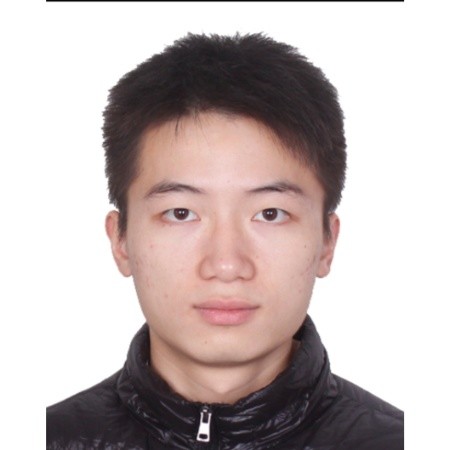
 Xupeng Zhu
· 6 previous affiliations
- Amazon (United States)Since 2024
- Researcher · Since 2025
- Intern · 2024–2025
- The Healping Hands Lab2019–2025
- Research Assistant · 2019–2025
- Northeastern University2017–2025
- PhD student · 2020–2025
- Master's degree, Robotics ECE · 2018–2020
- MS student · 2017–2020
- Robotic researcher · 2023
- The AI Institute2023
- Intern · 2023
- South China University of Technology2013–2017
- Research Assistant · 2016–2017
- Undergrad student · 2013–2017
Research Overview
Xupeng Zhu focuses on robotic manipulation, imitation learning, and reinforcement learning, with a primary emphasis on leveraging geometric symmetries to enhance sample efficiency and generalization. His work integrates Sample Efficiency through Geometric Equivariance into robotic control systems, enabling agents to master complex tasks by exploiting the inherent structure of 3D space. Currently an Applied Scientist at Amazon Robotics, he investigates the development of robot foundation models and the streamlining of robotic systems for real-world applications.
Research Trajectory
The trajectory of Zhu’s research reflects a transition from classical control and motion planning toward the integration of deep learning with geometric group theory. His early work in 2020 addressed the fundamental challenges of motion planning for redundant robot manipulators. During this period, he participated in developing hybrid schemes for end-effector posture maintenance and obstacle avoidance within quadratic programming frameworks. This work established a foundation in the physical constraints of robotic systems, focusing on joint-angular limits and collision avoidance in complex environments.
By 2021, Zhu’s focus shifted toward the intersection of symmetry and reinforcement learning (RL). Recognizing that many robotics problems possess rotational and reflectional symmetries, he began exploring how equivariant neural networks could generalize better than standard architectures. This period marked the beginning of his work on Few Shot Imitation Learning for Robotic Manipulation, where the goal was to reduce the "data hunger" of deep learning models by encoding physical laws—such as the invariance of objects under rotation—directly into the model architecture.
Between 2022 and 2023, Zhu’s research deepened into the theoretical and practical applications of symmetry in planning and policy learning. He investigated how group symmetry could improve data efficiency in end-to-end differentiable planning, treating path planning as a signal over grids where value iteration functions as a linear equivariant operator. This era also saw a focus on on-robot policy learning, where he contributed to methods that allow robots to learn manipulation tasks entirely through physical experience in minimal time. He also addressed the theoretical limits of these approaches, co-developing a framework to quantify the degrees of correct and incorrect equivariance when symmetries exist only partially in a given domain.
From 2024 onward, Zhu has focused on scaling these geometric insights to full 3D environments. This includes the development of SE(3)-equivariant models for grasp detection and the use of spherical Fourier space to represent robot trajectories. His recent work explores Rotation Equivariant Representations with Spherical CNNs and the application of diffusion policies to 3D manipulation. Most recently, he has participated in large-scale benchmarking efforts to evaluate the embodied reasoning capabilities of multimodal language models, signaling a move toward integrating geometric awareness with high-level semantic understanding.
Current Directions
Zhu’s current research is centered on the advancement of robot foundation models that are both geometrically principled and semantically capable. A major theme in his recent work is the use of Scaling 3D Representations Beyond the Memory Wall to handle high-resolution volumetric data without the cubic computational bottleneck. By moving beyond 2D image-based policies, he aims to create agents that perceive the world in true 3D, utilizing Geometry Aware Transformers for 3D Understanding to process point clouds and spatial relationships more effectively.
At Amazon Robotics, his focus includes improving robot foundation models through reinforcement learning and streamlining the deployment of these models in industrial settings. This involves bridging the gap between low-level motor control and high-level reasoning, as evidenced by his involvement in the BEAR benchmark for atomic embodied capabilities.
Representative Work
SE(3)-Equivariant Diffusion Policy in Spherical Fourier Space In this first-author work, Zhu introduces the Spherical Diffusion Policy (SDP), a mathematically principled framework for making robot manipulation geometry-aware. By embedding states and actions into spherical Fourier space, the model achieves end-to-end SE(3) equivariance. This approach ensures that if a scene is rotated or translated, the robot’s predicted trajectory adapts accordingly, resulting in a significant improvement in data efficiency and generalization to novel object poses compared to standard diffusion-based policies.
Integrating Symmetry into Differentiable Planning As second author, Zhu explored how group symmetry enhances data efficiency in differentiable planning algorithms. The research demonstrates that value iteration in grid-based path planning can be treated as a steerable convolution, extending Value Iteration Networks (VINs) to incorporate rotation and reflection symmetry. This work provided early evidence that encoding symmetry into the planning process allows models to generalize across different orientations of the same task.
A General Theory of Correct, Incorrect, and Extrinsic Equivariance In this theoretical contribution, Zhu co-developed a framework for analyzing equivariant networks when the underlying symmetry of a domain is only partial. The paper proposes pointwise definitions to quantify the degree of equivariance a function displays. This analysis is critical for understanding the performance of equivariant models in real-world scenarios where strict symmetry assumptions may be violated by environmental factors or extrinsic constraints.
Equivariant Action Sampling for Reinforcement Learning and Planning Zhu contributed to a novel method for preserving symmetry in sampling-based RL and planning. By augmenting action samples with group transformations, the method ensures "strong equivariance" in decision-making. The approach was shown to accelerate training and improve generalization in complex robotic control tasks by ensuring that the agent's exploration and exploitation respect the geometric symmetries of the environment.
OrbitGrasp: SE(3)-Equivariant Grasp Learning This work proposes a framework for detecting SE(3) grasp poses from point cloud input. Zhu helped develop an SE(3)-equivariant model that maps point clouds to a continuous grasp quality function over the 2-sphere using a spherical harmonic basis. This formulation allows for more accurate and reliable grasp detection in unstructured environments by reasoning about the continuous space of rotations rather than relying on a finite set of discrete samples.
On-Robot Policy Learning with O(2)-Equivariant SAC Zhu participated in research exploring on-robot policy learning without the use of simulators or offline datasets. By applying Equivariant Soft Actor-Critic (SAC) to robotic manipulation, the team demonstrated that non-trivial tasks could be learned entirely through physical experience in under two hours. This work highlighted the practical utility of equivariant models in reducing the time and data required for real-world robot training.
Profile updated
Loading new papers…
Other researchers whose papers cluster into the same research directions — a proxy for overlapping technical interests and shared intellectual neighborhoods.
See something wrong? Report a mistake