

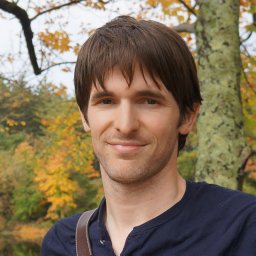
 Jonathan Le Roux
· 5 previous affiliations
- Distinguished Research Scientist · Since 2023
- Speech & Audio Senior Team Leader · Since 2020
- Research scientist · Since 2011
- Current
- Speech & Audio Team Leader · 2018–2020
- NTT (Japan)2009–2011
- Research Associate · 2009–2011
- The University of Tokyo2005–2009
- Ph.D. Student · 2005–2009
- Université Pierre-et-Marie-Curie2004–2009
- Ph.D. Student · 2004–2009
- Intern · 2006
Research Overview
Jonathan Le Roux focuses on audio source separation, speech enhancement, and multimodal scene understanding. His trajectory spans foundational work in phase-aware signal reconstruction to complex sequence transduction and spatial audio processing. Recently, his research investigates generative music control, neural acoustic fields, and the integration of large language models into audio captioning and robotic planning.
Research Trajectory
In his early work, Le Roux concentrated on advancing audio source separation and signal reconstruction. He introduced methods for source separation utilizing discrete representations in Phasebook and Friends: Leveraging Discrete Representations for Source Separation (2018). This work advanced the research direction of Complex Spectral Mapping for Phase Aware Signal Reconstruction by addressing periodic boundary discontinuities in neural networks and applying differentiable discrete sampling with Gumbel relaxations. During this period, his research also encompassed the broader area of Deep Unfolding Networks for Inverse Problems, applying structured neural architectures to complex signal recovery tasks.
By 2022, his focus expanded to address highly complex acoustic environments. He formalized the "cocktail fork problem"—the challenge of separating an audio mixture, such as a movie soundtrack, into the three broad categories of speech, music, and sound effects. This framework was detailed in The Cocktail Fork Problem: Three-Stem Audio Separation for Real-World Soundtracks. Around the same time, his research extended into multi-speaker automatic speech recognition (ASR) and sequence modeling, leading to the development of Extended Graph Temporal Classification for Multi-Speaker End-to-End ASR and Sequence Transduction with Graph-Based Supervision. Concurrently, he explored visual and multimodal domains, contributing to the research direction of Spatiotemporal Graph Representations for Video Reasoning through the design of (2.5+1)D Spatio-Temporal Scene Graphs for Video Question Answering.
In 2023, Le Roux continued to refine audio separation and enhancement techniques. He addressed real-time processing constraints in STFT-Domain Neural Speech Enhancement With Very Low Algorithmic Latency. He also expanded on his earlier separation work with Tackling the Cocktail Fork Problem for Separation and Transcription of Real-World Soundtracks, which evaluated deep learning models on both separation quality and downstream transcription performance.
His multimodal research also evolved to address human-robot collaboration. In a pair of publications, including Style-transfer based Speech and Audio-visual Scene understanding for Robot Action Sequence Acquisition from Videos and its corresponding preprint Style-transfer based Speech and Audio-visual Scene Understanding for Robot Action Sequence Acquisition from Videos, his team introduced an audio-visual Transformer that converts instruction speech and visual features into dynamic movement primitives. This work intersects with several emerging areas, including video generation as a foundation for robot planning, text-centric asymmetric multimodal fusion, and bridging the physical grounding gap in large language model (LLM) planning.
Most recently, his work has incorporated LLMs and advanced generative techniques. He participated in collaborative research to improve sequence-to-sequence architectures for automated audio description in Improving Audio Captioning Models with Fine-Grained Audio Features, Text Embedding Supervision, and LLM Mix-Up Augmentation. In the domain of generative music, he guided the development of SMITIN: Self-Monitored Inference-Time INtervention for Generative Music Transformers, an approach that uses classifier probes to steer autoregressive models toward specific musical traits without excessive intervention. Furthermore, he advanced spatial audio processing with Spatially-Aware Losses for Enhanced Neural Acoustic Fields, optimizing for inter-aural time and level differences to improve the realism of binaural audio reconstruction. This contributes to broader efforts in binaural feature integration for spatial audio processing and integrating spatial cues in multi-channel audio processing.
Current Directions
Recent work investigates the intersection of advanced generative models and complex audio environments. A primary focus is the controllable generation of audio and music, utilizing inference-time interventions to steer autoregressive transformers toward desired acoustic characteristics while preserving generation quality. Additionally, ongoing research addresses the synthesis of highly realistic spatial audio by optimizing neural acoustic fields for precise inter-aural cues, enabling more immersive acoustic reconstructions. Another key theme involves leveraging large language models and fine-grained feature extraction to improve automated audio captioning, reflecting a broader interest in semantic audio understanding and multimodal integration.
Profile updated
Loading new papers…
Other researchers whose papers cluster into the same research directions — a proxy for overlapping technical interests and shared intellectual neighborhoods.
See something wrong? Report a mistake