

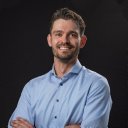
 Jonas Teuwen
· 5 previous affiliations
- Radboud University Medical CenterSince 2017
- Senior Researcher · Since 2021
- Researcher · Since 2019
- Assistant Professor · 2018–2020
- Postdoctoral Researcher · 2017
- University of AmsterdamSince 2020
- Affiliated · Since 2020
- The Netherlands Cancer InstituteSince 2018
- AI Innovation Lead · Since 2026
- Group Leader · Since 2021
- Junior Group Leader · 2020–2026
- Associate staff scientist · 2018–2020
- Glass Medical AISince 2025
- Scientific cofounder · Since 2025
- Ellogon.AI B.V.2023–2025
- Chief Technology Officer / co-founder · 2023–2025
Research Overview
Jonas Teuwen focuses on computational pathology and medical image reconstruction, developing deep learning methods to extract diagnostic signals from complex clinical data. His trajectory spans weakly supervised learning for whole-slide histopathology and unrolled optimization techniques for accelerated magnetic resonance imaging. His current work investigates foundation models and adaptive sampling strategies to improve the efficiency and generalization of medical imaging systems.
Research Trajectory
Beginning in 2021, Teuwen's research heavily emphasized computational pathology, addressing the unique challenges of learning from gigapixel whole-slide images with limited annotations. A central contribution during this period was DeepSMILE: Self-supervised heterogeneity-aware multiple instance learning for DNA damage response defect classification directly from H&E whole-slide images. This work advanced the research direction of Multiple Instance Learning for Weakly Supervised Medical Imaging by combining contrastive self-supervised pre-training with a heterogeneity-aware strategy to predict complex genomic biomarkers without manual tile-level annotations. This approach also contributed to the broader area of Predicting Molecular Signatures from Tissue Morphology. He further expanded on this framework in a subsequent journal publication, DeepSMILE: Contrastive self-supervised pre-training benefits MSI and HRD classification directly from H&E whole-slide images in colorectal and breast cancer, which demonstrated improved classification accuracy in data-scarce regimes and aligned with the emerging area of Specialized Visual Grounding for Medical Foundation Models.
In parallel with biomarker prediction, Teuwen developed methods for scoring specific cellular features under weak supervision. He guided the development of WeakSTIL: Weak whole-slide image level stromal tumor infiltrating lymphocyte scores are all you need, an interpretable pipeline that compresses whole-slide image tiles to predict prognostic lymphocyte scores in breast cancer tissue. Addressing the sheer scale of objects in pathology images, he collaborated on Sparse-shot Learning with Exclusive Cross-Entropy for Extremely Many Localisations. This research tackled the practical impossibility of exhaustive annotation by advancing the research direction of Learning from Sparse Labels via Partial Loss. The methodology also intersected with the areas of Dynamically Weighting Hard Examples to Mitigate Class Imbalance and Adaptive Thresholds for Pseudo Label Filtering.
Moving beyond classification and point localization, Teuwen also explored continuous boundary prediction for medical image segmentation. He introduced Subpixel object segmentation using wavelets and multiresolution analysis, a framework that directly predicts continuous object boundaries to achieve significant computational speedups over traditional architectures. Building on the need for rigorous optimization in such tasks, he later formalized Constrained Empirical Risk Minimization: Theory and Practice. This work provided a mechanism for the exact enforcement of constraints on neural network parameters, restricting them to specific manifolds to ensure robust behavior in applications like medical contour prediction.
Concurrently, a major arc of Teuwen's trajectory shifted toward solving inverse problems in medical imaging, specifically focusing on accelerated Magnetic Resonance Imaging (MRI) reconstruction. In 2022, he presented Recurrent Variational Network: A Deep Learning Inverse Problem Solver applied to the task of Accelerated MRI Reconstruction, leveraging deep learning to mitigate the long acquisition times and motion artifacts inherent to MRI. He subsequently developed vSHARP: variable Splitting Half-quadratic ADMM algorithm for Reconstruction of inverse-Problems, a framework combining Half-Quadratic Variable Splitting with the Alternating Direction Method of Multipliers to reconstruct high-quality images from undersampled data.
By 2025, his focus on MRI reconstruction expanded to address generalization and data availability. He introduced Joint Supervised and Self-supervised Learning for MRI Reconstruction, a hybrid approach that leverages supervised learning on proxy datasets alongside self-supervised learning on target undersampled data. To tackle the inefficiencies of organ-specific models, he also proposed UNIFORM: A Unified Deep Learning Framework for Multi-organ and Multi-contrast MRI Reconstruction, demonstrating robust performance across diverse anatomical sites and acceleration factors using a single unified architecture.
Current Directions
The most recent papers in the evidence, dating to 2026, indicate a continued focus on adaptive acquisition and the development of robust foundation models for volumetric imaging. In the domain of MRI, Teuwen is investigating how to dynamically optimize the data collection process itself. This is evidenced by End-to-End Adaptive $k$-space Sampling and Reconstruction for Dynamic MRI, which introduces a framework that generates case-specific sampling patterns rather than relying on predetermined uniform subsampling. Additionally, his work on Conditional Learned Reconstruction for Medical Imaging addresses the variability in hardware and protocol-dependent acquisition parameters across different imaging modalities. Beyond MRI, his recent collaborative work extends into 3D Computed Tomography with TAP-CT: 3D Task-Agnostic Pretraining of Computed Tomography Foundation Models. This research adapts self-supervised frameworks for volumetric data to generate robust feature representations that generalize across downstream tasks with minimal fine-tuning.
Profile updated
Loading new papers…
Other researchers whose papers cluster into the same research directions — a proxy for overlapping technical interests and shared intellectual neighborhoods.
See something wrong? Report a mistake