

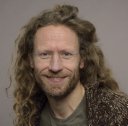
 Jan-Jakob Sonke
· 2 previous affiliations
- The Netherlands Cancer InstituteSince 2017
- Full Professor · Since 2017
- University of AmsterdamSince 2017
- Full Professor · Since 2017
Research Overview
Jan-Jakob Sonke focuses on medical image analysis, inverse problems in imaging, and the development of advanced neural architectures for continuous and physics-informed modeling. His early research addressed motion compensation and deformable registration in computed tomography, evolving into deep learning approaches for accelerated MRI reconstruction and continuous image representations. Most recently, his work explores adaptive sampling techniques, equivariant neural fields for physical simulation, and probabilistic methods for interactive segmentation.
Research Trajectory
Sonke’s early research concentrated on mitigating artifacts in medical imaging caused by patient movement, particularly in the context of radiotherapy. He developed methods to address respiratory motion in cone-beam computed tomography (CBCT), introducing an approach for On-the-Fly Motion-Compensated Cone-Beam CT Using an a Priori Motion Model that reconstructed a single 3D image at a reference position to improve quality without extending acquisition time. He subsequently contributed to Directional Interpolation for Motion Weighted 4D Cone-Beam CT Reconstruction, which combined directional interpolation with deformable image registration to reduce streaking artifacts. Concurrently, he explored complex deformable image registration challenges. Recognizing the difficulty of selecting optimal objective combinations, he helped introduce a Pareto front approach in Multi-objective optimization for deformable image registration: proof of concept. This multi-objective optimization framework was later expanded in Deformable image registration by multi-objective optimization using a dual-dynamic transformation model to account for large anatomical differences to handle severe deformations, such as those caused by postural changes or surgical interventions, using a dual-dynamic grid system.
As deep learning began to transform medical imaging, Sonke's focus expanded to neural network-based solvers for inverse problems, particularly in magnetic resonance imaging (MRI). He participated in the development of Recurrent inference machines for reconstructing heterogeneous MRI data and later contributed to Recurrent Variational Network: A Deep Learning Inverse Problem Solver applied to the task of Accelerated MRI Reconstruction. These works advanced the broader research direction of Physics Informed Deep Learning for Accelerated MRI Reconstruction by combining deep learning with parallel imaging and compressed sensing to drastically reduce MRI acquisition times. Returning to his earlier focus on CBCT, he guided the development of Noise2Aliasing: Unsupervised Deep Learning for View Aliasing and Noise Reduction in 4DCBCT, an unsupervised framework designed to resolve the aliasing artifacts that emerge when projection images are sorted into respiratory bins. He also continued to advance registration techniques with PC-Reg: A pyramidal prediction-correction approach for large deformation image registration.
A significant theme in Sonke’s later trajectory involves moving beyond fixed-resolution grids toward continuous and discretization-agnostic neural architectures. He contributed to Subpixel object segmentation using wavelets and multiresolution analysis, a framework that predicts continuous object boundaries to achieve high-efficiency medical image analysis. This work aligns with the research area of Soft Representations for Continuous Image Segmentation and Editing. Building on the need for flexible models, he oversaw the design of a general-purpose continuous convolutional neural network in Modelling Long Range Dependencies in $N$D: From Task-Specific to a General Purpose CNN. By utilizing continuous convolutional kernels, this architecture models long-range dependencies across arbitrary resolutions and dimensionalities without requiring task-specific structural modifications.
In recent years, Sonke has participated in diverse collaborations applying advanced neural fields and probabilistic models to complex scientific and interactive tasks. He contributed to Space-Time Continuous PDE Forecasting using Equivariant Neural Fields, which bakes physical symmetries into latent spaces to solve partial differential equations with high data efficiency. In the domain of interactive 3D segmentation, he was part of the team behind Probabilistic Interactive 3D Segmentation with Hierarchical Neural Processes, addressing the challenge of sparse user inputs in complex scenes through uncertainty quantification and hierarchical latent spaces. His recent work also encompasses foundational multi-modal research, such as Distributional Vision-Language Alignment by Cauchy-Schwarz Divergence, which aligns the global distributions of text and images to bridge the modality gap in joint embedding spaces. Concurrently, he remains active in medical imaging reconstruction, contributing to Conditional Learned Reconstruction for Medical Imaging to account for variable hardware parameters in iterative schemes, and End-to-End Adaptive $k$-space Sampling and Reconstruction for Dynamic MRI, which optimizes case-specific subsampling patterns to capture temporal correlations in dynamic imaging.
Current Directions
The most recent papers in the evidence indicate a dual focus on refining deep learning techniques for dynamic medical imaging and exploring foundational machine learning models for physical simulation and multi-modal alignment. In medical imaging, recent work investigates adaptive, case-specific sampling strategies for dynamic MRI and conditional learned iterative schemes that can adapt to varying hardware and protocol parameters.
Beyond traditional medical imaging, current research explores the integration of physical symmetries into equivariant neural fields for continuous partial differential equation forecasting, as well as probabilistic approaches to interactive 3D segmentation using hierarchical neural processes. Additionally, recent collaborative efforts address the modality gap in vision-language models by leveraging non-parametric density estimation and distributional alignment techniques to improve cross-modal retrieval and generation.
Profile updated
Loading new papers…
Other researchers whose papers cluster into the same research directions — a proxy for overlapping technical interests and shared intellectual neighborhoods.
See something wrong? Report a mistake