

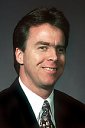
 John McPhee
· 1 previous affiliation
- University of WaterlooSince 1992
- Full Professor · Since 1992
Research Overview
John McPhee focuses on the mathematical development of graph-theoretic modeling and its application to the unified dynamics of multidisciplinary physical systems. His work centers on the creation of efficient, high-fidelity models that bridge mechanical, electrical, and biological domains, with specific applications in vehicle dynamics, human musculoskeletal movement, and rehabilitation robotics. By leveraging linear graph theory, McPhee has developed methods to automate the generation of governing equations for complex systems, a methodology that has been integrated into commercial symbolic computation tools and applied to problems ranging from autonomous vehicle control to the design of energy-efficient exoskeletons.
Research Trajectory
The trajectory of McPhee’s research reflects a steady progression from foundational multibody dynamics toward the integration of human physiological constraints and advanced machine learning. In the early stages of his career, the primary focus was the refinement of graph-theoretic methods for multidisciplinary systems. This approach treats physical components—whether they are mechanical linkages, hydraulic circuits, or electrical motors—as elements within a unified graph, allowing for the systematic derivation of system equations. This period established the groundwork for his later work in vehicle systems, where he addressed stability and performance in complex drivelines and articulated vehicles.
By the mid-2000s, McPhee’s work increasingly addressed the stability of articulated steer vehicles and the optimization of automotive drivelines. This research involved developing linearized models to identify critical driving conditions and implementing control strategies, such as locking differentials, to mitigate oscillatory instabilities. During this phase, the application of symbolic computation became a hallmark of his methodology, enabling the simulation of transient and steady-state characteristics in real-time or near-real-time environments.
In the 2010s, the scope of his research expanded significantly into biomechanics and human-machine interaction. Recognizing that traditional robotic models often lacked the nuance of biological systems, McPhee began developing musculoskeletal models that account for the How the Nervous System Resolves Motor Redundancy. This shift necessitated the inclusion of neuromuscular dynamics, leading to the creation of physiologically realistic driver models and predictive simulations of human movement. This era also saw the adoption of Receding Horizon Control and Model Predictive Optimization, specifically through Nonlinear Model Predictive Control (NMPC), to simulate voluntary arm movements and reaching tasks without the need for external motion-tracking data.
In recent years, McPhee has integrated artificial intelligence with classical dynamics to solve complex decision-making problems in autonomous systems. This includes comparative studies between Model Predictive Control (MPC) and Deep Reinforcement Learning (DRL) for adaptive cruise control and freeway merging. His current work also emphasizes the development of assistive technologies, such as myoelectric-controlled prostheses and exoskeletons that utilize Adaptive Compliance for Contact-Rich Robotic Interaction. This evolution represents a synthesis of his career-long focus on system dynamics with modern computational intelligence and physiological modeling.
Current Directions
McPhee’s current research is concentrated on the intersection of wearable robotics, energy regeneration, and neural-machine interfaces. A major theme in his recent work is the optimization of exoskeletons not only for assistance but for biomechanical energy harvesting. This involves the development of electromechanical models that can identify opportunities for electrical energy regeneration during negative mechanical work, thereby extending the battery life of portable assistive devices.
Furthermore, his group is investigating the effects of aging on the neuromuscular system, using nonlinear methods to analyze high-density surface electromyography (HD-sEMG) signals. This research seeks to quantify changes in muscle complexity and strength, providing a data-driven basis for neurorehabilitation interventions. The integration of Metabolic Cost Constraints for Biologically Realistic Motion remains a critical component of his predictive simulations, ensuring that the movements generated by his models align with the energy-minimizing behaviors observed in nature.
Representative Work
In Effects of locking differentials on the snaking behaviour of articulated steer vehicles, McPhee and his collaborators investigated the oscillatory instability, or "snaking," common in articulated vehicles. By developing a linearized model, the research identified the primary parameters contributing to this instability and demonstrated that locking differentials introduces a form of damping that can stabilize the vehicle. This work provided a theoretical foundation for improving the safety and handling of heavy articulated machinery.
The application of graph-theoretic modeling to automotive systems was further detailed in Modeling Torque Converter Characteristics in Automatic Drivelines: Lock-up Clutch and Engine Braking Simulation. As the senior author, McPhee presented a math-based torque converter model capable of capturing both transient and steady-state characteristics within the MapleSim environment. This work highlighted the utility of symbolic computation in modeling the longitudinal dynamics and fuel consumption of automatic transmissions, bridging the gap between component-level physics and system-level performance.
McPhee’s transition into biomechanical modeling is exemplified by Predictive Simulation of Reaching Moving Targets Using Nonlinear Model Predictive Control. This study utilized NMPC as an optimal feedback controller to predict human arm trajectories in planar reaching tasks. By using a musculoskeletal model actuated by antagonist muscle pairs, the research demonstrated that human-like motion could be predicted based on the assumption that the nervous system optimizes for specific performance criteria, such as metabolic cost, rather than relying on pre-recorded motion data.
In the domain of autonomous systems, McPhee led the development of Decision-Making and Control for Freeway On-Ramp Merging Using Deep Reinforcement Learning. This paper addressed the challenge of high-speed merging by implementing a DRL approach with a multi-objective reward function. The methodology achieved a significant reduction in vehicle jerk while maintaining safety, illustrating the potential for reinforcement learning to handle complex, non-linear maneuvers that are difficult to calibrate using traditional control methods.
The synthesis of his work in rehabilitation is captured in Myoelectric Control of Robotic Leg Prostheses and Exoskeletons: A Review. In this senior-authored review, McPhee and his colleagues evaluated the state of the art in wearable sensor technologies, signal processing, and pattern recognition for locomotor control. The paper proposed future directions for volitional control systems, emphasizing the need for hierarchical architectures that can better integrate human intent with robotic assistance.
Finally, Harnessing Biomechanical Energy Using Shoulder Exoskeleton: Electrical Energy Regeneration represents McPhee’s recent focus on the efficiency of wearable robotics. This study explored the regeneration capabilities of shoulder exoskeletons by converting dissipated mechanical energy into electrical energy. Through experimental motor parameter identification and the development of an electromechanical upper-limb model, the research demonstrated the feasibility of energy regeneration in real-world tasks, pointing toward more sustainable and long-lasting assistive technologies.
Profile updated
Loading new papers…
Other researchers whose papers cluster into the same research directions — a proxy for overlapping technical interests and shared intellectual neighborhoods.
See something wrong? Report a mistake