

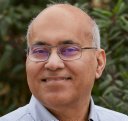
 Jitendra Malik
· 4 previous affiliations
- International Computer Science InstituteSince 1985
- Full Professor · Since 1985
- Amazon (United States)Since 2026
- VP & Distinguished Scientist · Since 2026
- Current
- Meta (United States)2018–2025
- Director of Research · 2018–2025
Research Overview
Jitendra Malik focuses on computer vision, robotic manipulation, and multimodal representation learning. His extensive trajectory spans foundational work in computational photography to modern approaches in 3D reconstruction and generative modeling. Currently, his research emphasizes scaling robot learning and developing predictive world models for autonomous agents.
Research Trajectory
Malik's research trajectory builds upon foundational contributions to computer vision and computational photography. Early foundational work includes Recovering high dynamic range radiance maps from photographs, which introduced a method to derive the response function of an imaging process from differently exposed photographs, enabling the creation of true radiance maps. Building on decades of vision research, his recent work has increasingly focused on generative models, 3D reconstruction, and embodied artificial intelligence.
In the domain of 3D vision and perception, Malik has explored scaling laws and foundation models. In Scaling Properties of Diffusion Models For Perceptual Tasks, he demonstrated that diffusion models can be effectively applied to visual perception tasks like depth estimation and optical flow, showing that increased test-time compute can offset pre-training data requirements. This interest in robust visual representations extends to 3D generation; with collaborators, he developed SAM 3D: 3Dfy Anything in Images, a generative model that extracts high-quality 3D geometry and textures from single in-the-wild images to overcome the volumetric resolution bottleneck in 3D representations.
A significant portion of Malik's recent trajectory addresses the intersection of computer vision and robotic manipulation. To bridge the embodiment gap in robot learning, his work investigates how visual data can be translated into actionable physical control. In ROSE: Reconstructing Objects, Scenes, and Trajectories from Casual Videos for Robotic Manipulation, he contributed to a real-to-sim-to-real pipeline that reconstructs simulator-ready assets from casual monocular videos, facilitating scalable data collection and advancing the broader area of Privileged Information Distillation for Sim-to-Real Policy Transfer. He further addressed multimodal policy representation in Visual-Geometry Diffusion Policy: Robust Generalization via Complementarity-Aware Multimodal Fusion, introducing a framework that fuses 2D RGB images with 3D point clouds to improve robotic generalization across varying environmental conditions.
This focus on complex, contact-rich manipulation is also evident in ViTacFormer: Learning Cross-Modal Representation for Visuo-Tactile Dexterous Manipulation, which fuses visual and tactile sensor data using cross-attention to enhance long-horizon task performance. For highly articulated systems, he explored behavioral averaging and inference latency in Coordinated Humanoid Manipulation with Choice Policies, tackling the coordination challenges inherent in controlling high-degree-of-freedom humanoid robots.
Malik has also heavily investigated predictive modeling and video generation to build world models for autonomous agents. In An Empirical Study of Autoregressive Pre-training from Videos, he explored treating video frames as sequences of visual tokens, demonstrating the versatility of autoregressive models across vision and tracking tasks. This connects to his contributions in the research direction of Asymmetric Spatiotemporal Decoupling for Video Models. Building on predictive mental simulation, he introduced Whole-Body Conditioned Egocentric Video Prediction, which conditions video generation on the mechanics of an agent's skeleton to predict the visual consequences of physical actions. This work directly supports the area of Video Generation as a Foundation for Robot Planning.
Expanding predictive models to multi-agent scenarios, Malik contributed to Poly-Autoregressive Prediction for Modeling Interactions, adapting next-token prediction frameworks to forecast social actions and trajectories by conditioning on the collective history of a scene. His research into motion forecasting continued with Forecasting Motion in the Wild, which utilizes dense point trajectories and diffusion transformers to predict complex animal behaviors, disentangling space and time in motion forecasting. Finally, addressing the challenge of reconstructing 3D interactions under severe mutual occlusion, he co-authored Reconstructing Hand-Held Objects in 3D from Images and Videos, introducing techniques to jointly reconstruct hand and object geometry from unconstrained internet videos. This aligns with his broader interest in areas such as Absolute Spatial Localization for 3D Human Pose Estimation and Recovering Absolute Metric Scale from Human Body Priors.
Current Directions
The most recent papers in the evidence highlight a strong focus on embodied AI, specifically the integration of predictive world models and multimodal sensory fusion for robotic control. Current work investigates how autoregressive prediction and diffusion models—originally popularized in language and image generation—can be adapted to forecast complex physical interactions, multi-agent dynamics, and animal motion in the wild. Additionally, ongoing research addresses the challenges of dexterous robotic manipulation by fusing heterogeneous data sources, such as visual, geometric, and tactile inputs, to enable robust generalization across diverse environments and long-horizon tasks. Another prominent theme is the high-fidelity 3D reconstruction of dynamic scenes, particularly focusing on resolving severe occlusions during hand-object interactions and extracting simulator-ready assets directly from casual video.
Profile updated
Loading new papers…
Other researchers whose papers cluster into the same research directions — a proxy for overlapping technical interests and shared intellectual neighborhoods.
See something wrong? Report a mistake