

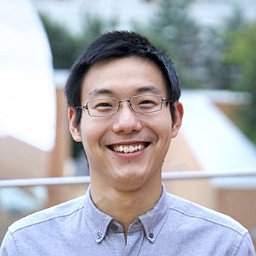
 Jiajun Wu
· 6 previous affiliations
- Stanford UniversitySince 2020
- Assistant Professor · Since 2020
- Google (United States)2019–2020
- Visiting Faculty Researcher · 2019–2020
- Cognition Group, Microsoft Research Redmond2016
- Research Intern · 2016
- PhD student · 2014–2016
- Research Intern · 2015
- Microsoft Research Asia (China)2011–2012
- Research Intern · 2011–2012
2 other authors named Jiajun Wu: Jiajun Wu (4 papers), Jiajun Wu (1 paper)
Research Overview
Jiajun Wu focuses on physical scene understanding, neuro-symbolic reasoning, and embodied artificial intelligence. His work bridges generative modeling and physics simulation to build systems that perceive, reason about, and interact with the 3D world. Recently, his research has expanded to include multi-modal perception, robotic manipulation of complex materials, and the integration of foundation models with logic-based program execution.
Research Trajectory
Wu’s early research focused on bridging the gap between raw visual data and underlying physical properties by integrating simulation with machine learning. In Galileo: Perceiving Physical Object Properties by Integrating a Physics Engine with Deep Learning (2015), he introduced a generative model that combined a 3D physics engine with deep networks to infer mass, friction, and shape from real-world videos, achieving physical event prediction comparable to human accuracy. He subsequently advanced the generation of 3D structures from probabilistic spaces in Learning a Probabilistic Latent Space of Object Shapes via 3D Generative-Adversarial Modeling (2016). This framework, known as 3D-GAN, utilized volumetric convolutional networks to synthesize high-quality 3D objects without reference images, contributing to the research direction of Emergent Semantic Part Decomposition.
Continuing his work on 3D perception, Wu addressed the challenge of reconstructing objects from single images in MarrNet: 3D Shape Reconstruction via 2.5D Sketches (2017). By sequentially estimating 2.5D sketches before recovering full 3D shapes, the end-to-end framework mitigated domain adaptation issues between synthetic training data and real-world images. That same year, he proposed a method for holistic scene understanding in Neural Scene De-rendering (2017), developing an interpretable, distributed representation that encoded object categories, poses, and positions to facilitate scene reasoning and manipulation.
Expanding his focus to the intersection of learning and logic, Wu began developing systems capable of interpreting complex environments through natural supervision. He guided the development of The Neuro-Symbolic Concept Learner: Interpreting Scenes, Words, and Sentences From Natural Supervision (2019), which integrated neural perception with symbolic reasoning. Parallel to this, he explored how systems can learn physical rules from observation alone in Unsupervised Discovery of Parts, Structure, and Dynamics (2019). This work introduced the PSD model, which learned hierarchical, disentangled object representations and predicted future motion from unlabeled video, advancing the area of Generalizing Physical Dynamics Across Categories and Materials. He also collaborated on CLEVRER: Collision Events for Video Representation and Reasoning (2020), contributing to a benchmark and modeling approach for spatiotemporal reasoning and counterfactual physical prediction based on collision events.
In subsequent years, Wu’s research group increasingly applied these foundational representations to complex real-world domains, including inverse rendering and robotics. To evaluate material recovery and object relighting, his team introduced Stanford-ORB: A Real-World 3D Object Inverse Rendering Benchmark (2023), providing a critical evaluation tool within the broader area of Global Illumination Modeling for Inverse Rendering. He also continued to push the boundaries of neuro-symbolic AI with What’s Left? Concept Grounding with Logic-Enhanced Foundation Models (2023). This framework, LEFT, combined the linguistic reasoning of large language models with a differentiable logic executor to ground abstract concepts across 2D, 3D, and robotic domains, driving forward the field of Data Efficiency Through Neuro Symbolic Integration.
In the domain of embodied AI, Wu's work has focused on enabling robots to plan and interact with diverse materials. In Learning Planning Abstractions from Language (2024), his group developed PARL, a framework that automatically discovers symbolic action spaces and latent state abstractions from language-annotated demonstrations, allowing robots to generalize to unseen object-concept combinations. He also participated in the large-scale collaborative effort Open X-Embodiment: Robotic Learning Datasets and RT-X Models (2024), supporting the broader research direction of Generalizing Robotic Policies Across Diverse Hardware Embodiments. To handle highly deformable materials, his team introduced RoboCraft: Learning to see, simulate, and shape elasto-plastic objects in 3D with graph networks (2024), employing a particle-based representation and model-based planning to manipulate objects like dough using only raw RGBD visual observations. Concurrently, he investigated the theoretical foundations of representation learning in Tripod: Three Complementary Inductive Biases for Disentangled Representation Learning (2024), exploring how data compression, collective independence, and minimal functional influence can be combined in neural autoencoders.
Most recently, Wu has extended his methodologies into highly dynamic environments, tactile sensing, and cognitive decoding. His group developed DexSkin: High-Coverage Conformable Robotic Skin for Learning Contact-Rich Manipulation (2025), an inexpensive, soft capacitive electronic skin that enables robot grippers to perform delicate, contact-rich tasks through real-world reinforcement learning. In the visual domain, he addressed the complex problem of fluid dynamics in FluidNexus: 3D Fluid Reconstruction and Prediction from a Single Video (2025), bridging video generation and physics simulation to reconstruct 3D fluid appearance and velocity from monocular input. His work on human-centric scene understanding culminated in ZeroHSI: Zero-Shot 4D Human-Scene Interaction by Video Generation (2026), which distills human interactions from video generation models to synthesize complex behaviors in unseen 3D settings, contributing to the area of Compositional Generative Models for Multi Object 3D Scenes. Finally, applying his neuro-symbolic expertise to cognitive science, he developed Neuro-Symbolic Decoding of Neural Activity (2026), introducing the NEURONA framework to decode complex, relational thoughts directly from fMRI brain scans by modeling the explicit interactions between concepts.
Current Directions
Recent work investigates the intersection of multi-modal perception, complex physical simulation, and foundation models to solve highly dynamic and unstructured problems. The most recent papers in the evidence address the synthesis of 4D human-scene interactions using video generation priors, as well as the reconstruction of 3D fluid dynamics from single monocular videos by coupling differentiable simulation with rendering. Additionally, this recent research explores hardware-software co-design for embodied AI, such as developing conformable, high-coverage tactile skins for contact-rich robotic manipulation. Beyond robotics and vision, current efforts also extend neuro-symbolic frameworks into cognitive neuroscience, utilizing logic-enhanced neural networks to decode relational thoughts and abstract concepts directly from human neural activity.
Profile updated
Loading new papers…
Other researchers whose papers cluster into the same research directions — a proxy for overlapping technical interests and shared intellectual neighborhoods.
See something wrong? Report a mistake