

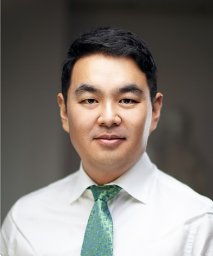
 Jiook Cha
· 6 previous affiliations
- Seoul National UniversitySince 2020
- Associate Professor Of Psychology · Since 2022
- Associate Professor · 2020–2022
- New York State Psychiatric Institute2014–2020
- Research Scientist · 2014–2020
- Assistant Professor of Clinical Neurobiology (in Psychiatry) · 2016–2020
- Postdoctoral Fellow · 2014–2016
- Columbia University2016–2020
- Member · 2018–2020
- Assistant Professor · 2016–2020
- Stony Brook University2009–2013
- PhD in Neuroscience · 2009–2013
- Catholic University of Korea2007–2009
- Master of Science (M.S.), Neurobiology · 2007–2009
Research Overview
Jiook Cha focuses on the functional anatomy of human connectomes, integrating structural and functional neuroimaging with genetic and environmental data to understand cognitive and psychiatric development. His trajectory spans early work on the neural circuits of anxiety to the development of advanced machine learning and foundation models for brain dynamics. Currently, he investigates scalable artificial intelligence architectures for multimodal neuroimaging and neural causal inference.
Research Trajectory
Cha’s early research investigated the neural circuitry underlying anxiety, fear processing, and emotional regulation. In collaborative work on Neural reactivity tracks fear generalization gradients, he contributed to identifying how regions like the insula and anterior cingulate cortex exhibit graded responses to stimuli resembling learned threats. This focus on threat processing extended to structural connectivity; he participated in research examining the Influence of the BDNF Genotype on Amygdalo-Prefrontal White Matter Microstructure is Linked to Nonconscious Attention Bias to Threat, which used probabilistic tractography to link genetic factors, white matter integrity, and attention biases. Subsequent work further mapped these circuits in clinical populations, as seen in Circuit-Wide Structural and Functional Measures Predict Ventromedial Prefrontal Cortex Fear Generalization: Implications for Generalized Anxiety Disorder. Building on this foundation, he led an investigation into early developmental vulnerabilities in Alterations in amygdala–prefrontal circuits in infants exposed to prenatal maternal depression. This study provided direct evidence that maternal depression alters infant brain wiring before two months of age, contributing to the research direction of Integrating Structural and Functional Brain Connectomics and utilizing methods in the area of Quantifying Indirect Pathways with Statistical Mediation Analysis.
Transitioning toward neurodegenerative diseases and large-scale genetic modeling, Cha explored how complex phenotypes manifest in brain architecture. He collaborated on Diagnosis and prognosis of Alzheimer's disease using brain morphometry and white matter connectomes, which demonstrated that machine learning applied to structural and diffusion MRI improves diagnostic accuracy. This work advanced the domain of Mapping White Matter Microstructure with Diffusion Tensor Imaging and the broader field of Synergistic Multimodal Fusion for Neuroimaging Diagnostics. He subsequently directed the development of novel generative models for clinical applications, introducing GANDALF: Generative Adversarial Networks with Discriminator-Adaptive Loss Fine-Tuning for Alzheimer's Disease Diagnosis from MRI, which integrated classification objectives directly into GAN training to stabilize synthesis and improve diagnosis. Expanding his focus to psychiatric risk, he participated in a large cohort study, Association of Genome-Wide Polygenic Scores for Multiple Psychiatric and Common Traits in Preadolescent Youths at Risk of Suicide, linking genetic risk factors for conditions like ADHD and autism to suicidal ideation.
By 2025, Cha's research heavily emphasized the intersection of artificial intelligence, foundation models, and complex brain dynamics. He oversaw a comprehensive mapping of genetic influences on the developing brain in Polygenic architecture of brain structure and function, behaviors, and psychopathologies in children, a study analyzing over 8,600 children to link cognitive potential with neural activation, further contributing to the area of Predicting Complex Phenotypes via Polygenic Risk Aggregation. Concurrently, he led the development of advanced state-space and transformer architectures for neuroimaging. He introduced CausalMamba: Scalable Conditional State Space Models for Neural Causal Inference, a framework leveraging Conditional Mamba architectures to accurately infer directed interactions between brain regions from fMRI data. He also directed the creation of the Scalable Diffusion Transformer for Conditional 4D fMRI Synthesis, which generates whole-brain voxel-level sequences conditioned on cognitive tasks.
His group's work on foundation models extended to other modalities and frequency domains. In Spatiotemporal Learning of Brain Dynamics from fMRI Using Frequency-Specific Multi-Band Attention for Cognitive and Psychiatric Applications, his team developed the Multi-Band Brain Net (MBBN) to explicitly model frequency-specific dynamics, revealing biomarkers for ADHD and ASD. For electroencephalography, he oversaw the development of DIVER-0 : A Fully Channel Equivariant EEG Foundation Model, which unifies spatio-temporal attention to generalize across diverse electrode setups. Applying these high-resolution EEG techniques to complex emotional states, his lab investigated the ambivalent nature of awe using virtual reality in Awe is characterized as an ambivalent affect in the human behavior and cortex. Beyond classical neuroimaging AI, he also explored novel computing paradigms, leading the proposal of a multi-chip ensemble framework in Addressing the Current Challenges of Quantum Machine Learning through Multi-Chip Ensembles to mitigate noise and scalability issues in variational quantum circuits.
Most recently, Cha's research has focused on decoding dynamic sensory experiences and personalizing neural models. He directed the development of a biologically grounded curriculum learning strategy in Decoding Dynamic Visual Experience from Calcium Imaging via Cell-Pattern-Aware Pretraining, which pretrains models on statistically regular neurons to improve the decoding of visual experiences from chaotic neural populations. Additionally, his team introduced a "fit-and-invert" pipeline in Inferring Individualized Color-Vision Distortions from fMRI Hue-Representation Geometry, mapping the unique neural warping of color space in individuals with color vision deficiency to create custom, brain-geometry-tailored color-correction filters.
Current Directions
Recent work investigates the development of scalable foundation models and advanced decoding techniques for complex neural data. The most recent papers in the evidence address the challenge of modeling spatiotemporal brain dynamics across multiple modalities, including fMRI, EEG, and calcium imaging. This involves designing architectures—such as conditional state-space models, diffusion transformers, and channel-equivariant networks—that can handle the high dimensionality and biological noise inherent in neural signals. Furthermore, current research emphasizes individualized neural modeling, moving beyond generic diagnostic categories to map personalized neural geometries, such as individualized color-vision distortions, and decoding dynamic sensory experiences through biologically grounded pretraining strategies.
Profile updated
Loading new papers…
Other researchers whose papers cluster into the same research directions — a proxy for overlapping technical interests and shared intellectual neighborhoods.
See something wrong? Report a mistake