

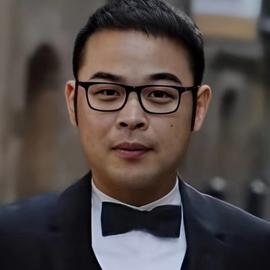
 Jinming Duan
· 3 previous affiliations
- University of ManchesterSince 2024
- Associate Professor · Since 2024
- University of Birmingham2019–2024
- Assistant Professor · 2019–2024
- Imperial College London2017–2019
- Postdoc · 2017–2019
Research Overview
Jinming Duan focuses on medical image computing, developing variational methods, neural networks, and generative models for clinical analysis. His trajectory spans from early work in numerical optimization and partial differential equations for image denoising to the design of highly efficient deep learning architectures for multimodal registration and surgical video understanding. Currently, he investigates anatomically constrained transformers and multimodal AI frameworks to support complex cardiac care and diagnostics.
Research Trajectory
He began his research by applying classical numerical optimization and partial differential equations to medical imaging. Early work included Denoising optical coherence tomography using second order total generalized variation decomposition (2016), which utilized advanced variational methods to improve image quality, contributing to the broader area of Higher Order Regularization for Mitigating Staircasing Artifacts.
As deep learning transformed medical image analysis, he focused on accelerating and evaluating neural registration techniques. In 2023, he introduced Fourier-Net: Fast Image Registration with Band-Limited Deformation, replacing parameter-heavy decoders with a model-driven Fourier domain approach to drastically reduce inference time. Concurrently, he led efforts in the research direction of Standardized Benchmarking for Medical Image Analysis, organizing the comprehensive Learn2Reg: Comprehensive Multi-Task Medical Image Registration Challenge, Dataset and Evaluation in the Era of Deep Learning to systematically compare deep learning and conventional optimization methods. Beyond medical imaging, he also addressed fundamental machine learning challenges in the area of Global Decision Thresholds for Open Set Recognition, designing a unified cross-entropy loss for deep face recognition in UniFace: Unified Cross-Entropy Loss for Deep Face Recognition.
Moving into 2025, his work in registration continued to emphasize efficiency and anatomical fidelity. Contributing to the research direction of Amortized Optimization for Real-Time Deformable Image Registration, he developed Decoder-Only Image Registration (LessNet), which eliminated the learnable encoder to reduce computational overhead while maintaining accuracy. To handle large deformations in complex anatomies, he introduced SACB-Net: Spatial-awareness Convolutions for Medical Image Registration, utilizing unsupervised clustering to generate adaptive kernels for different tissue regions. This aligned with his ongoing focus on work in Diffeomorphic Constraints for Physically Plausible Image Registration. He extended these diffeomorphic principles to generative models with Plasticine: A Traceable Diffusion Model for Medical Image Translation, a framework that integrates spatial transformations into the diffusion denoising process to preserve pixel-level correspondence. He also continued to drive community evaluation through Learn2Reg 2024: New Benchmark Datasets Driving Progress on New Challenges, introducing new tasks for ultrasound-to-MRI alignment and microscopy.
Expanding into temporal and multimodal domains, he developed architectures for complex scene understanding. He proposed UniAV: Unified Audio-Visual Perception for Multi-Task Video Event Localization to simultaneously localize visual and sound events in untrimmed videos. In the surgical domain, he introduced the Hierarchical Context Transformer for Multi-Level Semantic Scene Understanding, explicitly modeling the relationships between broad surgical phases and fine-grained instrument actions.
A major recent focus has been the application of anatomically constrained transformers to cardiac imaging. He developed Anatomically Constrained Transformers for Echocardiogram Analysis (ViACT), forcing vision transformers to focus exclusively on clinically relevant heart structures like the myocardium. This approach was further specialized in Anatomically Constrained Transformers for Cardiac Amyloidosis Classification to improve the diagnosis of rare cardiac conditions efficiently. Moving into 2026, his work increasingly integrates advanced sequence modeling and multimodal reasoning. He explored the synergy of diffusion and Mamba models for Robust tumor segmentation in incomplete multi-modal imaging via a synergy of diffusion and Mamba models, and applied unsupervised constraints to dynamic optical coherence tomography in Long-term stabilized iris tracking with unsupervised constraints on dynamic AS-OCT. Finally, as principal investigator, he guided the development of CardAIc-Agents: A Multimodal Framework with Hierarchical Adaptation for Cardiac Care Support, an adaptive AI system that integrates external tools and specialized knowledge bases to assist multidisciplinary clinical teams.
Current Directions
The most recent papers in the evidence indicate a strong focus on anatomically constrained architectures and multimodal AI agents for clinical decision support. Recent work investigates how vision transformers can be forced to attend exclusively to clinically relevant structures—such as the myocardium in echocardiograms—to improve both computational efficiency and diagnostic interpretability for conditions like cardiac amyloidosis. Additionally, current research explores the integration of large-scale sequence models, including Mamba and diffusion frameworks, to handle incomplete multimodal imaging data. At the systems level, there is an emerging emphasis on hierarchical, adaptive AI agents that combine specialized medical knowledge bases with external tools to support multidisciplinary clinical teams in complex cardiac care scenarios.
Profile updated
Loading new papers…
Other researchers whose papers cluster into the same research directions — a proxy for overlapping technical interests and shared intellectual neighborhoods.
See something wrong? Report a mistake