

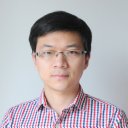
 Xiao Chen
· 4 previous affiliations
- UII AmericaSince 2019
- Principal Researcher · Since 2019
- Current
- Siemens Healthcare (United States)2015–2019
- Researcher · 2015–2019
- University of Virginia2008–2015
- PhD student · 2008–2015
7 other authors named Xiao Chen: Xiao Chen (Huawei Technologies (China) · Huawei Tech. Investment Co., Ltd. · 21 papers), Xiao Chen (Hong Kong Polytechnic University · 9 papers), Xiao Chen (Galbot · Chinese University of Hong Kong · 8 papers), Xiao Chen (University of Newcastle Australia · 3 papers), Xiao Chen (AT&T · 3 papers), and 2 more
Research Overview
Xiao Chen focuses on the development of advanced computational frameworks for medical image reconstruction, enhancement, and clinical analysis, with a primary emphasis on Magnetic Resonance Imaging (MRI) and X-ray fluoroscopy. Their work addresses critical bottlenecks in clinical imaging, such as the trade-off between acquisition speed and image quality, the scarcity of annotated medical data, and the need for real-time navigational guidance during interventional procedures. By integrating deep learning architectures—including recurrent neural networks, diffusion models, and vision-language foundation models—Chen’s research aims to improve the diagnostic utility of imaging modalities while reducing patient exposure to radiation and contrast agents.
Research Trajectory
The evolution of Chen’s research reflects a broader shift in medical imaging from traditional signal processing to sophisticated deep learning-based generative and foundational approaches. In the early stages of their career, around 2016, Chen’s work was centered on low-level image processing, specifically denoising for low-dose X-ray fluoroscopy. This period was characterized by the use of multiscale patch-based representations and sparse image dictionaries to reconstruct features in near real-time. This foundational work established an interest in balancing computational efficiency with high-fidelity reconstruction, a theme that would persist throughout their subsequent projects.
By 2020, Chen’s focus shifted significantly toward MRI reconstruction, particularly for dynamic and multi-contrast applications. This period marked a transition from sparse representation to the use of deep recurrent architectures to handle the temporal dimensions of cardiac imaging. Chen contributed to the development of models that could reconstruct cardiac cine MRI from highly undersampled data without the need for ECG gating, addressing a major limitation for patients with irregular heart rhythms or those unable to hold their breath. This work expanded into multi-contrast MRI, where Chen explored the inherent correlations between different image contrasts (such as T1 and T2 weighting) to accelerate acquisition times. Methodologically, this involved moving beyond independent reconstruction of single contrasts toward joint-sampling-and-reconstruction frameworks that optimize the entire imaging pipeline for downstream clinical tasks.
In the most recent phase of their work (2024–2026), Chen has increasingly leveraged foundation models and advanced rendering techniques to solve complex 3D and cross-modal problems. This includes the application of Real-Time Scene Representation with 3D Gaussian Splatting to CT volume rendering, enabling faster and more accurate X-ray simulations for intraoperative navigation. Furthermore, Chen has begun integrating large-scale foundation models, such as SAM and DINOv2, into medical workflows to overcome the "data hunger" of traditional supervised learning. This current direction focuses on few-shot segmentation and reference-based anatomical understanding, using vision-language models to interpret unlabeled medical images through relative spatial reasoning and cross-modal correspondence.
Current Directions
Chen’s current research is focused on three primary areas: the acceleration of dynamic MRI, the development of realistic simulations for interventional guidance, and the adaptation of foundation models for medical image analysis.
In the domain of dynamic MRI, Chen is addressing the challenges of Simultaneous Multi-Slice (SMS) reconstruction. SMS is a powerful technique for accelerating acquisition, but it introduces complex inter-slice artifacts and entangled k-space signals. Chen’s recent work involves holistic frameworks that can reconstruct multiple slices simultaneously, even in data-scarce environments, by utilizing the temporal redundancies inherent in dynamic sequences.
Another major current focus is coronary roadmapping and 3D reconstruction for cardiac interventions. This involves the use of diffusion models to generate realistic paired angiography images, which are then used to train models for correspondence matching. By creating high-fidelity 2D-to-3D mappings, this research supports precise diagnosis and treatment planning for coronary artery disease. Additionally, Chen is exploring "direction-disentangled" rendering techniques to improve the speed and accuracy of digitally reconstructed radiographs (DRRs) from CT scans, a critical component for real-time 2D/3D registration during surgery.
Finally, Chen is investigating the utility of Vision-Language Models (VLMs) for anatomical understanding. By moving away from purely pixel-based segmentation toward reference-based interpretation, this work seeks to allow models to identify anatomical regions by comparing them to annotated reference images. This approach is designed to mitigate the scarcity of expert-labeled data and improve the robustness of automated report generation and organ localization.
Representative Work
Chen has contributed to several key developments in MRI reconstruction and medical computer vision, often serving as a primary technical lead or senior collaborator.
In the area of dynamic cardiac imaging, Chen co-developed a Real-Time Cardiac Cine MRI with Residual Convolutional Recurrent Neural Network. This work was significant for being among the first to apply deep learning to Cartesian real-time cardiac cine reconstruction. By utilizing a residual convolutional RNN, the model successfully reconstructed high-quality images from undersampled data, outperforming traditional compressed sensing methods in radiologist evaluations. This research provided a viable path for imaging patients who cannot comply with standard breath-holding protocols.
Addressing the inefficiencies of multi-contrast MRI, Chen played a key role in the development of JoJoNet: Joint-contrast and Joint-sampling-and-reconstruction Network for Multi-contrast MRI. Traditional methods often reconstruct different contrasts independently, failing to exploit the shared structural information between them. JoJoNet introduced an end-to-end framework that simultaneously optimizes the sampling patterns and the reconstruction process across multiple contrasts. This joint optimization approach significantly reduced acquisition time while maintaining the diagnostic quality necessary for clinical use.
Chen’s work on Holistic Multi-Slice Framework for Dynamic Simultaneous Multi-Slice MRI Reconstruction tackled the specific artifacts associated with SMS acceleration. The framework was designed to handle the composite k-space signals that occur when multiple slices are excited simultaneously. By treating the reconstruction as a holistic problem rather than a slice-by-slice process, the model improved the clarity of dynamic cardiac images, particularly in scenarios where training data is limited.
In the field of 3D rendering and simulation, Chen contributed to DDGS-CT: Direction-Disentangled Gaussian Splatting for Realistic Volume Rendering. This research adapted 3D Gaussian Splatting—a technique originally developed for natural scene reconstruction—to the domain of medical CT scans. By disentangling isotropic and anisotropic light interactions, the method achieved state-of-the-art accuracy and speed in generating X-ray simulations. This advancement is particularly relevant for intraoperative 2D/3D registration, where real-time performance is essential for surgical navigation.
Chen has also explored the integration of foundation models to solve the problem of data scarcity in medical imaging. In Retrieval-Augmented Few-Shot Medical Image Segmentation With Foundation Models, Chen and colleagues proposed a method to adapt DINOv2 and SAM 2 for medical tasks. The approach uses a retrieval-augmented strategy, where features from a foundation model are used as queries to find similar samples from a small set of labeled data. This allows for effective segmentation in new modalities or domains without the extensive fine-tuning typically required for deep learning models.
Finally, Chen’s work on Leveraging Diffusion Model and Image Foundation Model for Improved Correspondence Matching in Coronary Angiography addresses the challenges of 3D coronary artery reconstruction. Because X-ray angiography often lacks the texture and contrast found in natural images, traditional matching algorithms frequently fail. Chen’s pipeline uses diffusion models conditioned on 3D mesh projections to generate realistic training data, thereby improving the model's ability to find accurate correspondences in clinical X-ray sequences. This work is foundational for the next generation of precision diagnosis tools for coronary artery disease.
In addition to these primary contributions, Chen has participated in collaborative research involving Learning a multiscale patch-based representation for image denoising in X-RAY fluoroscopy, which established early methods for real-time X-ray enhancement. They also contributed to the development of Braided Networks for Scan-Aware MRI Brain Tissue Segmentation, a project that explored the integration of non-imaging metadata into convolutional neural networks to improve the robustness of brain tissue segmentation across different acquisition protocols. While these collaborative roles were secondary to their lead work in MRI reconstruction, they demonstrate a consistent engagement with the broader challenges of medical image analysis and multi-modal data integration.
Profile updated
Loading new papers…
Other researchers whose papers cluster into the same research directions — a proxy for overlapping technical interests and shared intellectual neighborhoods.
See something wrong? Report a mistake