

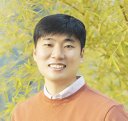
 Jinkyu Kim
· 4 previous affiliations
- Kakao Corporation (South Korea)Since 2025
- Researcher · Since 2025
- Korea UniversitySince 2021
- Associate Professor · Since 2025
- Assistant Professor · 2021–2024
- MS student · 2008–2010
- Undergrad student · 2005–2008
- waymo2020–2021
- Research Scientist · 2020–2021
- PhD student · 2015–2019
1 other author named Jinkyu Kim: Jinkyu Kim (SNU CVLAB · 3 papers)
Research Overview
Jinkyu Kim focuses on computer vision, multimodal learning, and autonomous driving. His early work explored interpretable neural controllers and human-to-vehicle interaction for self-driving systems, establishing foundations for explainable embodied AI. More recently, his research addresses 3D perception, robust scene understanding, and the alignment of large vision-language models to ensure factual and safe generation.
Research Trajectory
His early computational research focused on bioinformatics, where he developed an automated peak detection method for multiplexed hydroxyl radical cleavage analysis (MOHCA) to improve high-throughput RNA structure inference A robust peak detection method for RNA structure inference by high-throughput contact mapping.
Transitioning to computer vision and autonomous driving, he began exploring how to make deep neural perception and control networks explainable. He introduced visual attention models that highlight regions of an image causally influencing a vehicle's steering decisions Interpretable Learning for Self-Driving Cars by Visualizing Causal Attention. Expanding on this interpretability, he developed systems capable of generating introspective textual explanations and rationalizations for vehicle control commands Textual Explanations for Self-Driving Vehicles. This line of inquiry evolved into "advisable" driving systems that augment training data with natural language guidance from humans, allowing controllers to adapt their visual attention based on specific advice Grounding Human-To-Vehicle Advice for Self-Driving Vehicles. He further formalized this interaction by teaching systems to internalize observation-to-action rules, enabling models to summarize visual inputs in natural language and predict appropriate control responses Advisable Learning for Self-Driving Vehicles by Internalizing Observation-to-Action Rules.
Broadening his focus into domain generalization and robust scene understanding, he participated in the development of SelfReg, a self-supervised contrastive regularization technique that uses only positive data pairs to learn domain-invariant features SelfReg: Self-supervised Contrastive Regularization for Domain Generalization. This aligns with his broader interest in the area of Adversarial Alignment for Domain Invariant Feature Learning. Addressing the challenge of class imbalance in LiDAR-based 3D object detection, he introduced a multi-headed network architecture combined with context-aware data augmentation to better detect rare classes like cyclists Resolving Class Imbalance for LiDAR-based Object Detector by Dynamic Weight Average and Contextual Ground Truth Sampling. This work contributed significantly to the research direction of Contextual Object Placement for Robust Scene Understanding.
His research group subsequently advanced 3D perception for autonomous systems across multiple modalities. To improve perspective depth estimation from 2D cameras, his team incorporated map information to produce geometrically robust Bird’s-Eye View (BEV) representations BEVMap: Map-Aware BEV Modeling for 3D Perception. They also tackled temporal modeling in multi-camera setups by explicitly supervising models to predict future object poses, thereby learning stronger temporal cues from video streams Learning Temporal Cues by Predicting Objects Move for Multi-camera 3D Object Detection. Recognizing the difficulty of adapting LiDAR detectors to new sensor configurations, his lab explored self-supervised fine-tuning methods to bridge domain gaps using limited data Finetuning Pre-trained Model with Limited Data for LiDAR-based 3D Object Detection by Bridging Domain Gaps. Further integrating vision and language into driving, they developed a trajectory prediction method that incorporates surround-view camera inputs and textual descriptions generated by Vision-Language Models (VLMs) VisionTrap: Vision-Augmented Trajectory Prediction Guided by Textual Descriptions. He also contributed to frameworks that align 2D image segmentation with 3D LiDAR geometry for smarter query placement in occlusion-heavy environments ALIGN: Advanced Query Initialization with LiDAR-Image Guidance for Occlusion-Robust 3D Object Detection.
Concurrently, his research expanded into the safety, alignment, and continual learning capabilities of generative models. His group proposed methods to recognize, localize, and manipulate visually immoral cues in text-to-image generation, ensuring outputs align with commonsense morality Localization and Manipulation of Immoral Visual Cues for Safe Text-to-Image Generation. In the domain of few-shot class-incremental learning, his team addressed catastrophic forgetting by introducing hard-negative prototype-based regularization to better separate difficult-to-discriminate samples Hard-Negative Prototype-Based Regularization for Few-Shot Class-Incremental Learning. Most recently, he has collaborated on mitigating hallucinations in Large Vision-Language Models (LVLMs). This includes participating in the development of Tri-layer Contrastive Decoding, a training-free method that uses hidden visual watermarks to steer models toward factual truth Watermarking for Factuality: Guiding Vision-Language Models Toward Truth via Tri-layer Contrastive Decoding. He also contributed to research demonstrating that "truthfulness" is a heritable trait in AI model lineages, introducing soft-gating mechanisms to amplify attention heads specialized in contextual grounding The Truth Stays in the Family: Enhancing Contextual Truthfulness via Inherited Heads in Model Lineages.
Current Directions
The most recent papers in the evidence indicate a strong focus on the reliability and alignment of large-scale foundation models, particularly Large Vision-Language Models (LVLMs). Recent work investigates training-free decoding strategies and architectural interventions—such as isolating "truthful" attention heads—to mitigate hallucinations and ensure that multimodal models remain grounded in visual and contextual evidence. Concurrently, ongoing research in autonomous driving addresses robust 3D perception and trajectory prediction by fusing multi-camera Bird’s-Eye View (BEV) representations, LiDAR geometry, and textual guidance from language models. Together, these directions support the broader goal of building safe, interpretable, and factually grounded embodied AI systems that can reliably perceive and interact with the real world.
Profile updated
Loading new papers…
Other researchers whose papers cluster into the same research directions — a proxy for overlapping technical interests and shared intellectual neighborhoods.
See something wrong? Report a mistake