

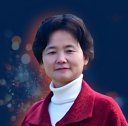
 Jingbo Wang
· 1 previous affiliation
- The University of Western AustraliaSince 2001
- Full Professor · Since 2001
4 other authors named Jingbo Wang: Jingbo Wang (Shanghai Artificial Intelligence Laboratory · 74 papers), Jingbo Wang (University of Southern California · 3 papers), Jingbo Wang (South China University of Technology · 1 paper), Jingbo Wang (1 paper)
Research Overview
Jingbo Wang focuses on quantum machine learning, quantum algorithms, and the application of computational models to bioinformatics and computer vision. Wang’s research spans the theoretical foundations of quantum kernel methods and the practical implementation of quantum-enhanced classifiers for biological and sensing data. Recent work explores the complexity of noisy quantum states, the trainability of quantum neural networks, and the development of efficient representation learners for quantum features.
Research Trajectory
Wang’s early research, dating back to 2009, addressed fundamental topics in biometrics and sensing, specifically the role of electromagnetic radiation in biometric identification. This early interest in signal processing and classification provided a foundation for a later pivot toward more complex computational paradigms. Following a period of transition, Wang’s work shifted significantly toward the intersection of quantum computing and machine learning, with a particular emphasis on overcoming the limitations of classical algorithms in high-dimensional state spaces.
By 2023, Wang’s research became centered on the power of quantum learning algorithms to solve problems in quantum physics that are classically intractable. This included a focus on Quantum Phase Recognition (QPR), where Wang demonstrated that quantum kernel methods could efficiently identify phases of matter in many-particle systems under complexity theory assumptions that preclude efficient classical solutions. This period marked the beginning of a sustained investigation into how quantum resources can be leveraged for specific classification tasks where classical resources fail.
In 2024, Wang expanded this inquiry into the domain of bioinformatics, specifically the classification of therapeutic peptides. By applying quantum support vector machines (QSVMs) to the identification of non-hemolytic peptides, Wang demonstrated that quantum-enhanced models could outperform classical machine learning algorithms on complex biological datasets. During this same period, Wang explored the synergy between classical and quantum methods, utilizing classical kernel methods to predict the scrambling of information in quantum systems—a phenomenon known as out-of-time-ordered correlators (OTOCs). This work relied on data generated through Scaling Tensor Networks for Higher Dimensional Quantum Systems, illustrating a hybrid approach where classical models provide computational shortcuts for studying quantum many-body dynamics.
As Wang transitioned into more senior research roles between 2025 and 2026, the focus evolved toward the challenges of Noisy Intermediate-Scale Quantum (NISQ) devices. This included developing algorithms to quantify the complexity of noisy quantum states and investigating the trainability of Parameter-Shared Quantum Neural Networks (PS-QNNs). Wang also extended quantum algorithmic frameworks to computer vision and remote sensing, addressing problems such as maritime object classification in Synthetic Aperture Radar (SAR) imagery and visual tracking in video sequences.
Current Directions
Wang’s current research is characterized by three primary pillars: the theoretical analysis of quantum model trainability, the development of robust quantum representation learners, and the application of quantum algorithms to real-world sensing and biological problems.
A significant portion of Wang’s recent work addresses the "exponential wall" of quantum state characterization. This involves creating provably efficient learning algorithms for noisy quantum state and process tomography. By leveraging techniques such as classical shadows, Wang’s research aims to reconstruct noisy processes with polynomial sample complexity and classical post-processing time. This theoretical work is complemented by investigations into the optimization landscapes of quantum neural networks, specifically how noise affects the convergence of training iterations.
In the applied domain, Wang continues to push the boundaries of quantum-enhanced bioinformatics. Moving beyond fixed, hand-crafted quantum encodings, Wang is developing quantum autoencoders that can learn data-driven representations of biological sequences. This approach has been applied to large-scale datasets, including millions of peptide sequences, to improve classification accuracy for tasks such as blood-brain barrier penetration and cytotoxicity.
Furthermore, Wang is integrating quantum algorithms into the broader field of Mask-Guided Feature Extraction for Precise Visual Understanding. This includes the development of quantum ridge regression classifiers for visual tracking, which aim to discriminate between objects and backgrounds in the quantum state form. This direction reflects a broader effort to determine where quantum advantage may realistically manifest in computer vision and remote sensing.
Representative Work
Quantum Phase Recognition via Quantum Kernel Methods In this first-author study, Wang explores the application of quantum computation to accelerate machine learning for understanding many-particle quantum systems. The paper provides a rigorous proof that a wide range of Quantum Phase Recognition (QPR) problems cannot be solved efficiently by classical algorithms, while demonstrating the efficiency and robustness of quantum kernel methods in these same contexts. This work establishes a theoretical basis for quantum advantage in physical property classification.
Non-hemolytic Peptide Classification using a Quantum Support Vector Machine Serving as the senior author, Wang applies the quantum support vector machine (QSVM) to a critical task in drug development: identifying peptides that do not rupture red blood cells. The research contrasts the performance of QSVMs against several popular classical SVMs across multiple peptide datasets. The findings indicate that the QSVM performs best overall, suggesting that quantum-enhanced screening can provide a significant advantage in bioinformatics applications even within the limitations of current noisy quantum devices.
Learning out-of-time-ordered correlators with classical kernel methods In this senior-author paper, Wang demonstrates that classical machine learning can be used as a computational shortcut for studying quantum chaos. By training kernel methods on datasets generated via tensor network simulations, the research shows that it is possible to predict how information scrambles in quantum systems across large parameter spaces. This work highlights a strategic use of classical resources to bypass the high cost of direct quantum simulation.
Learning the Complexity of Weakly Noisy Quantum States Wang, as senior author, addresses the quantification of "complexity" in quantum states degraded by noise. Utilizing classical shadows, the study presents an algorithm capable of predicting the circuit complexity of weakly noisy states with optimal sample efficiency. A key finding of this research is that, unlike pure states, noisy quantum states may decrease in complexity as they deepen, providing new insights into the behavior of quantum information in the presence of environmental decoherence.
Quantum Autoencoder: An Efficient Representation Learner for Quantum Features This senior-author work moves away from hand-crafted quantum encodings toward data-driven representation learning. Wang demonstrates the sample complexity efficiency of quantum autoencoders throughout the training process. The model was numerically validated on a dataset of 3 million peptide sequences, showing that learned quantum representations can effectively address multiple classification problems, including antihypertensive activity and cytotoxicity, more effectively than traditional methods.
Quantum algorithm for visual tracking In this senior-author contribution to quantum computer vision, Wang presents a quantum algorithm for locating moving objects in video sequences. The algorithm adapts the ridge regression framework into a quantum state form, consisting of distinct training and detection phases. By formulating the discrimination between object and background as a quantum computational task, this work explores the potential for quantum algorithms to enhance fundamental problems in security, surveillance, and robot perception.
Profile updated
Loading new papers…
Other researchers whose papers cluster into the same research directions — a proxy for overlapping technical interests and shared intellectual neighborhoods.
See something wrong? Report a mistake