

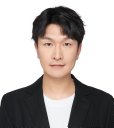
 Jing Wang
· 3 previous affiliations
- University of Hong KongSince 2026
- Postdoc · Since 2026
- University of Alberta2025–2026
- Postdoc · 2025–2026
- University of British Columbia2014–2024
- PhD student · 2020–2024
- MS student · 2018–2020
- Undergrad student · 2014–2018
35 other authors named Jing Wang: Jing Wang (Beijing Jiaotong University · 134 papers), Jing Wang (Shanghai Jiao Tong University · 112 papers), Jing Wang (Southeast University · 101 papers), Jing Wang (Huazhong University of Science and Technology · 40 papers), Jing Wang (34 papers), and 30 more
Research Overview
Jing Wang focuses on machine learning and robotics, with specific emphasis on domain adaptation, latent-space modeling, and policy learning. His earlier work developed unsupervised and source-free methods for transferring learned representations across shifting data distributions. Currently, his research investigates diffusion generative models and causal representation learning to build robust, adaptive policies for visuomotor control and open-world perception.
Research Trajectory
Jing Wang’s early research concentrated on unsupervised domain adaptation (UDA) in computer vision, addressing the challenge of deploying models in novel environments without requiring extensive target-domain labels. He introduced the Unsupervised Domain Adaptation Learning Algorithm for RGB-D Staircase Recognition (2019), which applied adversarial techniques to transfer spatial knowledge from labeled escalator data to unlabeled stationary stairs. This work contributes to the area of Adversarial Alignment for Domain Invariant Feature Learning and the broader direction of Test Time Adaptation for Distribution Shift. Recognizing that standard UDA methods often discard useful target-specific features in their pursuit of shared representations, he subsequently developed Domain Preservation Nets in Preserving Domain Private Representation via Mutual Information Maximization. By maximizing mutual information, this approach retains private representations unique to the target domain, advancing the research direction of The Invariance Discriminability Tradeoff in Domain Adaptation.
Expanding on feature alignment strategies, he proposed Discriminative Feature Alignment (DFA) in Discriminative Feature Alignment: Improving Transferability of Unsupervised Domain Adaptation by Gaussian-guided Latent Alignment. By utilizing a Gaussian prior to guide the alignment of source and target distributions, this method contributed to the field of Gradual Domain Adaptation via Intermediate Distributions. He also explored probabilistic approaches to knowledge transfer, introducing an indirect variational inference method to approximate latent distributions from unlabeled data in Mutual Variational Inference: An Indirect Variational Inference Approach for Unsupervised Domain Adaptation.
As privacy concerns increasingly restricted access to source data during model deployment, his focus shifted toward source-free domain adaptation (SFDA). In What Has Been Overlooked in Contrastive Source-Free Domain Adaptation: Leveraging Source-Informed Latent Augmentation within Neighborhood Context, he addressed the inability to analytically estimate domain gaps without source data by leveraging latent augmentation to adapt models effectively. During this period, he also investigated alternative learning paradigms and optimization strategies across different domains. He developed a two-step training framework inspired by energy models in Training feedforward neural nets in Hopfield-energy-based configuration: A two-step approach. In the context of sensor networks, he proposed a semi-binarized variational autoencoder to simultaneously optimize sampling strategies and signal estimation in WSN optimization for sampling-based signal estimation using semi-binarized variational autoencoder. Additionally, he demonstrated how active selection of context set labels can improve few-shot adaptation in Exploring Active Learning in Meta-learning: Enhancing Context Set Labeling.
His most recent work integrates diffusion models and causal inference into domain adaptation and robotics. To tackle SFDA under strict data privacy constraints, he repurposed Latent Diffusion Models in Vicinity-Guided Discriminative Latent Diffusion for Privacy-Preserving Domain Adaptation, allowing source providers to transfer decision boundaries via a lightweight diffusion module rather than raw data. He formalized this mathematically in Vicinal Gaussian Transform: Rethinking Source-Free Domain Adaptation Through Source-Informed Label Consistency, introducing an analytical operator and a novel stochastic differential equation to model source-informed latent vicinities.
In collaborative efforts, he contributed to the research direction of Causal Representation Learning for Out-of-Distribution Generalization. This included participation in COSDA: Counterfactual-based Susceptibility Risk Framework for Open-Set Domain Adaptation, which uses causal interventions to estimate the susceptibility of label changes for unknown classes. He also contributed to U$^3$CF: Unbiased, Unconfounding, and Unified Causal Framework for Multi-Target Domain Adaptation, a framework that applies do-calculus to disentangle domain-invariant factors from domain-specific noise across multiple target environments.
Concurrently, he has applied diffusion models to visuomotor control and robotic policy learning. In From Diffusion to Flow: Fast and Coherent Policy Distillation via Probability Flow ODEs, he addressed the high inference latency of Diffusion Policies by distilling them into single-step models while preserving trajectory-level stochasticity. Building on this, he introduced a closed-loop perception-action interplay in Act to See, See to Act: Diffusion-Driven Perception-Action Interplay for Adaptive Policies, utilizing the gradients of the action-denoising process to refine latent observations in real-time for more adaptive robotic behavior.
Current Directions
The most recent papers in the evidence address the intersection of generative modeling, causal inference, and embodied AI. A primary current direction involves adapting diffusion models for robust robotic policy learning. This includes developing distillation techniques via Probability Flow ODEs to enable real-time inference for visuomotor control, as well as designing closed-loop systems where action-denoising gradients actively refine visual perception.
Concurrently, recent collaborative work investigates causal representation learning to solve complex domain adaptation challenges, such as open-set and multi-target scenarios. By applying causal interventions and counterfactual frameworks, these approaches seek to disentangle domain-invariant features from confounding environmental noise. Finally, ongoing research continues to advance source-free domain adaptation by utilizing latent diffusion models and stochastic differential equations to transfer decision boundaries while strictly preserving data privacy.
Profile updated
| Paper | Venue | Year |
|---|---|---|
| Ensemble diverse hypotheses and knowledge distillation for unsupervised cross-subject adaptationGitHubKuangenZhang/ | Information Fusion | 2024 |
| Unsupervised Cross-Subject Adaptation for Predicting Human Locomotion IntentGitHubKuangenZhang/ | IEEE Transactions on Neural Systems and Rehabilitation Engineering | 2024 |
Loading new papers…
Other researchers whose papers cluster into the same research directions — a proxy for overlapping technical interests and shared intellectual neighborhoods.
See something wrong? Report a mistake