

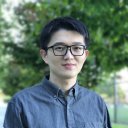
 Jiahong Chen
· 2 previous affiliations
- Amazon (United States)Since 2021
- Researcher · Since 2021
- University of British Columbia2015–2019
- Postdoctoral Researcher · 2015–2019
Research Overview
Jiahong Chen focuses on unsupervised domain adaptation, spatial intelligence, and efficient representation learning for robotic and sensor systems. His trajectory spans from early work in wireless sensor networks to developing robust cross-domain adaptation techniques for human activity recognition and fault diagnosis. Most recently, he investigates parameter-efficient vision-language-action models for resource-constrained edge deployment.
Research Trajectory
Jiahong Chen’s early research focused on optimizing the efficiency and data-gathering capabilities of wireless sensor networks (WSNs). Collaborative work on An Energy-Efficient Dual Prediction Scheme Using LMS Filter and LSTM in Wireless Sensor Networks for Environment Monitoring addressed the high energy costs of data transmission in remote environments. By employing least mean square filters and long short-term memory networks, the proposed scheme minimized transmission frequency between sensor nodes and gateways while maintaining data accuracy. Building on this domain, he developed Deep Reinforced Learning Tree for Spatiotemporal Monitoring With Mobile Robotic Wireless Sensor Networks, which utilized deep reinforcement learning to efficiently search for the most informative sampling locations across an infinite horizon space, subject to constraints like field estimation error and information gain.
Following this work in sensor networks, the focus shifted toward machine learning generalization, specifically unsupervised domain adaptation (UDA). A central challenge in this field is transferring knowledge from labeled source datasets to unlabeled target domains where the data distributions differ. He introduced Discriminative Feature Alignment: Improving Transferability of Unsupervised Domain Adaptation by Gaussian-guided Latent Alignment, a method that forces source and target features into a shared latent space guided by a standard normal distribution. This approach contributes to the broader area of Gradual Domain Adaptation via Intermediate Distributions and addresses the fundamental problem of The Invariance Discriminability Tradeoff in Domain Adaptation. He further expanded on latent space alignment with Mutual Variational Inference: An Indirect Variational Inference Approach for Unsupervised Domain Adaptation, proposing a novel variational inference technique to approximate latent distributions from unlabeled data, using the estimator as an agent for knowledge transfer.
The theoretical foundations of UDA were subsequently applied to complex, real-time systems, particularly in human-robot interaction and industrial diagnostics. To adapt wearable robot controllers to new users without requiring labeled data, he developed Ensemble diverse hypotheses and knowledge distillation for unsupervised cross-subject adaptation. By distilling an ensemble of diverse hypotheses into a single lightweight network, this work achieved high accuracy while maintaining the strict processing speeds required for physical interaction, advancing the research direction of Adversarial Alignment for Domain Invariant Feature Learning. This cross-subject adaptation research continued with Gaussian-guided feature alignment for unsupervised cross-subject adaptation, which proposed a non-adversarial metric to quantify and bridge the domain gap in human activity and intent recognition using inertial measurement units.
In parallel, these adaptation techniques were applied to industrial hardware in Unsupervised cross-domain fault diagnosis using feature representation alignment networks for rotating machinery, mitigating the performance drops caused by domain shifts between experimental training setups and actual operating platforms. Returning to the core mechanics of UDA, he also authored Preserving domain private information via mutual information maximization, which demonstrated that retaining the unique, domain-specific statistics of unlabeled data—rather than discarding them to achieve pure domain invariance—significantly improves model generalization.
Most recently, the trajectory has evolved to intersect with generative models, privacy preservation, and large-scale vision-language architectures. Collaborative research on Vicinity-Guided Discriminative Latent Diffusion for Privacy-Preserving Domain Adaptation repurposed latent diffusion models for "source-free" domain adaptation, allowing decision boundaries to be transferred without sharing raw source data. Extending into embodied AI, he introduced NanoVLA: Routing Decoupled Vision-Language Understanding for Nano-sized Generalist Robotic Policies, an ultra-efficient vision-language-action model designed for resource-constrained edge devices like the Jetson Orin Nano. This line of inquiry into spatial and physical reasoning continued with SpatioLM: Towards General Physical Spatial Intelligence in Vision-Language Models, which presented a parameter-efficient framework to grant vision-language models an understanding of 3D layouts and metric distances without relying on heavy external encoders.
Current Directions
Recent work investigates the deployment and enhancement of vision-language models (VLMs) for physical and robotic applications. A primary focus is on parameter-efficient architectures that enable complex reasoning on resource-constrained edge devices, such as nano-sized generalist robotic policies. Additionally, this research explores methods for granting VLMs physical spatial intelligence—allowing models to comprehend 3D layouts and metric distances without relying on heavy external encoders or additional 3D sensors. This trajectory points toward increasingly capable, privacy-preserving, and efficient multimodal systems for real-world embodied AI.
Profile updated
| Paper | Venue | Year |
|---|---|---|
| Ensemble diverse hypotheses and knowledge distillation for unsupervised cross-subject adaptationGitHubKuangenZhang/ | Information Fusion | 2024 |
Loading new papers…
Other researchers whose papers cluster into the same research directions — a proxy for overlapping technical interests and shared intellectual neighborhoods.
See something wrong? Report a mistake