

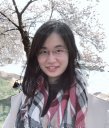
 Jing Ma
· 2 previous affiliations
- Case Western Reserve UniversitySince 2023
- Assistant Professor · Since 2023
- University of Virginia2018–2023
- PhD student · 2018–2023
9 other authors named Jing Ma: Jing Ma (Hong Kong Baptist University · 91 papers), Jing Ma (Emory University · 11 papers), Jing Ma (THiFly Health · 6 papers), Jing Ma (1 paper), Jing Ma (Fred Hutch Cancer Center · 1 paper), and 4 more
Research Overview
Jing Ma focuses on causal inference, graph machine learning, and trustworthy artificial intelligence. His early work developed methods for deconfounding observational data and generating counterfactual explanations within complex network structures. More recently, he investigates the intersection of causality and foundation models, designing frameworks that integrate causal reasoning into large language models and multimodal systems to improve their robustness and interpretability.
Research Trajectory
In 2018, Ma's early research explored fundamental graph analytics, optimizing shortest path queries by identifying critical vertices in Top-kCritical Vertices Query on Shortest Path. He soon shifted toward the intersection of causality and machine learning, focusing on estimating causal effects in the presence of unobserved confounders. He introduced methods for disentangling confounder representations in multi-cause scenarios with Multi-Cause Effect Estimation with Disentangled Confounder Representation. Expanding this to dynamic network environments, he developed techniques to learn individual treatment effects using time-evolving relational data in Deconfounding with Networked Observational Data in a Dynamic Environment.
This synthesis of graph structures and causal inference became a central theme of his work, as outlined in the overview Learning Causality with Graphs. To address higher-order interactions, he developed Learning Causal Effects on Hypergraphs, which introduced a framework to model complex spillover effects in networked environments, contributing to the broader area of Attentive Aggregation for Hypergraph Neural Networks. He also applied these causal-graph techniques to real-world epidemiological challenges, assessing policy effectiveness via time-varying network structures in Assessing the Causal Impact of COVID-19 Related Policies on Outbreak Dynamics: A Case Study in the US.
Concurrently, Ma investigated explainability and fairness in graph neural networks through a causal lens. He proposed generative models for counterfactual explanations on discrete graph topologies in CLEAR: Generative Counterfactual Explanations on Graphs. Addressing algorithmic bias, he developed approaches to mitigate the influence of sensitive attributes across graph neighborhoods in Learning Fair Node Representations with Graph Counterfactual Fairness.
His focus on robust representation learning expanded into the research direction of Causal Representation Learning for Out-of-Distribution Generalization. He synthesized strategies for bias mitigation in Causal Inference in Recommender Systems: A Survey of Strategies for Bias Mitigation, Explanation, and Generalization and further formalized these concepts in A survey of out-of-distribution generalization for graph machine learning from a causal view. Advancing work in the area of Invariant Representation Learning Across Diverse Environments, he introduced frameworks combining deformable shape modeling with invariant risk minimization to prevent models from relying on spurious correlations, as detailed in Invariant Shape Representation Learning for Image Classification.
Ma has also participated in broader computer vision and generative modeling research. He contributed to the field of Lifting 2D Foundation Models for 3D Scene Understanding through Segment then Splat: Unified 3D Open-Vocabulary Segmentation via Gaussian Splatting, which inverted traditional pipelines by segmenting 3D points prior to reconstruction. In generative models, he co-developed Bayesian optimization frameworks for discovering noise schedules in diffusion models, improving geometric conditioning in SHAPE: SCHEDULE HESSIAN ADAPTIVE PARAMETER ESTIMATION FOR SMOOTHER DIFFUSION OPTIMIZATION.
Most recently, Ma's trajectory has centered on integrating causal reasoning into foundation models. He mapped the landscape of this emerging field in Causal Inference with Large Language Model: A Survey. Driving the research direction of Causal Retrieval for Robust Reasoning, his lab developed CausalRAG: Integrating Causal Graphs into Retrieval-Augmented Generation, which replaces semantic similarity searches with causal graph tracing to improve the faithfulness of generated responses. This was subsequently expanded in CausalRAG2: Hierarchical Causal Knowledge Graph Design for RAG, which uses hierarchical structures and causal gates to enable multi-hop reasoning across isolated information clusters. Extending these principles to multimodal systems, he led the development of From Prompts to Tokens: Internalizing Causal Supervision in Vision-Language Model for Multi-Image Causal Reasoning, which internalizes physical mechanisms into vision-language models via latent causal graphs and specialized tokens.
Current Directions
Recent work investigates the integration of causal reasoning into large language models and multimodal foundation models. A primary focus is advancing retrieval-augmented generation (RAG) by replacing traditional semantic similarity with causal graph reasoning, enabling models to trace cause-and-effect relationships and perform complex, multi-hop reasoning across hierarchical knowledge structures. Additionally, current research explores internalizing causal supervision directly into the architecture of vision-language models, allowing them to model physical mechanisms and spatial relationships rather than relying solely on text priors.
Profile updated
Loading new papers…
Other researchers whose papers cluster into the same research directions — a proxy for overlapping technical interests and shared intellectual neighborhoods.
See something wrong? Report a mistake