

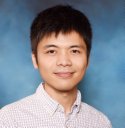
 Jin Lu
· 4 previous affiliations
- University of GeorgiaSince 2023
- Assistant Professor · Since 2023
- University of Michigan2019–2023
- Assistant Professor · 2019–2023
- University of Connecticut2014–2019
- PhD student · 2014–2019
- Xi'an Jiaotong University2011–2014
- MS student · 2011–2014
1 other author named Jin Lu: Jin Lu (1 paper)
Research Overview
Jin Lu focuses on machine learning, optimization, and biomedical informatics, with an emphasis on developing transparent and distributed algorithms. His early work addressed multi-view data clustering and matrix completion for health applications, gradually evolving toward efficient optimization techniques for large-scale models. His current research investigates memory-efficient zeroth-order fine-tuning and the application of large language models to complex physiological and biological data.
Research Trajectory
His initial research focused on complex data structures, sparsity, and matrix completion. He introduced Multi-view Sparse Co-clustering via Proximal Alternating Linearized Minimization, tackling the challenge of finding consistent subject groups across different data sources while simultaneously optimizing non-convex sparsity constraints to identify defining features. Building on this foundation in matrix methods, he proposed A Sparse Interactive Model for Matrix Completion with Side Information, which explicitly modeled interactions between row and column features to reduce the sample complexity required for exact matrix recovery. He subsequently applied these matrix completion techniques to biomedical informatics, developing a parallelized algorithm in Inferring phenotypes from substance use via collaborative matrix completion to rapidly identify genetic variants linked to substance use disorders. During this period, he also explored graph-based and multi-task learning representations, introducing Edge Attention-based Multi-Relational Graph Convolutional Networks to predict molecular properties by learning attention weights for chemical bonds, and participating in the development of Joint Modeling of Heterogeneous Sensing Data for Depression Assessment via Multi-task Learning.
Transitioning toward distributed optimization and edge computing, his research addressed the challenges of training models in resource-constrained environments. He directed the development of a novel federated learning framework in Mobilizing Personalized Federated Learning in Infrastructure-Less and Heterogeneous Environments via Random Walk Stochastic ADMM. This system utilized a mobile server moving via a random walk and local proximity constraints to achieve faster convergence with significantly lower communication overhead, advancing methods for on-device training in disaster zones and other infrastructure-less settings.
More recently, his optimization research has focused on the memory bottlenecks associated with training large language models (LLMs). He collaborated on HELENE: Hessian Layer-wise Clipping and Gradient Annealing for Accelerating Fine-tuning LLM with Zeroth-order Optimization, which integrated a noise-free Hessian estimator to accelerate zeroth-order fine-tuning. This work contributes to the broader area of Beyond Global Learning Rates in Deep Networks by overcoming the slow convergence of previous memory-efficient methods. Continuing this trajectory, he contributed to Harmony in Divergence: Towards Fast, Accurate, and Memory-efficient Zeroth-order LLM Fine-tuning, introducing the DiZO framework to mimic layer-specific learning rates and bridge the performance gap between forward-only zeroth-order optimization and standard backpropagation.
Alongside optimization, his recent work explores the application and evaluation of LLMs in specialized, complex domains. He participated in a large-scale evaluation of inference-time compute scaling in Evaluation of OpenAI o1: Opportunities and Challenges of AGI, which assessed the model's reasoning capabilities across diverse fields and highlighted the necessity of the research direction Shifting from Static Benchmarks to Dynamic Evaluation.
In the realm of health informatics and physiological sensing, he co-authored MARAuder's Map: Motion-Aware Real-time Activity Recognition with Layout-Based Trajectories, projecting ambient sensor streams onto physical floorplans for trajectory-aware activity recognition in smart homes. He also contributed to diffusion-based frameworks for medical signals in Advancing physiological time series reconstruction and imputation via mixture of receptive fields and experts fusion. To improve the clinical trustworthiness of LLMs, he collaborated on Enhancing Visual Inspection Capability of Multi-Modal Large Language Models on Medical Time Series with Supportive Conformalized and Interpretable Small Specialized Models. This framework integrates small specialized models with LLMs, advancing work in the area of Conformal Prediction for Rigorous Uncertainty Quantification to provide statistically grounded uncertainty for interpreting ECGs and EEGs. Furthering this cross-modal approach, he participated in Peak-R1: Instruction-Tuned Large Language Models for Robust J-Peak Detection in Cardiomechanical Signals, leveraging instruction-tuned models to overcome artifacts in cardiovascular monitoring. Finally, he contributed to a comprehensive review of these emerging paradigms in Large language models for bioinformatics, detailing the impact of transformer architectures on genomics and drug discovery.
Current Directions
The most recent papers in the evidence address the intersection of large language models and biomedical informatics, alongside the optimization techniques required to deploy them efficiently. Recent work investigates memory-efficient zeroth-order optimization frameworks that enable the fine-tuning of massive models without the prohibitive memory costs of standard backpropagation. Concurrently, research in health informatics focuses on adapting multi-modal LLMs to interpret complex physiological time series, such as cardiomechanical signals and EEGs. This involves developing frameworks that fuse the broad reasoning capabilities of LLMs with the precision of small, specialized models, utilizing conformal prediction to ensure rigorous uncertainty quantification and clinical trustworthiness in medical diagnostics.
Profile updated
Loading new papers…
Other researchers whose papers cluster into the same research directions — a proxy for overlapping technical interests and shared intellectual neighborhoods.
See something wrong? Report a mistake