

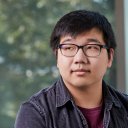
 Jiatao Gu
· 8 previous affiliations
- Apple (United States)Since 2022
- Researcher · Since 2022
- University of PennsylvaniaSince 2025
- Assistant Professor · Since 2025
- Apple MLRCurrent
- Current
- Meta (United States)2018–2022
- Senior Research Scientist · 2018–2022
- University of Hong Kong2014–2018
- Doctor of Philosophy (Ph.D.), Electronic Engineering · 2014–2018
- Research Intern · 2017
- Research Intern · 2017
- Tsinghua University2010–2014
- Undergrad student · 2010–2014
Research Overview
Jiatao Gu focuses on generative machine learning, multimodal modeling, and the development of efficient neural architectures. His trajectory spans foundational work in neural machine translation and non-autoregressive generation to recent advances in 3D-aware video diffusion and normalizing flows. Currently, his research emphasizes scalable generative models that integrate visual synthesis, geometric grounding, and algorithmic reasoning.
Research Trajectory
The trajectory begins with foundational contributions to sequence-to-sequence learning and neural machine translation (NMT). Early work addressed the challenge of out-of-vocabulary words and repetitive entities in text generation; he introduced Incorporating Copying Mechanism in Sequence-to-Sequence Learning, proposing the CopyNet architecture to selectively replicate input segments during decoding. A major shift in his NMT research occurred with the development of Non-Autoregressive Neural Machine Translation. This work broke the traditional sequential bottleneck of text generation by predicting all output tokens in parallel, utilizing fertility as a latent variable to maintain translation quality while significantly reducing inference latency. Concurrently, he explored the broader area of Neural Machine Translation for Low-Resource Languages, framing the challenge as a meta-learning problem in Meta-Learning for Low-Resource Neural Machine Translation to adapt models using high-resource language tasks.
Continuing to refine sequence generation, he developed the Levenshtein Transformer, which introduced a novel approach to sequence refinement. His research also expanded into large-scale multilingual contexts, participating in the development of mBART in Multilingual Denoising Pre-training for Neural Machine Translation. This sequence-to-sequence denoising auto-encoder demonstrated that pre-training on full texts across multiple languages substantially improves downstream translation tasks. As his focus broadened beyond text, he contributed to the research direction of Textless Speech to Speech Translation via Discrete Units. This transition is exemplified by his involvement in Direct Speech-to-Speech Translation With Discrete Units, which explored translating speech directly without relying on intermediate text representations.
Around 2023, the research arc expanded significantly into visual synthesis, 3D modeling, and diffusion models. Addressing the blurriness inherent in single-image novel view synthesis, he introduced NerfDiff: Single-image View Synthesis with NeRF-guided Distillation from 3D-aware Diffusion. This framework distills the generative capabilities of a 3D-aware diffusion model into a Neural Radiance Field, contributing to the area of Tri-Plane Feature Representations for 3D Deep Learning. He continued to innovate in diffusion architectures with Matryoshka Diffusion Models. Recognizing the limitations of generating isolated images, his collaborative work also proposed a domain-general framework in Many-to-many Image Generation with Auto-regressive Diffusion Models, enabling the scalable production of interrelated image series for multi-view and narrative contexts.
In 2025, his work increasingly unified explicit geometric modeling with generative video and image synthesis. He guided the development of World-consistent Video Diffusion with Explicit 3D Modeling, a framework that jointly trains a diffusion transformer to produce RGB frames alongside per-pixel 3D coordinates, enabling high-fidelity novel view synthesis and 3D reconstruction. Simultaneously, he addressed the scaling challenges of normalizing flows in STARFlow: Scaling Latent Normalizing Flows for High-resolution Image Synthesis, demonstrating how exact likelihood estimation and invertible mappings could be applied to high-resolution visual generation. This interest in scalable architectures also led to Denoising Autoregressive Transformers for Scalable Text-to-Image Generation, which unified the iterative refinement of diffusion with the sequence-modeling strengths of autoregressive transformers. Further optimizing visual generation, he oversaw research on One Layer Is Enough: Adapting Pretrained Visual Encoders for Image Generation, a streamlined framework that decouples feature reconstruction from pixel synthesis to accelerate convergence.
The most recent phase of his trajectory focuses on unifying multimodal generation and improving the efficiency of autoregressive models. He led the creation of STARFlow2: Bridging Language Models and Normalizing Flows for Unified Multimodal Generation, which vertically interleaves large language models with normalizing flows to generate text and images in a single pass. In the video domain, he addressed the brittleness of flow distillation with Pi-E-Flow: Uncertainty-Guided Flow Distillation for Autoregressive Video Generation, a method that dynamically allocates computation based on spatial and temporal uncertainty. His research also probes the fundamental learning dynamics of these models; Grokking of Diffusion Models: Case Study on Modular Addition revealed how diffusion models transition from memorization to algorithmic reasoning. Continuing to refine the mathematical foundations of generation, he introduced Normalizing Trajectory Models, which models reverse generation steps as expressive conditional normalizing flows to maintain exact likelihood training even when generation is compressed to a few transitions.
In 2026, their work expanded flow-based generative frameworks to molecular design, robot control, and video distillation. Moving into molecular therapeutics, they contributed to CupOFMoCA: Coupled Objective-Guided Discrete Flows for Molecular Conjugate Assembly, a discrete flow approach that enforces cross-component chemical validity during conjugate generation. In embodied AI, Gu guided the development of NF-VLA: A Normalizing-Flow Baseline for Vision-Language-Action Learning, demonstrating that maximum-likelihood autoregressive normalizing flows with score-based refinement provide a competitive policy for vision-language-action control. In video modeling, they oversaw Analyzing and Improving FlowMap Distillation of Autoregressive Video Models, introducing anti-drifting and motion-aware guidance to enable effective few-step autoregressive video generation without relying on distribution matching distillation.
Current Directions
Recent work investigates the unification of large language models with continuous visual generation, particularly through the lens of normalizing flows and autoregressive architectures. The most recent papers in the evidence address the challenges of single-pass, interleaved text-and-image generation, as well as the efficient allocation of computation in autoregressive video synthesis. A parallel theme in current research involves understanding the theoretical properties of generative models alongside applying flow-based paradigms across molecular conjugate assembly, robot manipulation policies, and efficient autoregressive video distillation.
Profile updated
Loading new papers…
Other researchers whose papers cluster into the same research directions — a proxy for overlapping technical interests and shared intellectual neighborhoods.
See something wrong? Report a mistake