

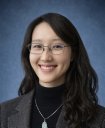
 Jiaqi Li
· 4 previous affiliations
- Rice UniversitySince 2026
- Assistant Professor · Since 2026
- University of Chicago2022–2026
- Instructor · 2024–2026
- Visiting Student · 2022–2024
- Washington University in St. Louis2019–2024
- PhD student · 2019–2024
- Soochow University2015–2019
- Bachelor of Science - BS, Mathematics · 2015–2019
14 other authors named Jiaqi Li: Jiaqi Li (China Mobile Research Institute · 30 papers), Jiaqi Li (Beijing Institute for General Artificial Intelligence · 17 papers), Jiaqi Li (Southeast University · 13 papers), Jiaqi Li (Chinese University of Hong Kong · Shenzhen Research Institute of Big Data · 10 papers), Jiaqi Li (Tencent (China) · 7 papers), and 9 more
Research Overview
Jiaqi Li focuses on the mathematical foundations of machine learning, high-dimensional statistics, and time series analysis. Their research establishes rigorous asymptotic theories and probabilistic guarantees for stochastic optimization algorithms, enabling reliable uncertainty quantification in large-scale training. Recent work investigates the robustness of predictive models and the statistical properties of constant learning-rate stochastic gradient descent.
Research Trajectory
The trajectory begins with a focus on providing rigorous mathematical guarantees for non-convex optimization and stochastic gradient descent (SGD). In 2024, Li introduced Prob-SARAH in the paper Probabilistic Guarantees of Stochastic Recursive Gradient in Non-convex Finite Sum Problems. This work advanced the theoretical understanding of non-convex optimization by establishing high-probability bounds on the gradient norm of the solution, moving beyond standard guarantees that only hold in expectation. In parallel, Li investigated the asymptotic behavior of regularized models in Asymptotics of Stochastic Gradient Descent with Dropout Regularization in Linear Models. By proving a property termed geometric moment contraction, this research demonstrated that the iterates of dropout-regularized SGD converge to a predictable normal distribution, facilitating real-time confidence intervals and contributing to the broader research area of Basins of Attraction in Nonconvex Optimization.
In 2025, this theoretical foundation was expanded to high-dimensional regimes and diverse learning rate schedules. A central contribution is Statistical Guarantees for High-Dimensional Stochastic Gradient Descent, which bridged high-dimensional time series analysis and online learning. By framing SGD as a nonlinear autoregressive process, this work established geometric-moment contraction for constant learning rates and derived sharp high-probability concentration bounds. Further refining the distributional properties of these algorithms, Li collaborated on Gaussian Approximation and Concentration of Constant Learning-Rate Stochastic Gradient Descent. This research provided a quenched central limit theorem and the first Berry-Esseen bound for constant learning-rate SGD, alongside non-asymptotic large-deviation guarantees via Nagaev-type inequalities.
The application of these asymptotic frameworks to specific loss functions was explored in Online Inference for Quantiles by Constant Learning-Rate Stochastic Gradient Descent. This paper proved that the last iterate of constant learning-rate SGD for quantile loss follows a central limit theorem, allowing for efficient uncertainty quantification in streaming datasets without the need for decaying learning rates. Concurrently, Li participated in research examining alternative optimization schedules in Asymptotic theory of SGD with a general learning-rate. This work provided convergence characterizations for cyclical learning rates and linear decay schemes, contributing to the research direction of Two-Phase and Budget-Aware Learning Rate Schedules.
Beyond core optimization theory, the trajectory also encompasses the robustness and safety of machine learning systems in applied domains. In the context of time series forecasting, Li contributed to Fre-CW: Targeted Attack on Time Series Forecasting using Frequency Domain Loss. This research adapted adversarial attack methodologies to predictive models by optimizing both time-domain and frequency-domain losses, intersecting with the areas of Adversarial Robustness of Continuous Regression Models and Deep Learning for Irregularly Sampled Time Series. Additionally, Li engaged with system-level safety evaluations in Towards Benchmarking and Assessing the Safety and Robustness of Autonomous Driving on Safety-critical Scenarios. This work formalized definitions for edge cases and developed a testing platform to evaluate perception modules and overall system robustness, advancing the research direction of Generating Safety Critical Scenarios for Autonomous Driving.
Current Directions
The most recent papers in the evidence indicate a continued focus on the intersection of time series methodology and the statistical foundations of machine learning. Current work emphasizes deriving exact asymptotic distributions, central limit theorems, and non-asymptotic concentration bounds for stochastic gradient descent in high-dimensional and streaming contexts. A parallel theme involves assessing the adversarial vulnerabilities of complex predictive models, particularly by leveraging frequency-domain characteristics to understand the failure modes of time series forecasting architectures.
Profile updated
Loading new papers…
Other researchers whose papers cluster into the same research directions — a proxy for overlapping technical interests and shared intellectual neighborhoods.
See something wrong? Report a mistake