

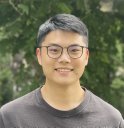
 Jiahao Xu
· 4 previous affiliations
- Oak Ridge National LaboratorySince 2025
- Intern · Since 2025
- University of Nevada, RenoSince 2023
- PhD student · Since 2023
- Current
- Hong Kong Polytechnic University2021–2023
- Researcher · 2023
- MS student · 2021–2023
- Fujian Normal University2017–2021
- Undergrad student · 2017–2021
1 other author named Jiahao Xu: Jiahao Xu (Tencent (China) · 76 papers)
Research Overview
Jiahao Xu focuses on federated learning, parameter-efficient fine-tuning, and the security of large-scale machine learning models. His work addresses the challenges of training foundation models across heterogeneous devices while maintaining robust privacy guarantees and defending against adversarial attacks. Recently, he has concentrated on model watermarking and Byzantine-resilient aggregation techniques.
Research Trajectory
Xu’s early research explored data-efficient training methodologies for generative models. In 2023, he collaborated on Re-GAN: Data-Efficient GANs Training via Architectural Reconfiguration, a project that dynamically reconfigured Generative Adversarial Network architectures during training to identify sparse sub-networks, thereby reducing the data requirements for high-fidelity image generation.
Following this work, his focus shifted toward the intersection of distributed systems and foundation models, specifically addressing the resource constraints inherent in edge learning. He co-developed Fed-piLot: Optimizing LoRA Assignment for Efficient Federated Foundation Model Fine-Tuning, a framework designed to manage clients with heterogeneous GPU memory capacities. This research contributed to the broader area of Adaptive Rank Allocation for Low Rank Adaptation and advanced techniques in the direction of Selective Parameter Updating via Hybrid Importance Metrics by optimizing local Low-Rank Adaptation (LoRA) assignments across federated networks.
By 2025, Xu’s research agenda expanded significantly into the security and privacy of federated learning systems. He introduced novel defense mechanisms against adversarial threats, such as Detecting Backdoor Attacks in Federated Learning via Direction Alignment Inspection. This method inspects the alignment of local model updates to filter out malicious contributions, addressing vulnerabilities often exploited in the research direction of Stealthy Model Poisoning within Natural Gradient Variance. Concurrently, he developed Achieving Byzantine-Resilient Federated Learning via Layer-Adaptive Sparsified Model Aggregation, which combines pre-aggregation sparsification with layer-wise adaptive aggregation to maintain model robustness in non-IID settings under Byzantine attacks.
In parallel with his security research, Xu addressed the theoretical and practical challenges of privacy-preserving distributed training. He authored Optimal Client Sampling in Federated Learning with Client-Level Heterogeneous Differential Privacy, which tackles the utility degradation that occurs when federated networks must enforce uniform privacy standards across clients with varying requirements. This work advanced the area of Heterogeneous Differential Privacy and contributed to methods for Reducing Differential Privacy Noise via Model Sparsification.
Beyond federated learning, Xu has also investigated the provenance and security of generative text models. He designed Majority Bit-Aware Watermarking For Large Language Models, proposing a multi-bit watermarking scheme that balances text quality with decoding accuracy. This research engages with the fundamental trade-offs explored in the area of Watermarking Low Entropy Generative Text.
In his most recent work, Xu has continued to synthesize his interests in parameter-efficient fine-tuning, distributed systems, and model security. He guided research on Heterogeneous Federated Fine-Tuning with Parallel One-Rank Adaptation (Fed-PLoRA), a framework that decomposes standard LoRA into parallel one-rank modules to accommodate devices with vastly different hardware capabilities. Additionally, he proposed Traceable Black-Box Watermarks For Federated Learning, addressing the critical issue of model leakage by enabling the tracing of illegally distributed global models back to malicious clients. Throughout this recent period, Xu has been affiliated with Qinghai New Energy.
Current Directions
The most recent papers in the evidence indicate a dual focus on optimizing federated fine-tuning for heterogeneous hardware and securing distributed models against intellectual property theft. Xu is currently investigating highly granular parameter-efficient fine-tuning techniques, specifically decomposing adaptation matrices into parallel one-rank modules to seamlessly integrate clients with disparate computational resources. Alongside this architectural optimization, his recent work addresses the security vulnerabilities inherent in broadcasting global models to untrusted clients. By developing traceable black-box watermarking protocols specifically tailored for federated environments, he aims to mitigate model leakage and ensure the provenance of collaboratively trained foundation models.
Profile updated
Loading new papers…
Other researchers whose papers cluster into the same research directions — a proxy for overlapping technical interests and shared intellectual neighborhoods.
See something wrong? Report a mistake