

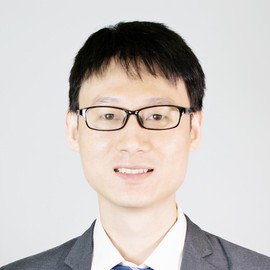
 Feng Lin
· 4 previous affiliations
- Zhejiang UniversitySince 2018
- Full Professor · Since 2018
- University of Colorado Denver2017–2018
- Assistant Professor · 2017–2018
- Researcher · 2015–2017
- Tennessee Technological University2010–2015
- PhD student · 2010–2015
2 other authors named Feng Lin: Feng Lin (intellifusion · 7 papers), Feng Lin (University of Chinese Academy of Sciences · Zhejiang Lab · Zhejiang University · 2 papers)
Research Overview
Feng Lin focuses on the security and privacy of cyber-physical systems, biometric authentication, and the optimization of large-scale distributed learning architectures. Lin’s work spans a broad spectrum of security challenges, ranging from hardware-level side-channel attacks and pervasive sensing vulnerabilities to the robustness of autonomous vehicle perception and the efficiency of modern transformer-based models. By integrating signal processing, machine learning, and systems security, Lin addresses the vulnerabilities inherent in the intersection of physical environments and digital authentication frameworks.
Research Trajectory
The earliest phase of Lin’s research, documented around 2008, centered on computational linguistics and the structural constraints of unsupervised learning. This work addressed Higher-Order Structural Context for Dependency Parsing, challenging the limitations of "arc-factored" models that evaluated syntactic relationships in isolation. During this period, Lin also explored the The Length Bottleneck in Unsupervised Grammar Induction, investigating how sentence length affects a model's ability to reverse-engineer grammar from raw text without human supervision.
In 2016, Lin’s focus shifted toward the security of additive manufacturing and hardware side-channels. As a primary contributor to the study My Smartphone Knows What You Print: Exploring Smartphone-based Side-channel Attacks Against 3D Printers, Lin investigated how the rich sensor suites in modern mobile devices could be exploited to intercept intellectual property. This research demonstrated that acoustic and motion signals from a smartphone placed near a 3D printer could be used to reconstruct the geometry of the object being fabricated, revealing a significant vulnerability in intellectual property protection for sensitive manufacturing.
By the early 2020s, Lin’s research program expanded into pervasive sensing and the vulnerabilities of biometric authentication systems. This period was characterized by an interest in Non-Convex Landscapes in Distributed and Robust Learning, applying optimization theory to the challenges of training robust models in decentralized environments. Lin participated in the development of novel sensing modalities, such as Wavesdropper: Through-wall Word Detection of Human Speech via Commercial mmWave Devices, which utilized millimeter-wave probes to detect throat vibrations through physical obstructions. This work highlighted the potential for commercial off-the-shelf (COTS) devices to compromise privacy in supposedly soundproof environments.
Concurrent with these sensing studies, Lin addressed the security of fingerprint and facial recognition. This included investigating spoofing attacks that do not require prior knowledge of the victim's biometrics, as well as developing countermeasures against 3D mask attacks in facial recognition. The research also touched upon voice privacy, proposing adversarial methods to de-identify voice data while maintaining audibility for human listeners, thereby balancing privacy and utility in voice-activated services.
In the most recent phase of work (2023–2025), Lin has pivoted toward the security of autonomous systems and the infrastructure of Large Language Models (LLMs). A significant contribution in this area is the lead-authored work on PhaDe: Practical Phantom Spoofing Attack Detection for Autonomous Vehicles, which addresses the threat of "phantom" objects generated by projectors or monitors to deceive vehicle perception modules. Furthermore, Lin’s recent interests include the scalability of AI systems, specifically Decentralized Architectures for Scalable Distributed Learning and Mitigating Weight-Switching Latency in Multi-Tenant Inference. This work seeks to resolve the I/O and computational bottlenecks that occur when multiple models or users share GPU resources.
Current Directions
Lin’s current research is increasingly focused on the efficiency and robustness of long-context AI models. This includes addressing the "imbalance tax" in transformer architectures through Load Balancing for Long Context Transformers. As context windows expand into the millions of tokens, the asymmetric nature of self-attention mechanisms creates significant computational disparities across worker nodes; Lin’s work explores methods to redistribute this load to maintain training efficiency.
Additionally, Lin continues to work on the integrity of digital media, specifically the detection and assessment of deepfakes. This involves moving beyond simple classification to create comprehensive evaluation platforms that test for generalization across different forgery algorithms, robustness to image distortion, and resilience against adversarial attacks.
Representative Work
PhaDe: Practical Phantom Spoofing Attack Detection for Autonomous Vehicles As the lead author, Lin developed a detection system for phantom spoofing attacks, where electronic displays are used to create deceptive objects that mislead autonomous vehicle cameras. The research identifies a gap in existing countermeasures, which often focus on a single device type or lack effective fusion mechanisms. PhaDe introduces a multi-modal approach to identify these artificial objects across various display technologies, enhancing the reliability of perception modules in real-world driving scenarios.
My Smartphone Knows What You Print: Exploring Smartphone-based Side-channel Attacks Against 3D Printers In this second-author paper, Lin explored the security implications of smartphone sensors in the context of additive manufacturing. The study formulates the problem of hacking 3D printer intellectual property through side-channel signals. By analyzing the acoustic and magnetic emissions captured by a nearby smartphone, the research demonstrates that it is possible to reconstruct the G-code or the physical structure of the printed object, highlighting a pervasive surveillance risk in industrial and personal 3D printing.
Wavesdropper: Through-wall Word Detection of Human Speech via Commercial mmWave Devices Serving as the second author, Lin contributed to the development of a through-wall eavesdropping system. The system uses commercial mmWave devices to sense the minute vibrations of a speaker's throat. To overcome the challenges of environmental noise and human movement, the work proposes a signal processing pipeline based on Complementary Ensemble Empirical Mode Decomposition (CEEMD) and wavelet-based extraction. This allows for the recovery of speech content even when the speaker is in a soundproofed room.
FingerFaker: Spoofing Attack on COTS Fingerprint Recognition Without Victim's Knowledge In this work, Lin participated in the design of a novel fingerprint spoofing attack that operates without prior access to the target's actual fingerprint data. The research introduces the concept of a "pseudo-minutiae-set" as an optimization target to bypass automated fingerprint recognition systems (AFRSs). This contribution demonstrates that the security of commercial off-the-shelf fingerprint sensors can be compromised through systematic optimization rather than physical theft of biometric templates.
A Comprehensive Deepfake Detector Assessment Platform Lin contributed to the development of the Deepfake Detector Assessment Platform (DAP), a framework designed to standardize the evaluation of deepfake detection algorithms. The platform assesses models across six dimensions, including forgery localization accuracy, attribute bias, and adversarial resilience. This work addresses the tendency of current detectors to overfit to specific training datasets, providing a more rigorous benchmark for the generalizability of media integrity tools.
Locate and Verify: A Two-Stream Network for Improved Deepfake Detection As part of a collaborative effort, Lin worked on a two-stream network architecture intended to improve the detection of forged media. The approach addresses the limitation of existing methods that often focus on a few dominant forgery regions while ignoring other cues. By enlarging the potential regions for evidence extraction and reducing overfitting to background content, the network improves the detection of subtle forgery cues that are often missed by standard convolutional neural networks.
Profile updated
Loading new papers…
Other researchers whose papers cluster into the same research directions — a proxy for overlapping technical interests and shared intellectual neighborhoods.
See something wrong? Report a mistake