

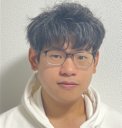
 Jiafeng Mao
· 3 previous affiliations
- CyberAgent (Japan)Since 2024
- Researcher · Since 2024
- Current
- The University of Tokyo2019–2024
- PhD student · 2021–2024
- MS student · 2019–2021
- Undergrad student · 2013–2017
Research Overview
Jiafeng Mao focuses on controllable image generation, visual understanding, and the optimization of generative models for precise semantic control. His trajectory spans early work in few-shot learning and object detection to advanced techniques in training-free diffusion guidance and synthetic data utilization. Recently, he investigates specialized generative applications such as manga line art colorization and the strategic synthesis of training data.
Research Trajectory
Jiafeng Mao's early research addressed structural prediction and robust learning across different domains. In natural language processing, he contributed to FewJoint: A Few-shot Learning Benchmark for Joint Language Understanding, a benchmark designed to evaluate how models handle multi-task dependencies and structural prediction with minimal data across numerous industrial domains. Transitioning to computer vision, his work explored object detection under imperfect data conditions, addressing label noise in Noisy Annotation Refinement for Object Detection.
By 2023, his focus expanded to the generative mechanisms of diffusion models and the challenges of spatial control. He investigated the area of Object Localization with Internal Diffusion Attention Maps through Training-Free Location-Aware Text-to-Image Synthesis, proposing an interactive paradigm that allows users to specify the position of generated objects without additional training. Concurrently, he explored the generation tendencies of initial noise in Semantic-Driven Initial Image Construction for Guided Image Synthesis in Diffusion Model and Guided Image Synthesis via Initial Image Editing in Diffusion Model. These studies analyzed how manipulating initial noise can guide layout-to-image generation and repainting, contributing to the broader direction of Manifold Alignment for High Fidelity Latent Inversion. Alongside these generative advancements, he continued to refine object detection methodologies, developing techniques for handling incomplete data in Noise-Avoidance Sampling for Annotation Missing Object Detection.
In 2024, his research deepened into training-free generation and latent optimization. He developed Training-Free Sketch-Guided Diffusion with Latent Optimization, a pipeline that aligns internal cross-attention maps to reference sketches for photorealistic synthesis, advancing the research direction of Aligning Sparse Sketches with Dense Photographic Images. He also formalized his earlier observations on noise initialization in The Lottery Ticket Hypothesis in Denoising: Towards Semantic-Driven Initialization. This work demonstrated that specific pixel blocks in random Gaussian noise act as "winning tickets" predisposed to forming certain objects, enabling semantic-driven initialization for layout control. Addressing the lifecycle of generative models, he introduced distillation techniques for the areas of Multi-Preference Alignment for Generative Models and Continual Learning for Generative Models in Reward Incremental Learning in Text-to-Image Generation, which fine-tunes models on evolving objectives without catastrophic forgetting. Additionally, he investigated the intersection of generative AI and traditional learning paradigms, analyzing the impact of synthetic images on semi-supervised learning in From Obstacle to Opportunity: Enhancing Semi-supervised Learning with Synthetic Data.
Most recently, his work has expanded into specialized visual domains and the strategic generation of training data. He developed Transformer-based frameworks for manga processing, including Region-Wise Correspondence Prediction between Manga Line Art Images for semantic region matching across frames, and MangaDiT: Reference-Guided Line Art Colorization with Hierarchical Attention in Diffusion Transformers for consistent colorization. He also advanced latent optimization techniques for rectified flow models in LORE: Latent Optimization for Precise Semantic Control in Rectified Flow-based Image Editing, addressing semantic bias to enable precise object replacement. Furthermore, he contributed to the research direction of Dataset Distillation for Efficient Model Training through Task-Specific Generative Dataset Distillation with Difficulty-Guided Sampling. Building on this theme, he introduced methods to target model weaknesses by synthesizing high-value training samples in Difficulty Controlled Diffusion Model for Synthesizing Effective Training Data.
Current Directions
Recent work investigates specialized applications of generative models and the strategic synthesis of training data. The most recent papers in the evidence address the automation of manga production, utilizing diffusion transformers and hierarchical attention for reference-guided line art colorization, as well as region-wise correspondence prediction. Alongside domain-specific generation, current efforts focus on refining synthetic data for downstream model training, exploring difficulty-controlled diffusion models and dataset distillation techniques to generate high-value training samples that target model weaknesses. Additionally, ongoing research addresses precise semantic control in rectified flow-based image editing through latent optimization.
Profile updated
Loading new papers…
Other researchers whose papers cluster into the same research directions — a proxy for overlapping technical interests and shared intellectual neighborhoods.
See something wrong? Report a mistake