

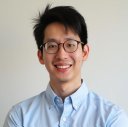
 Jerry Yao-Chieh Hu
· 1 previous affiliation
- Northwestern UniversityCurrent
- PhD student · Current
Research Overview
Jerry Yao-Chieh Hu focuses on the theoretical foundations and principled methodologies of large foundation models, encompassing both large language models and generative AI. His trajectory spans the mathematical analysis of modern Hopfield networks, the statistical limits of diffusion transformers, and the mechanics of in-context learning. Currently, he investigates the universal approximation capabilities and algorithmic emulation power of attention mechanisms.
Research Trajectory
Hu’s research trajectory is anchored in the theoretical mechanics of associative memory and its relationship to modern deep learning architectures. In 2023, he formalized a theoretically grounded extension of associative memory in On Sparse Modern Hopfield Model. By replacing dense retrieval with sparsemax-style dynamics, this work demonstrated tighter retrieval error bounds and greater robustness to noise, contributing to the research direction of Sparse Retrieval Dynamics in Modern Hopfield Models. Alongside his core focus on machine learning theory, he has also engaged in interdisciplinary applications, collaborating with physicists to develop edge AI models for particle accelerators in Disentangling Beam Losses in The Fermilab Main Injector Enclosure Using Real-Time Edge AI.
In 2024, Hu expanded his analysis of Hopfield networks to directly address inefficiencies in large transformer models. He introduced a novel associative memory model in Outlier-Efficient Hopfield Layers for Large Transformer-Based Models, which absorbs irrelevant queries to reduce activation outliers, advancing the area of Overcoming the Softmax Summation Constraint in Transformers. Concurrently, he investigated the fundamental scaling barriers of these architectures. In On Computational Limits of Modern Hopfield Models: A Fine-Grained Complexity Analysis, he identified a norm-based phase transition governing the feasibility of sub-quadratic retrieval. He further bridged associative memory and information theory in Provably Optimal Memory Capacity for Modern Hopfield Models: Transformer-Compatible Dense Associative Memories as Spherical Codes, treating stored memories as spherical codes to establish optimal exponential memory capacity.
During this period, Hu also began analyzing the theoretical properties of generative AI architectures. In On Statistical Rates and Provably Efficient Criteria of Latent Diffusion Transformers (DiTs), he provided a rigorous framework showing that DiTs can bypass the curse of dimensionality by focusing on latent structures, situating this work within the broader area of Overcoming the Linear Subspace Assumption.
Moving into 2025, Hu continued to address the computational bottlenecks of foundation models. He tackled the quadratic scaling wall of associative memory in Nonparametric Modern Hopfield Models. To improve representation learning efficiency, he developed a drop-in replacement for standard linear layers in NdLinear Is All You Need for Representation Learning, which processes multi-dimensional tensors natively to achieve significant parameter reductions. Returning to generative models, he established tight approximation and estimation rates in On Statistical Rates of Conditional Diffusion Transformers: Approximation, Estimation and Minimax Optimality, proving that these architectures can achieve statistical efficiency and contributing to the field of Minimax Optimality in Deep Generative Modeling.
Hu’s 2025 research also marked a distinct shift toward understanding the mechanics of prompting and in-context learning. In Fundamental Limits of Prompt Tuning Transformers: Universality, Capacity and Efficiency, he proved that prompt tuning on a minimal transformer acts as a universal approximator for sequence-to-sequence functions, exploring the research direction of Universal Approximation through Token Distinguishability in Transformers.
By 2026, this focus on universality and algorithmic emulation became a central theme of his work. He demonstrated in Universal Approximation with Softmax Attention that softmax attention alone, without feed-forward networks, is sufficient for universal approximation, advancing work in the area of Universal Approximation Power of the Attention Mechanism. Building on this, he explored how models execute algorithms internally. In In-Context Universal Approximation, Compositional Generalization, and Algorithm Emulation, he showed that a single, frozen-weight transformer can approximate continuous functions simply by altering its prompt. This concept was further formalized in In-Context Algorithm Emulation in Fixed-Weight Transformers, which treats prompts as programs and attention layers as interpreters capable of executing algorithms like gradient descent on the fly. Finally, he broadened his architectural analysis in On Structured State-Space Duality, formalizing the mathematical bridge between recurrent state-space models and masked attention while highlighting the fundamental incompatibilities of standard softmax attention with this duality.
Current Directions
The most recent papers in the evidence indicate a strong focus on the theoretical limits of in-context learning and the expressive power of minimal transformer architectures. Recent work investigates how frozen-weight transformers can function as universal algorithmic engines, capable of emulating complex machine learning algorithms entirely through prompt modifications. This involves treating the attention mechanism as an interpreter that executes prompt-based subroutines without requiring weight updates. Additionally, current research addresses the mathematical duality between state-space models and attention mechanisms, seeking to understand how different sequence modeling architectures relate to one another and where their representational capacities diverge.
Profile updated
Loading new papers…
Other researchers whose papers cluster into the same research directions — a proxy for overlapping technical interests and shared intellectual neighborhoods.
See something wrong? Report a mistake