

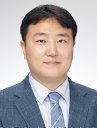
 Jaesung Lee
· 1 previous affiliation
- ChungAng UniversitySince 2001
- Associate Professor · Since 2021
- Assistant Professor · 2017–2021
- Research Professor · 2013–2017
- PhD student · 2009–2013
- MS student · 2007–2009
- Undergrad student · 2001–2007
1 other author named Jaesung Lee: Jaesung Lee (National Institute for Japanese Language and Linguistics · The Graduate University for Advanced Studies, SOKENDAI · 1 paper)
Research Overview
Jaesung Lee focuses on automated machine learning, medical image analysis, and environmental monitoring systems. His research spans theoretical foundations in mathematical analysis to applied deep learning frameworks that reduce human intervention in complex domains. Currently, he develops scalable architectures for clinical diagnostics, human activity recognition, and climate-related predictive modeling.
Research Trajectory
Lee’s early research focused on complex analysis and harmonic analysis, specifically investigating the behavior of mathematical operators in weighted spaces. His foundational work includes Weighted Norm Inequalities for Pluriharmonic Conjugate Functions (2002). He subsequently expanded on this by examining the conjugate operator in two-weighted Lebesgue spaces in Norm inequalities for the conjugate operator in two-weighted Lebesgue spaces (2011). This theoretical foundation contributed to broader research areas such as Weighted Norm Inequalities for Multilinear and Martingale Operators and the direction of Nonisotropic Metrics and Lyapunov Functionals for Strong Convergence. He continued to explore these mathematical structures in later work, including Iterates of weighted Berezin transform under invariant measure in the unit ball (2020).
In the early 2020s, Lee's focus shifted toward the application of automated machine learning in clinical settings, particularly in ophthalmology and radiology. With collaborators, he participated in the development of a multi-pipeline neural network to assess thyroid-associated orbitopathy (TAO) activity from orbital CT scans in Neural network application for assessing thyroid-associated orbitopathy activity using orbital computed tomography (2023). This work advanced the broader area of Mitigating Inter-Observer Variability in Medical Diagnostics. Building on this, he led the development of an automated pipeline for measuring proptosis (bulging eyes) from CT scans, combining deep learning segmentation with geometric rotation to align orbital bones in Neural network-based automated proptosis measurement using computed tomography images for patients with thyroid-associated orbitopathy (2024).
Throughout 2024, Lee directed several projects aimed at refining medical image segmentation and diagnosis. He oversaw the design of specialized architectures for TAO, including Multihead Neural Network for Multiple Segmented Images-based Diagnosis of Thyroid-associated Orbitopathy Activity and a treatment decision framework detailed in Neural Network-based Pipeline with High-Resolution Feature Enhancement and Low-Resolution Feature Preservation for Automated Treatment Decision of Graves' Orbitopathy Patients. His research group also addressed challenges in quantifying irregular anatomical structures, developing a novel geometric estimation method for ocular changes in Automated eyeball volume measurement based on CT images using neural network-based segmentation and simple estimation, which contributed to the research direction of Delineating Ambiguous Boundaries in Low-Contrast Images. Additionally, he guided research on Effective encoder-decoder network for pupil light reflex segmentation in facial photographs of ptosis patients, focusing on extracting features from very small regions of interest.
Beyond medical imaging, Lee's research encompasses efficient neural architectures for human-centric data. He developed CALANet: Cheap All-Layer Aggregation for Human Activity Recognition (2024), a novel network that aggregates features across all layers using computationally inexpensive transformation matrices, enabling high-accuracy activity recognition on resource-constrained wearable devices.
Most recently, Lee has applied machine learning to environmental monitoring, climate modeling, and fundamental data science. In 2025, he introduced the Advanced Torrential Loss Function for Precipitation Forecasting, which reinterprets rainfall prediction as a quadratic binary optimization problem to improve performance during extreme weather events. He also led the development of DeepFire S3GA-Net, a specialized framework for drone imagery detailed in Automated forest fire detection in ecological monitoring using enhanced deep learning networks. His methodological contributions include a critical reassessment of feature selection techniques in On Evaluation of Unsupervised Feature Selection for Pattern Classification (2025), arguing for the necessity of multi-label evaluation frameworks. In a cross-disciplinary study, he investigated statistical models of neural activity in Place-cell heterogeneity underlies power-laws in hippocampal activity (2025), demonstrating that apparent scale-invariant dynamics can emerge from simple spatial heterogeneity among independent neurons. His ongoing work in ecological applications is further reflected in A survey of neural network segmentation and validation on plant specimen images of Korean Violaceae (2026).
Current Directions
The most recent papers in the evidence indicate a strong focus on applying automated machine learning to climate and ecological monitoring, alongside foundational improvements in multi-label data evaluation. Recent work investigates specialized loss functions for extreme weather forecasting and efficient, real-time segmentation architectures for UAV-based environmental surveillance, such as forest fire detection. Additionally, his research addresses the statistical interpretation of complex biological systems, exploring how spatial heterogeneity influences observed neural dynamics. Across these domains, a unifying theme is the design of robust, scalable models capable of handling complex, real-world data with minimal human intervention.
Profile updated
Loading new papers…
Other researchers whose papers cluster into the same research directions — a proxy for overlapping technical interests and shared intellectual neighborhoods.
See something wrong? Report a mistake