

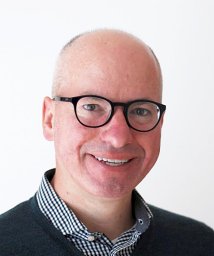
 Gregory Slabaugh
· 8 previous affiliations
- Queen Mary University of LondonSince 2020
- Professor, and Director of the Digital Environment Research Institute (DERI) · Since 2020
- Chief Scientist in Computer Vision (Europe) · 2017–2020
- Huawei Technologies (China)2017–2020
- Chief Scientist (Computer Vision) · 2017–2020
- City University2012–2017
- Associate Professor · 2012–2017
- Associate Professor (Senior Lecturer) in Computer Science · 2012–2017
- Medicsight2008–2011
- Researcher · 2008–2011
- Siemens Healthcare (United States)2003–2008
- Project Manager, Research Scientist · 2003–2008
- Georgia Institute of Technology1996–2002
- PhD, Electrical Engineering · 1998–2002
- MS, Electrical Engineering · 1996–1998
Research Overview
Gregory Slabaugh focuses on computer vision, medical image analysis, and computational photography. His early work established methods in volumetric scene reconstruction before expanding into deep learning approaches for image restoration and enhancement. More recently, his research addresses multimodal medical imaging, parameter-efficient architectures, and the mechanistic understanding of foundation models.
Research Trajectory
Gregory Slabaugh's early research focused on 3D computer vision and image-based rendering. He guided the development of algorithms for synthesizing new views from scattered images, notably in Generalized Voxel Coloring, which extended voxel coloring techniques to accommodate arbitrary camera locations. He subsequently advanced these volumetric reconstruction techniques in Methods for Volumetric Reconstruction of Visual Scenes, introducing robust visibility and photo-consistency computations to model infinitely large scenes and generate photo-realistic renderings.
Transitioning into deep learning for computational photography and image enhancement, his work addressed complex real-world degradations. He contributed significantly to the research direction of Removing Moiré Interference from Screen Photography. This included participation in Image Demoireing with Learnable Bandpass Filters, which utilized frequency filters for texture and color correction. He later directed the development of a multi-scale bandpass convolutional neural network in Learning Frequency Domain Priors for Image Demoireing. In the broader domain of image enhancement, he oversaw the creation of DeepLPF: Deep Local Parametric Filters for Image Enhancement, a model designed to automate the highly expressive local adjustments typically performed manually by digital artists. Concurrently, he collaborated on Reconstructing the Noise Variance Manifold for Image Denoising, which explored conditional generative adversarial networks for object-independent denoising.
As his research expanded into machine learning stability and sequential processing, he explored methods to prevent catastrophic forgetting and error accumulation. He participated in a comprehensive empirical evaluation of task-incremental classification in A Continual Learning Survey: Defying Forgetting in Classification Tasks, which is highly relevant to the area of Modular Parameter Isolation for Continual Learning. Addressing temporal models, he guided Diagnosing and Preventing Instabilities in Recurrent Video Processing, introducing diagnostic tools and spectral norm constraints to stabilize recurrent networks during long video sequences. He also introduced parameter-efficient techniques to reinforcement learning in ADAPTER-RL: Adaptation of Any Agent using Reinforcement Learning, adapting natural language processing concepts to improve the flexibility of deep reinforcement learning agents.
A major theme in his recent trajectory is multimodal medical image analysis and clinical diagnostics. He directed the integration of histological and genetic data in MOAB: Multi-Modal Outer Arithmetic Block for Fusion of Histopathological Images and Genetic Data for Brain Tumor Grading. Continuing this focus on clinical contextualization, he oversaw Compositional Segmentation of Cardiac Images Leveraging Metadata, which utilizes a cross-modal feature integration module to incorporate patient metadata into the segmentation pipeline. In computational pathology, he guided BioX-CPath: Biologically-driven Explainable Diagnostics for Multistain IHC Computational Pathology, developing a graph neural network architecture that provides biologically interpretable insights for autoimmune disease classification. He also explored parameter-efficient architectures for specialized medical tasks, overseeing CAMS: Convolution and Attention-Free Mamba-based Cardiac Image Segmentation, which relies entirely on Mamba blocks to reduce computational complexity while maintaining high performance.
In parallel, his work has increasingly engaged with vision-language models, transformers, and the mechanistic properties of foundation models. He guided the development of RAVE: Residual Vector Embedding for CLIP-Guided Backlit Image Enhancement, leveraging CLIP embeddings to improve unpaired image restoration. He also authored Graph neural networks in vision-language image understanding: a survey, analyzing how relational inductive biases improve spatial reasoning in vision-language tasks. His collaborative work on transformer architectures includes Improving Dynamic HDR Imaging with Fusion Transformer, which addresses ghosting artifacts in high dynamic range reconstruction. Investigating the control and interpretability of generative AI, he participated in MidSteer: Optimal Affine Framework for Steering Generative Models, which established mathematical frameworks for concept manipulation. Most recently, he directed CLAMP: A Mechanistic Probe of Regulatory Structure in Foundation Models under Single-Cell Perturbations, evaluating whether single-cell foundation models accurately capture underlying gene regulatory relationships.
Current Directions
The most recent papers in the evidence address the intersection of foundation models, generative AI, and advanced medical image analysis. In the medical domain, recent work investigates parameter-efficient architectures—such as convolution- and attention-free Mamba networks—for cardiac image segmentation, as well as biologically-driven explainable diagnostics for computational pathology. Concurrently, research in generative and foundation models focuses on mechanistic understanding and control. This includes developing optimal affine frameworks for steering generative models and designing probes to evaluate whether single-cell foundation models accurately capture underlying regulatory structures rather than simply collapsing gene-to-gene relationships.
Profile updated
| Title | Venue | Year |
|---|---|---|
| EquiSteer: Cross-Attention Steering Towards a Fairer Text-Guided Image Generation | arXiv | 2026 |
| MidSteer: Optimal Affine Framework for Steering Generative Models | ICML | 2026 |
| Low-complexity pedestrian intent prediction using contextual stacked ensemble learning | Research Square | 2026 |
| CLAMP: A Mechanistic Probe of Regulatory Structure in Foundation Models under Single-Cell Perturbations | GenBio @ ICML | 2026 |
| A network-based atlas of human skeletal muscle aging | Openalex | 2026 |
| Optimal Affine Framework for Steering Generative ModelsGitHub resource | Openreview | 2026 |
| Improving Dynamic HDR Imaging with Fusion Transformer | Association for the Advancement of Artificial Intelligence | 2026 |
| ProtoPathway: Biologically Structured Prototype-Pathway Fusion for Multimodal Cancer Survival Prediction | arXiv | 2026 |
| CASteer: Cross-Attention Steering for Controllable Concept ErasureGitHub resource | ICLR | 2026 |
| Safe Intelligent Vehicles: Intent Is What We Need | IEEE Intelligent Transportation Systems Magazine | 2026 |
Loading new papers…
Other researchers whose papers cluster into the same research directions — a proxy for overlapping technical interests and shared intellectual neighborhoods.
See something wrong? Report a mistake