

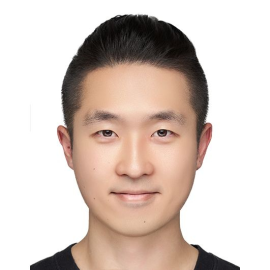
 Jaemin Cho
· 5 previous affiliations
- Young Investigator · Since 2025
- Predoctoral Young Investigator · 2019–2020
- Johns Hopkins UniversitySince 2026
- Assistant Professor · Since 2026
- PhD student · 2020–2025
- Naver (South Korea)2018–2019
- AI Resident · 2018–2019
- Seoul National University2011–2018
- Undergrad student · 2011–2018
1 other author named Jaemin Cho: Jaemin Cho (Korea Advanced Institute of Science and Technology · 1 paper)
Research Overview
Jaemin Cho focuses on multimodal representation learning, vision-and-language reasoning, and controllable image generation. His trajectory spans from unifying visual perception tasks via text generation to developing parameter-efficient adapters and rigorous evaluation frameworks for generative models. Recently, his work investigates spatial logic, layout-guided diffusion, and efficient control mechanisms for video and embodied agents.
Research Trajectory
Cho's early research established foundational methods for unifying and optimizing vision-and-language (V&L) architectures. In 2021, he introduced Unifying Vision-and-Language Tasks via Text Generation, presenting the VL-T5 and VL-BART frameworks. By converting image regions into visual sentinel tokens, this work framed diverse V&L challenges—from visual question answering to image grounding—as a single text generation problem. This approach advanced the broader area of End-to-End Optimization for Multimodal Representation Learning, demonstrating that a standard encoder-decoder architecture could match task-specific models while generalizing better to open-ended answers. Recognizing the growing computational burden of these large pre-trained models, he subsequently developed VL-ADAPTER: Parameter-Efficient Transfer Learning for Vision-and-Language Tasks (2022). This work integrated lightweight bottleneck adapters into models like VL-BART and VL-T5, enabling efficient multi-task fine-tuning across diverse image-text and video-text benchmarks without updating the entire parameter set.
As generative AI rapidly advanced, Cho's focus expanded to the rigorous evaluation and structural control of text-to-image models. He addressed the opaque nature of these systems in Visual Programming for Step-by-Step Text-to-Image Generation and Evaluation (2023), utilizing large language models (LLMs) to decompose image generation into interpretable layout planning and skill-specific visual programs. This programmatic approach significantly improved spatial control and the reliability of automated metrics. Concurrently, he investigated the reasoning limitations of generative models in DALL-EVAL: Probing the Reasoning Skills and Social Biases of Text-to-Image Generation Models (2023). By introducing the PAINTSKILLS dataset, this research revealed that despite producing high-quality visuals, models like Stable Diffusion struggle with basic logic and inherit deep-seated social biases, contributing significantly to the research direction of Geometric Spatial Logic for Image Understanding.
In parallel with his work on generative evaluation, Cho continued to optimize multimodal architectures. With PERCEIVER-VL: Efficient Vision-and-Language Modeling with Iterative Latent Attention (2023), he adapted the Perceiver architecture to V&L tasks. By replacing standard self-attention with iterative latent cross-attention, this method reduced the complexity of processing high-dimensional data from quadratic to linear, advancing the area of Latent Mediated Attention for Scalable Set Processing while achieving state-of-the-art efficiency on major benchmarks.
In 2024, Cho deepened his investigations into spatial control and fine-grained multimodal evaluation. He proposed LayoutBench in Diagnostic Benchmark and Iterative Inpainting for Layout-Guided Image Generation, examining how models handle out-of-distribution samples with arbitrary spatial configurations. This work highlighted generalization gaps in existing methods and pushed forward the domain of Layout-Guided Diffusion for Precise Spatial Control. To further improve evaluation reliability, he developed the Davidsonian Scene Graph: Improving Reliability in Fine-grained Evaluation for Text-to-Image Generation (2024), which decomposes complex prompts into a hierarchy of atomic questions to avoid logical inconsistencies in automated scoring.
His research also explored training-free methods for improving model grounding. Contrastive Region Guidance: Improving Grounding in Vision-Language Models Without Training (2024) introduced a technique that factors out internal model biases by contrasting outputs on original versus masked images, forcing models to rely on actual visual evidence. In the realm of dense prediction, he addressed the latency bottlenecks of interactive systems in Rethinking Interactive Image Segmentation with Low Latency, High Quality, and Diverse Prompts (2024), bridging the gap between high-latency specialist models and foundation models.
Expanding multimodal capabilities to complex document understanding, Cho introduced M3DocRAG: Multi-modal Retrieval is What You Need for Multi-page Multi-document Understanding (2024). This framework replaced traditional text-only OCR pipelines with a fully multi-modal retrieval-augmented generation approach, achieving strong performance on documents reliant on charts and layouts. Additionally, he explored the intersection of LLMs and reinforcement learning, participating in the development of EnvGen: Generating and Adapting Environments via LLMs for Training Embodied Agents (2024), which dynamically synthesizes training environments for embodied agents to improve performance on long-horizon tasks.
Cho's most recent work addresses the spatial awareness of frontier models and the efficiency of video generation. In RotBench: Evaluating Multimodal Large Language Models on Identifying Image Rotation (2025), he revealed a fundamental blind spot in state-of-the-art multimodal models, demonstrating their inability to reliably distinguish between basic image rotations despite their complex reasoning capabilities. In the domain of video generation, he contributed to Ctrl-Adapter: An Efficient and Versatile Framework for Adapting Diverse Controls to Any Diffusion Model (2025), a lightweight framework that allows pretrained ControlNets to be reused with new image or video diffusion backbones, drastically reducing training costs while maintaining temporal consistency. This focus on efficiency continued with EPiC: Efficient Video Camera Control Learning with Precise Anchor-Video Guidance (2026), which achieved precise camera control by training on anchor videos created through visibility masking rather than expensive 3D rendering. Finally, his research extended into autonomous exploration, guiding work on One Life to Learn: Inferring Symbolic World Models for Stochastic Environments from Unguided Exploration (2026), where AI agents infer the underlying rules of complex, stochastic environments without external rewards.
Current Directions
The most recent papers in the evidence indicate a strong focus on the efficiency and spatial reliability of generative models, particularly in the video domain. Recent work investigates lightweight adaptation mechanisms that allow existing spatial controls to be applied to new video diffusion backbones without prohibitive retraining costs. Alongside this, Cho is actively addressing fundamental perception gaps in frontier multimodal models, developing benchmarks to probe their spatial awareness and geometric reasoning. His recent contributions also extend into embodied AI, focusing on how agents can autonomously infer symbolic world models in stochastic environments to improve long-horizon planning and exploration.
Profile updated
Loading new papers…
Other researchers whose papers cluster into the same research directions — a proxy for overlapping technical interests and shared intellectual neighborhoods.
See something wrong? Report a mistake