

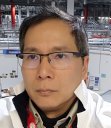
 Ivan Lee
· 2 previous affiliations
- University of South AustraliaSince 2008
- Associate Professor · Since 2008
- Toronto Metropolitan University2005–2007
- Assistant Professor · 2005–2007
2 other authors named Ivan Lee: Ivan Lee (2 papers), Ivan Lee (1 paper)
Research Overview
Ivan Lee focuses on network science, the science of science, and efficient machine learning architectures. His early trajectory spanned multimedia streaming and scholarly impact assessment before expanding into higher-order network clustering and automated knowledge discovery. His most recent work investigates scalable graph transformers, neural architecture search, and resource-constrained deep learning.
Research Trajectory
The earliest work in the provided evidence highlights an initial focus on multimedia network protocols. He introduced a centralized peer-to-peer streaming protocol utilizing layered video coding to balance perceived quality of service with decentralized traffic loads in Centralized peer-to-peer streaming with layered video.
A significant portion of his subsequent research shifted toward scientometrics, academic data mining, and the science of science. He participated in comprehensive evaluations of how academic success is measured, contributing to surveys on citation weighting solutions in Scholarly impact assessment: a survey of citation weighting solutions and the broader quantification of scientific success in Quantifying Success in Science: An Overview. During this period, his research encompassed the broader area of Weighted Citation Networks for Scholarly Impact and the research direction of Normalizing Research Impact Metrics Across Scientific Disciplines. He also explored information retrieval within academic contexts, co-authoring a comprehensive review of recommender systems for scientific papers in Scientific Paper Recommendation: A Survey, which touches upon the area of Automated Knowledge Synthesis from Scientific Literature. Furthering the development of academic data infrastructure, he collaborated on Web of Scholars: A Scholar Knowledge Graph, a system designed to mine and visualize complex networks of computer science researchers. Applying these bibliometric insights at an institutional level, he analyzed the strategic prioritization of academic disciplines using large-scale datasets in Fitness and Research Complexity Among Research-Active Universities in the World.
Building on his expertise in complex networks, his research evolved to address the structural analysis and clustering of large-scale graphs. He guided the development of a novel framework for partitioning and clustering big networks using higher-order structures in CHIEF: Clustering With Higher-Order Motifs in Big Networks. This work advanced the research direction of Higher-Order Network Motifs and Simplicial Message Passing and provided methodological insights relevant to the area of Author Name Disambiguation in Scholarly Networks. He continued to investigate these complex topologies by participating in research on coding and counting structures within heterogeneous graphs in Heterogeneous Network Motif Coding, Counting, and Profiling. Concurrently, his group focused on improving density peaks clustering (DPC) algorithms. They designed new local density calculation methods for uneven datasets in Density peaks clustering algorithm based on fuzzy and weighted shared neighbor for uneven density datasets and proposed robust multi-cluster merging techniques to extract typical user load patterns in Density peaks clustering algorithm based on multi-cluster merge and its application in the extraction of typical load patterns of users.
In recent years, his trajectory has heavily emphasized efficient machine learning architectures and their domain-specific applications, particularly under resource constraints. In the medical domain, his team applied specialized word embeddings and named entity recognition to the problem of unsupervised clinical coding in Application of specialized word embeddings and named entity and attribute recognition to the problem of unsupervised automated clinical coding. Addressing the computational limitations of deploying deep learning on mobile and edge devices, he explored neural architecture search (NAS). His group utilized multi-objective evolutionary algorithms to design efficient convolutional neural networks in Evolutionary neural architecture search based on efficient CNN models population for image classification and developed a weight-sharing supernet for saliency prediction in SalNAS: Efficient Saliency-prediction Neural Architecture Search with self-knowledge distillation. To further optimize models for compact devices, he led research on explainable knowledge distillation for multi-label chest X-ray classification in Explainable Knowledge Distillation for On-device Chest X-Ray Classification. Most recently, he contributed to the development of scalable and equitable graph machine learning models, co-authoring FairGP: A Scalable and Fair Graph Transformer Using Graph Partitioning, which mitigates algorithmic bias and reduces training times on large-scale datasets by strategically eliminating inter-cluster attention.
Current Directions
The most recent papers in the evidence address the intersection of graph machine learning, algorithmic fairness, and efficient neural architectures. Current work investigates scalable graph transformers that mitigate bias by partitioning networks to control the disproportionate influence of high-degree nodes. Additionally, ongoing research focuses on optimizing deep learning models for resource-constrained environments—such as mobile devices and point-of-care medical diagnostics—through neural architecture search, self-knowledge distillation, and advanced clustering algorithms designed for complex, uneven datasets.
Profile updated
| Paper | Venue | Year |
|---|---|---|
| Semi-PKD: Semi-supervised Pseudoknowledge Distillation for saliency predictionGitHubchakkritte/ | Ict Express | 2025 |
| SalNAS: Efficient Saliency-prediction Neural Architecture Search with self-knowledge distillationGitHubchakkritte/ | Engineering Applications of AI | 2024 |
| On-Device Saliency Prediction Based on Pseudoknowledge DistillationGitHubchakkritte/ | IEEE Trans. Industrial Informatics | 2022 |
| EEEA-Net: An Early Exit Evolutionary Neural Architecture SearchGitHubchakkritte/ | Engineering Applications of AI | 2021 |
Loading new papers…
Other researchers whose papers cluster into the same research directions — a proxy for overlapping technical interests and shared intellectual neighborhoods.
See something wrong? Report a mistake