

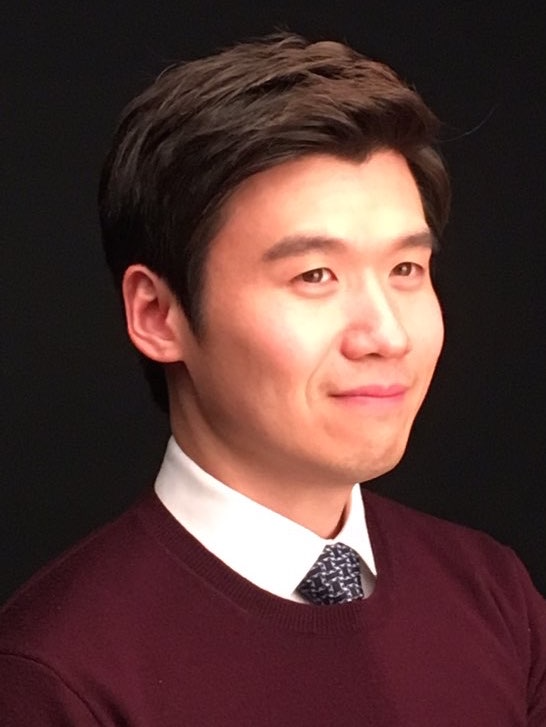
 Insoon Yang
· 4 previous affiliations
- Seoul National UniversitySince 2018
- Full Professor · Since 2025
- Associate Professor · 2020–2025
- Assistant Professor · 2018–2020
- University of Southern California2016–2018
- Assistant Professor · 2016–2018
- Postdoc · 2015–2016
- PhD student · 2009–2015
Research Overview
Insoon Yang focuses on decision-making under uncertainty, optimization for machine learning, and reinforcement learning, with primary applications in safe autonomy and physical AI. His work integrates control theory, stochastic optimization, and mathematical programming to address the computational challenges inherent in high-dimensional and safety-critical systems. By developing frameworks for distributionally robust optimization and non-Euclidean gradient methods, Yang provides theoretical foundations and tractable algorithms for autonomous agents operating in uncertain environments.
Research Trajectory
Yang’s early research was centered on the fundamental computational limits of optimal control, particularly the "curse of dimensionality" associated with the Hamilton-Jacobi-Bellman (HJB) equation. During his doctoral work, he investigated Scalable Methods for High Dimensional Stochastic Optimal Control, employing techniques such as Path Integral Control for Linearizing Optimal Control. This period was characterized by a focus on the identification of dynamic surfaces and the development of regularization methods for level set equations to ensure the differentiability of cost functions in optimization problems. He also explored the application of these control-theoretic principles to economic and organizational structures, developing concavity-preserving algorithms for designing optimal contracts in multi-layer hierarchies.
Between 2017 and 2019, Yang’s focus shifted toward robustness and risk-awareness in stochastic systems. He became a significant contributor to the field of Distributionally Robust Optimization with Probability Metric Uncertainty Sets. Recognizing that standard Markov Decision Processes (MDPs) are sensitive to modeling errors, he introduced frameworks using the Wasserstein metric to define ambiguity sets of probability distributions. This work resolved infinite-dimensionality issues in Bellman equations by applying Kantorovich convex relaxation and duality principles. Concurrently, he addressed safety in stochastic environments by incorporating Conditional Value-at-Risk (CVaR) into optimal control, providing a mathematical basis for risk-constrained safe sets. During this time, he also applied optimization techniques to infrastructure challenges, such as Piecewise Linearization for Nonlinear Combinatorial Optimization in the context of energy storage placement in power networks.
In recent years, Yang has increasingly focused on the intersection of control theory and the geometric properties of optimization. This includes a deep investigation into optimization on manifolds and the development of accelerated gradient methods for non-Euclidean spaces. His work has addressed the convergence of stochastic interacting particle systems on the Stiefel manifold and the closing of the gap between Euclidean and Riemannian optimization complexities. Most recently, his research has extended into the theoretical analysis of machine learning training dynamics, specifically examining the convergence properties of sharpness-aware minimization and the robustness of partially observable linear systems under distributional uncertainty.
Current Directions
Yang’s current research agenda is defined by three primary pillars: distributionally robust control for complex autonomous systems, accelerated optimization on Riemannian manifolds, and the theoretical foundations of generalization in machine learning.
In the domain of autonomy, he continues to refine Dynamic Exposure Scaling for Risk-Aware Market Participation and motion planning. This involves extending distributionally robust frameworks to partially observable settings, such as the Linear-Quadratic-Gaussian (LQG) framework, where the noise distribution is unknown and must be managed via Wasserstein ambiguity sets. This ensures that autonomous systems, such as mobile robots, maintain safety guarantees even when empirical data deviates from real-world conditions.
His work in optimization theory currently emphasizes the development of "best-of-both-worlds" algorithms. This includes unifying Nesterov’s accelerated gradient methods to handle both convex and strongly convex functions within a single framework. Furthermore, he is investigating the phenomenon of "hallucinated minimizers" in sharpness-aware minimization (SAM), seeking to provide theoretical remedies for training regimes that may otherwise converge to suboptimal points that do not exist in the original objective function.
Representative Work
A Convex Optimization Approach to Distributionally Robust Markov Decision Processes With Wasserstein Distance This work addresses the sensitivity of MDPs to distribution errors in model parameters. Yang proposes a robust control policy framework using the Wasserstein metric to model ambiguity. By employing the Kantorovich duality principle, the paper develops a convex optimization-based Bellman equation that remains tractable despite the infinite-dimensional nature of the underlying distribution sets.
Safety-Aware Optimal Control of Stochastic Systems Using Conditional Value-at-Risk In this study, Yang introduces a multi-objective control framework that balances cost minimization with safety constraints. By utilizing Conditional Value-at-Risk (CVaR) as a safety risk measure, the paper formulates a risk-constrained optimal control problem. The resulting dynamic programming solution provides a new tool for stochastic safety verification through the concept of risk-constrained safe sets.
A Stochastic Consensus Method for Nonconvex Optimization on the Stiefel Manifold Yang develops a consensus-based algorithm for nonconvex optimization specifically tailored for the Stiefel manifold. The approach uses a stochastic interacting particle system where samples asymptotically converge toward a global minimizer. The work establishes the global existence and uniqueness of solutions for the underlying stochastic differential equations and provides a predictor-corrector numerical scheme to ensure sample points remain on the manifold.
Accelerated Gradient Methods for Geodesically Convex Optimization: Tractable Algorithms and Convergence Analysis This research introduces RNAG-C and RNAG-SC, which are among the first computationally tractable and fully accelerated first-order methods for Riemannian optimization. The paper demonstrates that these methods achieve optimal iteration complexities comparable to Nesterov’s accelerated gradient method in Euclidean space, bridging a significant gap in non-Euclidean optimization theory.
Wasserstein Distributionally Robust Control and State Estimation for Partially Observable Linear Systems Addressing the "glass jaw" of the standard LQG framework—its reliance on exact noise distributions—this work proposes a robust alternative. By using Wasserstein ambiguity sets, Yang develops a control and state estimation framework that remains resilient when the true noise distribution deviates from the empirical guess, a critical requirement for reliable autonomous systems.
Sharpness-Aware Minimization Can Hallucinate Minimizers In this recent theoretical contribution, Yang analyzes Sharpness-Aware Minimization (SAM), a popular technique for improving generalization in deep learning. The paper proves that SAM can converge to "hallucinated" minimizers—points that are not actually minimizers of the original objective function. The work establishes the conditions under which this occurs and proposes a modified approach to avoid these points during training.
Profile updated
| Paper | Venue | Year |
|---|---|---|
| Distributionally Robust Kalman FilterGitHubjangminhyuk/ | arXiv | 2025 |
Loading new papers…
Other researchers whose papers cluster into the same research directions — a proxy for overlapping technical interests and shared intellectual neighborhoods.
See something wrong? Report a mistake