

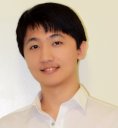
 Ian En-Hsu Yen
1 previous affiliation
- Carnegie Mellon University2016–2018
- PhD student · 2016–2018
Research Overview
Ian En-Hsu Yen focuses on the development of scalable optimization algorithms and hardware-algorithm co-design for artificial intelligence. His work spans the theoretical foundations of convex and non-convex optimization, the design of sparse and structured machine learning models, and the practical acceleration of deep learning inference. Currently, his research emphasizes Accelerating the Non-linear Bottleneck in Transformer Inference and the creation of unified data formats to support Low Bit Floating Point Quantization for Neural Networks.
Research Trajectory
The evolution of Yen’s research reflects a transition from fundamental optimization theory for large-scale linear models toward the specialized requirements of modern deep learning architectures and hardware.
Large-Scale Optimization and Sparsity (2013–2015)
In the early stages of his career, Yen’s work was primarily concerned with the computational efficiency of linear classification and empirical risk minimization. During this period, he focused on leveraging sparsity—both in data and in model parameters—to reduce the memory and I/O overhead of training on massive datasets. A key contribution was the development of Indexed block coordinate descent for large-scale linear classification with limited memory, which utilized approximate nearest neighbor search to identify active dual variables, thereby avoiding the need to process irrelevant samples.
This focus on optimization efficiency extended to more complex models, such as Conditional Random Fields (CRFs). He participated in the development of Proximal Quasi-Newton for Computationally Intensive L1-regularized M-estimators, which addressed the high cost of gradient computation in structured prediction. By 2015, his work on Sparse Linear Programming via Primal and Dual Augmented Coordinate Descent demonstrated that combining augmented Lagrangian methods with coordinate descent could achieve superior iteration complexity for large-scale linear programs, a staple of machine learning optimization.
Structured Prediction and Latent Feature Models (2016–2018)
As his work matured, Yen began addressing the challenges of large output domains and non-linear learning. He developed methods to scale Structural Support Vector Machines (SVMs) by decomposing the training process into sub-problems that could be solved with sublinear complexity relative to the factor domain. This period also saw an exploration of kernel approximation methods, where he investigated the convergence and parallelizability of Random Binning features as an alternative to Random Fourier features.
His research during this time also delved into latent variable models and tensor decompositions. He introduced the Latent Feature Lasso, a generalization of mixture models that employs sparsity-inducing penalties to learn latent representations. This line of inquiry expanded into Learning Tensor Latent Features, where he contributed to the development of Binary Matching Pursuit for decomposing tensors with Boolean factors. Additionally, he explored specialized topics such as Overcoming Semantic Sparsity in Short Texts and Scaling Optimal Transport via One-Dimensional Projections, addressing the "curse of dimensionality" in geometric data analysis.
AI Acceleration and Hardware-Algorithm Co-Design (2019–Present)
Following his doctoral work and roles at major research labs, Yen’s focus shifted toward the deployment phase of the machine learning lifecycle. As a co-founder and Chief Scientist at Moffett System Inc., he has focused on the intersection of algorithm design and hardware architecture. This work is characterized by a move away from purely minimizing floating-point operations (FLOPs) toward a more holistic view of system throughput and latency.
His recent work addresses the specific bottlenecks of Large Language Models (LLMs). This includes participating in research on speculative decoding to improve the latency-throughput tradeoff in long-context generation and developing the SQ-format: A Unified Sparse-Quantized Hardware-friendly Data Format for Large Language Models. These efforts aim to bridge the gap between theoretical model compression and actual hardware support, ensuring that techniques like 4-bit quantization and semi-structured sparsity can be efficiently executed on modern GPUs and specialized AI accelerators.
Current Directions
Yen’s current research is centered on the democratization and efficient serving of LLMs. He is actively involved in refining post-training quantization (PTQ) techniques that maintain model accuracy at ultra-low bitwidths. A significant portion of this work involves Matrix-Free Spectral Analysis for Massive Datasets and the Structural Comparison of Networks Across Scales, which provide the mathematical tools necessary to analyze and compress the complex weight distributions found in Transformer architectures.
Furthermore, he continues to explore the potential of high-dimensional sparse representations. Unlike traditional compact embeddings, these representations maintain high capacity while leveraging sparse matrix multiplication to achieve speedups on compatible hardware. This direction represents a synthesis of his early work on sparse optimization and his current focus on hardware-aware AI acceleration.
Representative Work
Indexed block coordinate descent for large-scale linear classification with limited memory This work addresses the challenge of training linear classifiers on datasets where many samples do not contribute to the final model but still consume significant memory and I/O resources. The paper proposes a Block Coordinate Descent method that utilizes an Approximate Nearest Neighbor (ANN) index to select active dual variables. This approach allows the algorithm to focus on the most informative data points, significantly reducing the cost of processing irrelevant samples in a dual-sparse model.
Sparse Linear Programming via Primal and Dual Augmented Coordinate Descent Linear Programming (LP) is a fundamental tool in numerical optimization, yet standard interior-point and simplex methods often struggle with the scale of modern machine learning problems. This paper introduces a general LP algorithm based on the combination of Augmented Lagrangian and Coordinate Descent (AL-CD). The method achieves an iteration complexity of $O((\log(1/\epsilon))^2)$ with a per-iteration cost proportional to the number of non-zeros in the constraint matrix, making it highly suitable for massive, sparse LP problems.
Dual Decomposed Learning with Factorwise Oracle for Structural SVM of Large Output Domain Training structured predictors is often hindered by the need for repetitive calls to expensive inference oracles. This paper demonstrates that by decomposing the training of a Structural SVM into a series of multiclass SVM problems, the standard oracle can be replaced by a Factorwise Maximization Oracle (FMO). The proposed Greedy Direction Method of Multiplier (GDMM) exploits message sparsity to achieve efficient learning with complexity sublinear to the factor domain.
Latent Feature Lasso This research generalizes mixture models by allowing each instance to be generated from multiple latent features rather than a single component. The Latent Feature Lasso employs a convex formulation to learn these features, using sparsity-inducing penalties to determine the appropriate number of features automatically. The work provides a theoretical and algorithmic framework for discovering hidden structures in complex datasets.
MixLasso: Generalized Mixed Regression via Convex Atomic-Norm Regularization Standard mixed regression assumes each response is generated from a single component, but many real-world scenarios involve additive combinations of multiple components. MixLasso introduces a convex estimator for this generalized mixed regression problem. By using atomic-norm regularization, the method avoids the local optima issues common in Expectation-Maximization (EM) approaches and does not require prior knowledge of the input distribution.
Minimizing FLOPs to Learn Efficient Sparse Representations In contrast to the common practice of learning compact, dense embeddings for retrieval and recommendation, this paper proposes learning high-dimensional, sparse representations. These sparse embeddings maintain the representational capacity of dense models while enabling faster inference through sparse matrix operations. The work demonstrates that minimizing FLOPs during the learning process can lead to models that are both accurate and computationally efficient for large-scale visual search and identification tasks.
Profile updated
| Paper | Venue | Year |
|---|---|---|
| Minimizing FLOPs to Learn Efficient Sparse RepresentationsGitHubbiswajitsc/ | ICLR | 2020 |
Loading new papers…
Other researchers whose papers cluster into the same research directions — a proxy for overlapping technical interests and shared intellectual neighborhoods.
See something wrong? Report a mistake