

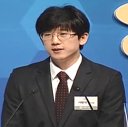
 Hyunseok Seo
· 4 previous affiliations
- Korea UniversitySince 2025
- Assistant Professor · Since 2025
- Principal Researcher · 2020–2025
- Stanford University2018–2020
- Postdoc · 2018–2020
- PhD student · 2012–2017
Research Overview
Hyunseok Seo focuses on artificial intelligence for digital image and signal processing, with a primary emphasis on biomedical image segmentation, MRI reconstruction, and generative modeling. His trajectory spans from developing robust neural network architectures for medical diagnostics to advancing foundational techniques in vision transformers and frequency-domain image synthesis. Recently, his work addresses physics-informed optimization and active probabilistic subsampling for clinical imaging protocols.
Research Trajectory
Seo’s early research established a foundation in automated medical image analysis, particularly in handling the challenges of limited or artifact-heavy clinical data. In 2019, he participated in the development of Atlas Based Segmentations via Semi-Supervised Diffeomorphic Registrations, a framework that cascaded affine and dense deformation blocks to segment head and neck organs-at-risk. This work advanced the research direction of Diffeomorphic Constraints for Physically Plausible Image Registration and contributed to the broader area of Overcoming the Manual Segmentation Bottleneck in Medical Imaging. That same year, he published a comprehensive review, Machine Learning Techniques for Biomedical Image Segmentation: An Overview of Technical Aspects and Introduction to State-of-Art Applications. This paper mapped the trade-offs between classical statistical methods and deep learning, touching on several key research areas including Explainable Deep Learning for Clinical Diagnostics, Efficient Architectures for High-Resolution 3D Volumetric Processing, and Multi-Slice Spatial Context for Volumetric Image Processing.
Moving into 2020 and 2021, Seo focused on improving the precision of convolutional architectures for specific clinical tasks. He introduced Modified U-Net (mU-Net) With Incorporation of Object-Dependent High Level Features for Improved Liver and Liver-Tumor Segmentation in CT Images, addressing the low tissue contrast and deformable shapes of targets in radiation therapy planning. He further refined tumor delineation in Deep Neural Network With Consistency Regularization of Multi-Output Channels for Improved Tumor Detection and Delineation. Recognizing the limitations of standard optimization metrics in clinical contexts, he developed Closing the Gap Between Deep Neural Network Modeling and Biomedical Decision-Making Metrics in Segmentation via Adaptive Loss Functions, proposing a generalized loss framework with functional parameters determined adaptively during training. Concurrently, he expanded his focus to magnetic resonance imaging with A Dual Domain Network For MRI Reconstruction Using Gabor Loss, a method that simultaneously leverages image and k-space domain data to improve undersampled MRI scans.
In 2022, his research explored novel network combinations and feature conservation techniques. He directed the development of A Bounding-Box Regression Model for Colorectal Tumor Detection in CT Images Via Two Contrary Networks, which efficiently connected a Detection Transformer with an Hourglass network using intermediate prediction information. He also proposed Spatial Feature Conservation Networks (SFCNs) for Dilated Convolutions to Improve Breast Cancer Segmentation from DCE-MRI, designing a compensation module to prevent intrinsic signal loss from the multi-scale dilated convolutions used to expand the network's receptive field.
By 2024, Seo’s work broadened to encompass explainability in modern architectures and the refinement of generative models. He collaborated on Attention Guided CAM: Visual Explanations of Vision Transformer Guided by Self-Attention, a method that selectively aggregates gradients to provide high-level semantic explanations for ViT decisions, advancing the research direction of Contrastive Saliency for Class Specific Explanations. He also led research on Spectrum Translation for Refinement of Image Generation (STIG) Based on Contrastive Learning and Spectral Filter Profile, addressing intrinsic frequency-domain discrepancies in both generative adversarial networks and diffusion models to improve photo-realistic synthesis.
In 2026, his trajectory reflects a deep integration of probabilistic methods and physics-informed machine learning. He co-authored Prior-aware and Context-guided Group Sampling for Active Probabilistic Subsampling, which improves selective data sampling for MRI reconstruction and hyperspectral imaging by combining global dataset priors with instance-specific sampling. He also explored cross-modality synthesis in Cyclic conditional diffusion models for CT-to-MR synthetic image segmentation with misaligned image pairs. Finally, he oversaw Taming Gradient Perturbations: Probabilistic Reparameterization for Robust Physics-Informed MRI Protocol Optimization, introducing a noise-robust framework that replaces direct optimization of control parameters with probabilistic optimization to stabilize tissue characteristic estimation.
Current Directions
The most recent papers in the evidence indicate a strong focus on the intersection of probabilistic machine learning, generative diffusion models, and physics-informed medical imaging. Recent work investigates how to optimize MRI acquisition protocols by treating control parameters probabilistically, thereby mitigating the stochastic noise inherent in both imaging systems and gradient descent. Additionally, there is an ongoing emphasis on active subsampling frameworks that leverage global dataset priors to improve reconstruction and segmentation tasks, as well as the application of cyclic conditional diffusion models to handle misaligned multi-modal image pairs (such as CT and MR). Together, these directions aim to make clinical AI systems more robust, physically plausible, and adaptable to imperfect real-world data.
Profile updated
Loading new papers…
Other researchers whose papers cluster into the same research directions — a proxy for overlapping technical interests and shared intellectual neighborhoods.
See something wrong? Report a mistake