

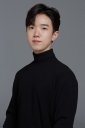
 Hyungjin Chung
· 7 previous affiliations
- EverExSince 2024
- Lead AI Research Scientist · Since 2025
- Researcher · Since 2024
- Research scientist, advisory member · 2024–2025
- Doctor of Philosophy - PhD · 2019–2025
- PhD student · 2021–2025
- MS student · 2019–2021
- Intern · 2023
- 구글2023
- Student Researcher · 2023
- Intern · 2023
- Intern · 2022
- Korea University2015–2019
- Undergrad student · 2015–2019
Research Overview
Hyungjin Chung focuses on the intersection of generative models, imaging, and inverse problems, with a particular emphasis on diffusion model-based solvers. His trajectory spans from foundational work in accelerated MRI reconstruction to the development of manifold-constrained guidance and posterior sampling techniques for complex visual degradations. Currently, his research addresses unified frameworks for explainable AI, advanced classifier-free guidance, and continuous-time representation learning for medical imaging.
Research Trajectory
Chung’s early research concentrated on medical image reconstruction, particularly in accelerating magnetic resonance imaging (MRI). In 2020, he participated in developing Unpaired Deep Learning for Accelerated MRI Using Optimal Transport Driven CycleGAN, which addressed the challenge of acquiring matched, fully sampled k-space data by training networks in an unsupervised manner. This work aligned with the broader area of Optimal Transport and Schrödinger Bridges for Image Restoration. Building on these foundations, he subsequently explored Score-based diffusion models for accelerated MRI, transitioning his focus toward the powerful generative capabilities of diffusion models for inverse problems.
By 2022, Chung began addressing the computational and structural limitations of diffusion solvers. He introduced Improving Diffusion Models for Inverse Problems using Manifold Constraints, identifying that standard reverse diffusion steps often push the sample path off the data manifold, and proposed a correction term to keep iterations manifold-aligned. To tackle the slow inference speeds of these models, he developed Come-Closer-Diffuse-Faster: Accelerating Conditional Diffusion Models for Inverse Problems through Stochastic Contraction. By initializing the sampling process with a corrupted image rather than pure noise, this method significantly shortened the sampling path, contributing to the research direction of Restoring Images with Unknown Complex Degradations.
In 2023, his work expanded to handle more complex, real-world degradations. He developed Diffusion Posterior Sampling for General Noisy Inverse Problems, which extended diffusion solvers to manage noisy, non-linear inverse problems via Laplace approximation. This significantly advanced the area of Posterior Sampling for Diffusion-Based Inverse Problems. To ensure that accelerated solvers maintain fidelity to the original input, he proposed Direct Diffusion Bridge using Data Consistency for Inverse Problems, introducing a training-free gradient guidance step. Addressing scenarios where both the image and the corruption process are unknown, he introduced Parallel Diffusion Models of Operator and Image for Blind Inverse Problems. This approach runs parallel reverse diffusion processes for both the image and the operator parameters, coupling them via measurement-consistency gradients.
During his transition to a role as Lead AI Research Scientist at EverEx, Chung continued to formalize and expand diffusion-based solvers. He co-authored a comprehensive overview, Diffusion models for inverse problems, detailing the mathematical challenges of ill-posed imaging tasks. He then introduced InvFussion: Bridging Supervised and Zero-shot Diffusion for Inverse Problems, creating a training-based, degradation-aware posterior sampler that combines the accuracy of supervised methods with the flexibility of zero-shot approaches. Expanding into explainable AI, he developed Derivative-Free Diffusion Manifold-Constrained Gradient for Unified XAI. This black-box framework uses Ensemble Kalman Filters to approximate model gradients while constraining them to the data manifold, producing human-interpretable feature attributions without requiring access to internal model weights.
Further refining diffusion guidance mechanisms, Chung proposed CFG++: Manifold-constrained Classifier Free Guidance for Diffusion Models. By shifting from extrapolation to interpolation and utilizing unconditional noise for the renoising step, CFG++ prevents models from drifting off the natural image manifold, contributing to the broader area of Manifold Preserving Guidance for Diffusion Models. Returning to his roots in medical imaging, he developed ContextMRI: Enhancing Compressed Sensing MRI through Metadata Conditioning, a framework that converts clinical metadata into text prompts to stabilize and improve compressed sensing reconstructions.
Current Directions
The most recent papers in the evidence, published in 2026, indicate a focus on latent domain optimization, robust guidance, and continuous-time representation learning. In the domain of video generation, Chung contributed to InverseCrafter: Efficient Video ReCapture as a Latent Domain Inverse Problem, which reformulates 4D generation as an inpainting problem solved directly in the latent space to bypass computationally expensive fine-tuning. He also collaborated on ContrastiveCFG: Guiding Diffusion Sampling by Contrasting Positive and Negative Concepts, introducing a dynamic weighting mechanism that attenuates guidance once unwanted concepts are removed, thereby preserving image quality during negative prompting. In medical imaging, his recent collaborative work includes Stochastic Optimal Control for Continuous-Time fMRI Representation Learning, which models brain activity as continuous-time latent dynamics rather than discrete patches, framing fMRI representation learning as a stochastic optimal control problem.
Profile updated
Loading new papers…
Other researchers whose papers cluster into the same research directions — a proxy for overlapping technical interests and shared intellectual neighborhoods.
See something wrong? Report a mistake