

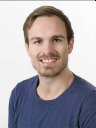
 Alexander Denker
· 3 previous affiliations
- Deutsches Elektronen-Synchrotron DESYSince 2026
- Postdoc · Since 2026
- University College London2024–2026
- Postdoc · 2024–2026
- University of Bremen2020–2024
- PhD student · 2020–2024
Research Overview
Alexander Denker focuses on generative modeling, inverse problems, and medical image reconstruction. His early work explored conditional normalizing flows for quantifying spatial uncertainty in computed tomography and magnetic resonance imaging. Recently, his research has shifted toward applying diffusion models and stochastic optimal control to solve complex inverse problems across continuous function spaces and irregular domains.
Research Trajectory
Denker's early research investigated the application of invertible neural networks to medical imaging, particularly focusing on how these architectures can estimate posterior distributions rather than just providing point estimates. In Conditional Normalizing Flows for Low-Dose Computed Tomography Image Reconstruction (2020), he and his collaborators combined standard filtered back-projection with conditional normalizing flows to achieve high structural similarity in low-dose CT scans. This contributed to the broader area of Quantifying Spatial Uncertainty via Generative Sampling. He expanded on this foundation in Conditional Invertible Neural Networks for Medical Imaging, presenting extensive ablation studies on flow-based models applied to both accelerated MRI and computed tomography, emphasizing the necessity of uncertainty quantification in ill-posed inverse problems.
Moving toward rigorous mathematical guarantees, Denker explored the intersection of deep learning and classical mathematical frameworks. His 2023 work on Invertible residual networks in the context of regularization theory for linear inverse problems bridged the gap between black-box neural networks and traditional regularization theory. This theoretical grounding informed practical applications in highly incomplete sensor data environments, such as Electrical Impedance Tomography (EIT). In Data-driven approaches for electrical impedance tomography image segmentation from partial boundary data, he participated in developing a post-processing approach that fed classical reconstructions into a U-Net, demonstrating the robustness of hybrid analytical-neural pipelines. This research aligns with the direction of Regularization and Robustness in Ill-Posed Inverse Problems. A subsequent comprehensive benchmark, Deep Learning Based Reconstruction Methods for Electrical Impedance Tomography, further confirmed that integrating physical models like unrolled Gauss-Newton iterations with neural networks yields superior generalization for out-of-distribution measurements.
As score-based generative models gained prominence, Denker adapted these techniques for complex medical reconstructions. He developed Score-Based Generative Models for PET Image Reconstruction, contributing to the research direction of Preserving Structural Fidelity in Generative Medical Imaging. To address the non-convex optimization challenges inherent in using generative priors, his lab introduced a graduated optimization framework in Convergence Properties of Score-Based Models for Linear Inverse Problems Using Graduated Optimisation, proving that graduated non-convexity flows can converge to stationary points in linear inverse problems.
A major theme in Denker's subsequent trajectory is the efficient adaptation of large, pre-trained diffusion models. He introduced DEFT (Doob’s $h$-transform Efficient FineTuning) in DEFT: Efficient Fine-tuning of Diffusion Models by Learning the Generalised $h$-transform, a rigorous framework that turns unconditional diffusion models into conditional samplers by fine-tuning a small auxiliary network. This work advanced both the area of Parameter Efficient Adaptation of Pre Trained Models and the broader direction of Generative Diffusion as Stochastic Optimal Control. He continued this line of inquiry with Iterative Importance Fine-tuning of Diffusion Models, proposing a self-supervised algorithm to iteratively refine the $h$-transform using path-based importance weights. To handle distribution shifts in clinical settings, he contributed to Steerable Conditional Diffusion for Out-of-Distribution Adaptation in Medical Image Reconstruction, which adapts pre-trained models on-the-fly using only available measurement data, a method relevant to the research direction of Low-Rank Weight Decomposition for Efficient Model Adaptation. Concurrently, he collaborated on novel data acquisition strategies, such as the bilevel optimization framework for learning illumination patterns in Learning Binary Sampling Patterns for Single-Pixel Imaging using Bilevel Optimisation.
By 2026, Denker's research expanded to compose multiple models and handle irregular data structures. He co-authored CMAD: Cooperative Multi-Agent Diffusion via Stochastic Optimal Control, which treats pre-trained diffusion models as cooperative agents steered toward a shared objective. Addressing the computational memory overhead of flow-based models, he proposed a multiple-shooting framework in Trajectory Stitching for Solving Inverse Problems with Flow-Based Models, achieving constant memory usage by stitching trajectory segments with soft penalties. Finally, he oversaw the development of GRIFDIR: Graph Resolution-Invariant FEM Diffusion Models in Function Spaces over Irregular Domains, extending diffusion models to generate complex functions over irregular shapes and varying resolutions.
Current Directions
The most recent papers in the evidence address the scalability and flexibility of generative models in complex physical and geometric settings. Recent work investigates how to apply diffusion models to continuous function spaces and irregular domains, moving beyond standard grid-based data structures. Additionally, current research explores stochastic optimal control frameworks to compose multiple pre-trained diffusion models as cooperative agents, as well as memory-efficient "trajectory stitching" techniques that break down the generative paths of flow-based models to solve high-dimensional inverse problems like super-resolution and medical scanning.
Profile updated
Loading new papers…
Other researchers whose papers cluster into the same research directions — a proxy for overlapping technical interests and shared intellectual neighborhoods.
See something wrong? Report a mistake