

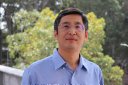
 Hongyu Zhang
· 4 previous affiliations
- Chongqing UniversitySince 2023
- Full Professor · Since 2023
- University of Newcastle Australia2016–2023
- Full Professor · 2016–2023
- Tsinghua University2006–2016
- Associate Professor · 2006–2016
- National University of Singapore2000–2003
- PhD student · 2000–2003
3 other authors named Hongyu Zhang: Hongyu Zhang (Peking University · 7 papers), Hongyu Zhang (Shandong University · 2 papers), Hongyu Zhang (1 paper)
Research Overview
Hongyu Zhang focuses on intelligent software engineering, software analytics, and software fault management. Their trajectory spans early work in software reuse and fault distribution to recent advancements in log-based anomaly detection and root cause analysis for microservices. Current research investigates the integration of large language models with program analysis and causal inference for system reliability.
Research Trajectory
The early trajectory of Zhang's research focused on software reuse and the statistical properties of software faults. In 2003, they participated in the development of XVCL: XML-based Variant Configuration Language, a meta-programming technique designed to manage program variants from a compact base of meta-components. Subsequent work shifted toward empirical software engineering, where Zhang demonstrated in On the Distribution of Software Faults that the distribution of faults across software modules is more precisely modeled by the Weibull distribution rather than the traditionally assumed Pareto principle.
As machine learning techniques became more prevalent in software engineering, Zhang's focus expanded to include deep learning applications for code and compiler analysis. They contributed to the research direction of Mapping Natural Language to Source Code Semantics through work on Deep API learning, and explored retrieval techniques in Deep code search. In the domain of compiler reliability, Zhang collaborated on Learning to prioritize test programs for compiler testing, which introduced a machine learning approach to predict the bug-revealing probability of test programs to accelerate compiler testing. Later, they participated in developing XLIR, a Transformer-based neural network detailed in Cross-Language Binary-Source Code Matching with Intermediate Representations, contributing to the broader area of Overcoming Compiler Optimization Variance in Binary Analysis.
A major theme in Zhang's trajectory is the analysis of system logs for anomaly detection and compression. They contributed to Robust log-based anomaly detection on unstable log data, which proposed an attention-based Bi-LSTM model to handle previously unseen log events and processing noise. To critically assess progress in the area of Semantic Log Embedding for Anomaly Detection, Zhang conducted an in-depth empirical study in Log-based Anomaly Detection with Deep Learning: How Far Are We?, highlighting the impact of data noise, class distribution, and chronological partitioning on model evaluation. Advancing the area of Scalable Log Analysis for High Volume Distributed Systems, Zhang introduced LogShrink: Effective Log Compression by Leveraging Commonality and Variability of Log Data, a framework that combines clustering-based sampling with column-oriented storage to improve compression ratios.
In recent years, Zhang has directed significant research toward root cause analysis (RCA) in complex microservice architectures and the reliability of large language models (LLMs). They developed RCAEval: A Benchmark for Root Cause Analysis of Microservice Systems with Telemetry Data to standardize the evaluation of diagnostic tools. This was complemented by Multivariate Time Series Anomaly Detection by Capturing Coarse-Grained Intra- and Inter-Variate Dependencies, which shifted the focus from noisy fine-grained data to multi-scale temporal patches for anomaly detection. Zhang also oversaw a comprehensive empirical study in Root Cause Analysis for Microservices based on Causal Inference: How Far Are We?, evaluating the effectiveness and efficiency of various causal discovery methods. To address the limitations of existing RCA pipelines, Zhang led the design of BARO: Robust Root Cause Analysis for Microservices via Multivariate Bayesian Online Change Point Detection, an end-to-end approach integrating anomaly detection with nonparametric statistical hypothesis testing.
Concurrently, Zhang has explored the optimization and monitoring of machine learning models. They proposed a novel text augmentation paradigm in Transplant Then Regenerate: A New Paradigm for Text Data Augmentation, leveraging LLMs to create diverse content-level variants. To ensure the safe deployment of LLMs, Zhang led the development of LLMScan: Causal Scan for LLM Misbehavior Detection, a monitoring technique based on causal inference to detect untruthful or harmful responses. They also directed research on Hybrid Automated Program Repair by Combining Large Language Models and Program Analysis, and guided the creation of MOBO-OSD: Batch Multi-Objective Bayesian Optimization via Orthogonal Search Directions to generate diverse Pareto optimal solutions for expensive black-box functions. In addition, Zhang contributed to An empirical study of neural network based graph representations for software defect prediction, evaluating neural graph representation methods for identifying software defects.
Current Directions
The most recent papers in the evidence indicate a strong focus on the reliability and diagnostics of distributed systems, particularly through the lens of causal inference and multivariate time-series analysis. Recent work investigates robust root cause analysis for microservices, developing end-to-end frameworks and standardized benchmarks to evaluate diagnostic tools in the presence of noisy telemetry data. Additionally, Zhang is actively exploring the intersection of large language models and software engineering, addressing both the application of LLMs for automated program repair and the development of causal monitoring techniques to detect and mitigate LLM misbehavior in critical applications.
Profile updated
Loading new papers…
Other researchers whose papers cluster into the same research directions — a proxy for overlapping technical interests and shared intellectual neighborhoods.
See something wrong? Report a mistake