

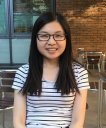
 Cuiyun Gao
· 2 previous affiliations
- Harbin Institute of TechnologySince 2025
- Full Professor · Since 2025
- Current
Research Overview
Cuiyun Gao focuses on the intersection of artificial intelligence and software engineering, with specific emphasis on software repository mining, natural language understanding, and source code analysis. Her early work explored user review analysis and mobile advertising measurement, establishing a foundation in data-driven software evaluation. Currently, her research investigates large language models for code intelligence, automated vulnerability detection, and the development of autonomous software engineering agents.
Research Trajectory
Gao’s early research trajectory centered on mobile application ecosystems, specifically analyzing developer-user interactions and monetization strategies. In 2017, she developed IntelliAd: assisting mobile app developers in measuring ad costs automatically, contributing to the broader area of Balancing Ad Revenue and Long-Term User Retention. Building on this focus on app ecosystems, she analyzed Online app review analysis for identifying emerging issues, advancing the research direction of The Challenge of Cross-Platform Behavioral Generalization. This line of inquiry culminated in the development of CoRe, a neural network detailed in Automating App Review Response Generation Based on Contextual Knowledge, which automatically generates accurate responses to app reviews by incorporating contextual knowledge such as app descriptions and historical data.
Transitioning toward deeper source code analysis and security, Gao began investigating structural representations of code for automated vulnerability detection. She explored these themes in Vulnerability Detection with Graph Simplification and Enhanced Graph Representation Learning, which laid the groundwork for more complex relational models. In 2024, she proposed MAGNET in Meta-Path Based Attentional Graph Learning Model for Vulnerability Detection. By constructing a meta-path graph to capture complex relationships between code elements and employing a hierarchical attention mechanism, this work significantly improved detection accuracy, contributing to the domain of Bridging the Inter-Procedural Context Gap in Code Analysis. Concurrently, Gao began exploring the capabilities of emerging generative models for software tasks. In What Makes Good In-Context Demonstrations for Code Intelligence Tasks with LLMs?, she investigated how the selection, order, and number of examples impact model performance, offering guidelines for effective prompt creation within the area of Dynamic Retrieval for In-Context Learning.
By 2025, Gao’s work comprehensively addressed the integration of large language models (LLMs) into software engineering pipelines. She outlined the overarching landscape in The Current Challenges of Software Engineering in the Era of Large Language Models, while evaluating model reliability in Understanding the Robustness of Transformer-Based Code Intelligence via Code Transformation: Challenges and Opportunities. To improve generation quality, she conducted an empirical study on retrieval-augmented generation in An Empirical Study of Retrieval-Augmented Code Generation: Challenges and Opportunities, providing practical guidance on selecting retrieval and fusion techniques. She further optimized model interactions by developing the APE-CoT framework in Automated Prompt Generation for Code Intelligence: An Empirical study and Experience in WeChat, which combines optimized task instructions with multi-step reasoning to boost performance in industrial settings. Her work also extended to specialized generation tasks, such as inferring missing data dependencies from UML sequence diagrams in Data Dependency Inference for Industrial Code Generation Based on UML Sequence Diagrams and automating user interface development in MLLM-Based UI2Code Automation Guided by UI Layout Information.
Recognizing the limitations of LLMs in practice, Gao has focused heavily on evaluation, context enrichment, and agentic frameworks. She provided a comprehensive taxonomy of model errors in A Systematic Literature Review of Code Hallucinations in LLMs: Characterization, Mitigation Methods, Challenges, and Future Directions for Reliable AI, analyzing why models invent non-existent APIs and evaluating mitigation strategies. To improve automated code review, she contributed to the development of ContextCRBench in Benchmarking LLMs for Fine-Grained Code Review with Enriched Context in Practice, a dataset that provides models with the textual intent and structural context necessary for human-like review. She also addressed the challenge of evaluating generated code by proposing AXIOM: Benchmarking LLM-as-a-Judge for Code via Rule-Based Perturbation and Multisource Quality Calibration. Pushing toward autonomous systems, she presented Trae Agent: An LLM-based Agent for Software Engineering with Test-time Scaling, a framework that tackles complex bugs through test-time scaling and modular pruning. This work achieved state-of-the-art results on the SWE-bench Verified leaderboard, advancing the research directions of Autonomous Environment Orchestration for LLM Agents and Repository-Level Code Intelligence for Large Language Models.
Most recently, Gao has expanded her focus to the safety and alignment of multimodal foundation models. She collaborated on ASRU: Activation Steering Meets Reinforcement Unlearning for Multimodal Large Language Models, which introduces a framework to help multimodal large language models selectively forget sensitive information without losing their general conversational and reasoning capabilities.
Current Directions
Based on her most recent publications, Gao's current research focuses on the reliability, evaluation, and agentic capabilities of large language models in software engineering. A major theme is moving beyond simple code generation to complex, repository-level reasoning and autonomous bug fixing through test-time scaling and multi-agent orchestration. This involves developing robust evaluation frameworks for LLM-as-a-judge paradigms and mitigating code-specific hallucinations by grounding models in structural context and API documentation. Additionally, her recent collaborative work explores the intersection of multimodal models and machine unlearning, investigating how to selectively erase sensitive information from foundation models without degrading their general intelligence.
Profile updated
| Paper | Venue | Year |
|---|---|---|
| XMoE: Sparse Models with Fine-grained and Adaptive Expert SelectionGitHubysngki/ | ACL | 2024 |
Loading new papers…
Other researchers whose papers cluster into the same research directions — a proxy for overlapping technical interests and shared intellectual neighborhoods.
See something wrong? Report a mistake