

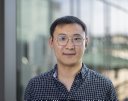
 Hongyi Wang
· 6 previous affiliations
- Assistant Professor · Since 2025
- Assistant Professor · Since 2024
- GenBio AISince 2024
- Head of Infrastructure · Since 2024
- Carnegie Mellon University2021–2024
- Senior Research Scientist · 2023–2024
- Researcher · 2022–2024
- Postdoctoral Fellow · 2021–2023
- Postdoc · 2021–2022
- University of Wisconsin–Madison2016–2021
- Doctor of Philosophy (PhD), Computer Science · 2016–2021
- Research Intern · 2020
- Hangzhou Dianzi University2012–2016
- Bachelor of Engineering, Electrical Engineering · 2012–2016
3 other authors named Hongyi Wang: Hongyi Wang (Hong Kong University of Science and Technology · 2 papers), Hongyi Wang (Tsinghua University · 2 papers), Hongyi Wang (Hong Kong University of Science and Technology · 1 paper)
Research Overview
Hongyi Wang focuses on scalable machine learning systems, distributed optimization, and large language model infrastructure. His early work addressed communication bottlenecks and Byzantine resilience in distributed training environments. More recently, his research emphasizes the efficient training, serving, and alignment of large-scale models, particularly exploring mixture-of-experts architectures and transparent optimization frameworks under real system constraints.
Research Trajectory
Wang’s early research addressed the fundamental system bottlenecks of distributed machine learning, particularly communication overhead and vulnerability to node failures. He investigated how network architecture impacts large-batch training, showing in The Effect of Network Width on the Performance of Large-batch Training that wider neural networks are more amenable to fast, large-batch optimization than deeper ones. To directly reduce communication costs, he introduced ATOMO: Communication-efficient Learning via Atomic Sparsification, a general framework for sparsifying gradients using atomic decompositions like singular value decomposition (SVD) to achieve faster distributed training.
Concurrently, Wang focused on making distributed systems robust against malicious or failing compute nodes, contributing heavily to the area of Linear Complexity Byzantine Resilient Distributed Learning. This work included DRACO: Byzantine-resilient Distributed Training via Redundant Gradients, which uses redundant gradients to protect global models from adversarial updates. He subsequently developed DETOX: A Redundancy-based Framework for Faster and More Robust Gradient Aggregation, combining algorithmic redundancy with robust aggregation to achieve Byzantine resilience without the quadratic computational costs of prior methods. To mitigate the "straggler effect" caused by slow compute nodes, he designed ErasureHead: Distributed Gradient Descent without Delays Using Approximate Gradient Coding. This work advanced the research direction of Approximate Gradient Coding for Straggler Mitigation and the broader field of Straggler-Resilient Coded Computation by trading exact gradient recovery for a slightly noisy approximation, yielding significant speedups over exact coded methods.
Transitioning into decentralized and federated learning (FL), Wang explored both the vulnerabilities and optimization strategies inherent to heterogeneous client data. He demonstrated the susceptibility of FL systems to adversarial attacks in Attack of the Tails: Yes, You Really Can Backdoor Federated Learning, establishing a theoretical connection between backdoor vulnerabilities and adversarial examples. To improve FL convergence, he proposed Federated Learning with Matched Averaging, an algorithm that aligns neurons and channels layer-by-layer before averaging, avoiding the performance degradation caused by naive coordinate-wise aggregation. His lab later expanded on federated optimization with FedNAR: Federated Optimization with Normalized Annealing Regularization, introducing a co-clipping strategy that prevents standard weight decay from disrupting global model alignment.
Around this time, Wang also investigated model compression and privacy-preserving inference. He collaborated on MPCFORMER: FAST, PERFORMANT AND PRIVATE TRANSFORMER INFERENCE WITH MPC, a framework utilizing Secure Multi-Party Computation and Knowledge Distillation to accelerate private Transformer inference. His research also explored automated model compression in Cuttlefish: Low-Rank Model Training without All the Tuning, which dynamically determines optimal ranks during low-rank neural network training without requiring manual hyperparameter tuning.
As large language models (LLMs) became central to machine learning, Wang’s focus shifted toward scalable LLM infrastructure and advanced architectures. Building on his earlier compression research, his group developed Maestro: Uncovering Low-Rank Structures via Trainable Decomposition, which integrates low-rank compression directly into training via ordered decomposition, allowing models to be sliced post-training to fit various hardware constraints. He also introduced Fusing Models with Complementary Expertise, a supervised framework that intelligently routes inputs to the most capable expert model rather than relying on traditional ensembling. Supporting the broader push for open science, he participated as a contributor to LLM360: Towards Fully Transparent Open-Source LLMs, an initiative releasing fully transparent LLMs along with their complete training code, data, and intermediate checkpoints.
His most recent work heavily emphasizes Mixture-of-Experts (MoE) architectures and LLM optimization. He led the development of LEGO: Expert Expansion for Continual Learning of Mixture-of-Experts Language Models, a framework enabling MoE models to continually learn new domains by expanding experts and applying routing pressure to prevent catastrophic forgetting. Addressing the instability of Reinforcement Learning in MoE models caused by "router drift," his group proposed Predictive Routing Replay for MoE-based LLM Reinforcement Learning, which anticipates future routing assignments to stabilize training on reasoning tasks. Furthermore, he designed ALPS: Adaptive Lineage-Aware Parallel Search for LLM-Driven Optimization, an adaptive scheduling framework that allows LLM-driven optimization agents to operate in parallel while maintaining the logical consistency and compounding improvements of a serial search.
Current Directions
The most recent papers in the evidence address the efficient scaling and adaptation of large language models, particularly through Mixture-of-Experts (MoE) architectures. Current work investigates methods to stabilize reinforcement learning for MoE models during complex reasoning tasks and explores techniques for continual learning that allow models to absorb new domains without catastrophic forgetting. Additionally, recent research focuses on adaptive scheduling frameworks designed to optimize the throughput of LLM-driven autonomous agents, reflecting a broader interest in building practical, high-performance systems for next-generation AI infrastructure.
Profile updated
Loading new papers…
Other researchers whose papers cluster into the same research directions — a proxy for overlapping technical interests and shared intellectual neighborhoods.
See something wrong? Report a mistake