

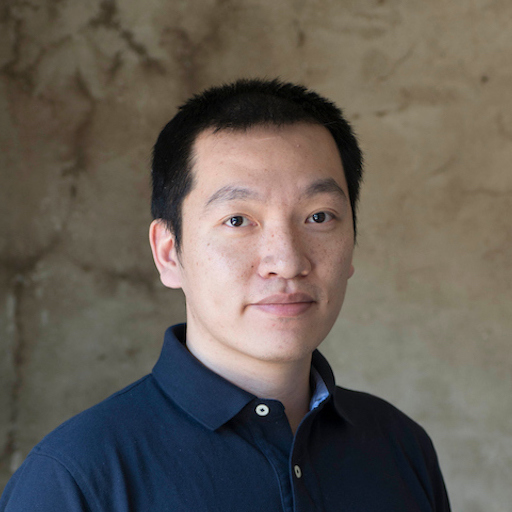
 Hongteng Xu
· 6 previous affiliations
- Renmin University of ChinaSince 2021
- Associate Professor · Since 2021
- Infinia ML (United States)2018–2020
- Senior Researcher · 2018–2020
- Duke University2017–2020
- Researcher · 2018–2020
- Postdoc · 2017–2018
- Georgia Institute of Technology2013–2017
- PhD student · 2013–2017
- Shanghai Jiao Tong University2010–2013
- MS student · 2010–2013
- Tianjin University2006–2010
- Undergrad student · 2006–2010
Research Overview
Hongteng Xu focuses on computational optimal transport, generative modeling, and temporal point processes. His early work established foundational methods for relational alignment and event modeling using optimal transport distances. More recently, his research has expanded into artificial intelligence for science and mathematics, developing conformation-centric foundation models for 3D molecular structures and efficient reasoning architectures for large language models.
Research Trajectory
The early trajectory of this research focused heavily on the mathematical modeling of event sequences, particularly through temporal point processes (TPPs). He introduced Learning Granger Causality for Hawkes Processes (2016), which tackled the challenge of uncovering causal relationships in general point processes. This foundational work contributed to the broader research direction of Neural and Nonparametric Temporal Point Processes.
Around 2019, the methodological focus expanded to incorporate computational optimal transport, specifically leveraging the Gromov-Wasserstein (GW) distance to analyze structured data. He proposed Gromov-Wasserstein Learning for Graph Matching and Node Embedding (2019) to jointly align graphs and learn node embeddings by measuring discrepancies between network structures. This optimal transport methodology was subsequently applied to deep learning architectures. He participated in developing Learning Autoencoders with Relational Regularization (2020), a framework utilizing the GW distance to align latent distributions based on their internal structures rather than their coordinates, enabling the co-training of multiple autoencoders across different dimensions. This advanced the area of Relational Optimal Transport for Incomparable Data Spaces.
Continuing this theme, he addressed complex challenges in data alignment and network modeling. He contributed to A Hypergradient Approach to Robust Regression without Correspondence (2021), proposing a computational framework for shuffled regression problems where input-output correspondence is lost—such as in flow cytometry measurements—contributing to the field of Unlabeled Sensing and Regression with Unknown Correspondence. In the same year, he developed Learning Graphons via Structured Gromov-Wasserstein Barycenters (2021), which bypassed computationally expensive node alignment to learn generative models for networks directly from observed graphs, furthering the direction of Relational Alignment across Incomparable Metric Spaces.
By 2022, his research began addressing complex scientific domains, particularly molecular representation learning. He was part of the team that introduced Uni-Mol: A Universal 3D Molecular Representation Learning Framework (2022), which utilized an SE(3)-equivariant transformer architecture to incorporate 3D geometric information for downstream tasks like drug design, overcoming the limitations of traditional 1D and 2D representations.
This pivot toward AI for science accelerated in recent years, with a strong focus on the research area of Scaling Generative Models for 3D Molecular Structures. His group developed Unifying Polymer Modeling and Design via a Conformation-Centric Generative Foundation Model (2025), a foundation model pre-trained on simulated 3D polymer structures to capture global structural nuances like chain length and tacticity. They also introduced ReQFlow: Rectified Quaternion Flow for Efficient and High-Quality Protein Backbone Generation (2025), which leverages quaternion mathematics to represent 3D rotations and flow rectification to straighten generation pathways, significantly accelerating the design of long-chain proteins. Extending these generative techniques to cyclic peptides, his lab proposed MuCO: Generative Peptide Cyclization Empowered by Multi-stage Conformation Optimization (2026), a framework that breaks down 3D structure prediction into backbone design, side-chain packing, and physics-based refinement.
In parallel with AI for science, his recent work explores advanced architectures and reasoning capabilities in large language and multimodal models. He designed Self-Paced and Self-Corrective Masked Prediction for Movie Trailer Generation (2025), treating video generation as an iterative, bi-directional refinement process. His research also yielded MoORE: SVD-based Model MoE-ization for Conflict- and Oblivion-Resistant Multi-Task Adaptation (2025), which addresses multi-task learning challenges by utilizing singular value decomposition to create mixture-of-experts adaptations that resist negative transfer. In the domain of mathematical reasoning, his team built Assisting Mathematical Formalization with A Learning-based Premise Retriever (2025), a lightweight, high-performance retriever designed specifically for the Lean theorem prover. Further advancing LLM reasoning, he contributed to Variational Latent Reasoning Guided by Rendered Chain-of-Thought (2026), which uses visual representations of reasoning chains to guide a variational auto-encoding framework, achieving efficient compression with minimal information loss.
Finally, he has continued to innovate in his foundational area of temporal point processes by integrating modern optimization and optimal transport techniques. His group introduced A Plug-and-Play Bregman ADMM Module for Inferring Event Branches in Temporal Point Processes (2025) to uncover hidden triggering relationships in temporal data by enforcing sparse and low-rank structures. Most recently, they developed ST-TPP: Learning Semi-Transductive Temporal Point Processes with Gromov-Wasserstein Barycentric Regularization (2026), combining sequence-specific features with global structural information to improve event sequence prediction and data representation.
Current Directions
The most recent papers in the evidence indicate a dual focus on generative AI for molecular biology and advanced reasoning architectures for foundation models. In the scientific domain, current work investigates 3D conformation-centric generative models for designing complex biological structures, including polymers, protein backbones, and cyclic peptides, often utilizing flow matching and multi-stage optimization. Concurrently, research in large language models addresses computational efficiency and reasoning capabilities, exploring techniques such as variational latent reasoning, specialized premise retrieval for formal mathematics, and robust multi-task adaptation. Finally, ongoing work continues to refine temporal point processes by applying advanced regularization techniques to improve the interpretability and accuracy of event sequence modeling.
Profile updated
Loading new papers…
Other researchers whose papers cluster into the same research directions — a proxy for overlapping technical interests and shared intellectual neighborhoods.
See something wrong? Report a mistake