

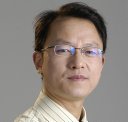
 Hongtao Lu
· 1 previous affiliation
- Shanghai Jiao Tong UniversitySince 2001
- Full Professor · Since 2001
Research Overview
Hongtao Lu focuses on computer vision, distributed machine learning, and embodied artificial intelligence. His early work established foundational stability conditions for continuous-time neural networks before expanding into high-dimensional tensor coding and robust visual representation. Recently, his research investigates federated learning architectures, graph recommender systems, and reward recovery for diffusion-based robotic policies.
Research Trajectory
Hongtao Lu’s research trajectory spans several decades, beginning with foundational theoretical work in neural network dynamics and evolving into modern deep learning applications across computer vision, generative modeling, and embodied artificial intelligence.
In the 1990s and early 2000s, his work concentrated on the stability and behavior of complex neural architectures. In A New Type of Chaotic Attractor with Cellular Neural Networks, he analyzed bifurcation phenomena to detect strange attractors in three-cell networks. Building on this theoretical foundation, he utilized Lyapunov functions to establish sufficient conditions for globally asymptotic stability independent of delays in On stability of nonlinear continuous-time neural networks with delays. This work improved existing models for delayed Hopfield networks, bidirectional associative memory networks, and cellular neural networks.
As machine learning shifted toward high-dimensional data processing, he explored novel mathematical frameworks for representation learning. With collaborators, he developed techniques for multi-dimensional tensor sparse coding in Efficient Multi-Dimensional Tensor Sparse Coding Using t-Linear Combination. This approach mitigated the curse of dimensionality by employing t-linear combinations, achieving dictionary compression and shift-invariance for multispectral images and video, and contributing to the research direction of Decoupling Tensor Operations via the Fourier Transform.
In the domain of computer vision, his research has addressed challenges in crowd counting, pose estimation, and object detection. He advanced the area of Perspective Aware Multi Scale Feature Integration for Crowd Counting by introducing PANet in PANet: Perspective-Aware Network with Dynamic Receptive Fields and Self-Distilling Supervision for Crowd Counting. This framework employed dynamic receptive fields to adjust feature extraction based on object density and utilized self-distilling supervision to refine density maps. For human pose estimation, he contributed to Single Person Dense Pose Estimation via Geometric Equivariance Consistency, which devised a unified loss function to explicitly characterize the correlation for surface coordinates regression. He further tackled 2D human pose estimation by leveraging unlabeled data in Boosting Semi-Supervised 2D Human Pose Estimation by Revisiting Data Augmentation and Consistency Training. His work on facial alignment introduced a spatial-gradient consistency loss in Spatial gradient guided learning and semantic relation transfer for facial landmark detection. To address class imbalance and model degradation in cross-domain scenarios, he proposed an adversarial learning and mean-teacher framework for detection transformers in Enhancing cross-domain detection: adaptive class-aware contrastive transformer.
His investigations into generative models and sequence generation include participation in the broader area of Discrete Tokenization for Human Motion Modeling. In Generating Human Motion from Textual Descriptions with Discrete Representations, he collaborated on the T2M-GPT framework, which combined a VQ-VAE with a GPT-style transformer to generate high-quality human motion from text by representing motion as discrete code sequences.
More recently, his focus has expanded to distributed learning, graph structures, and continual learning. He presented a novel paradigm fusing federated learning with multi-task learning in BARTENDER: A simple baseline model for task-level heterogeneous federated learning, utilizing a conditional prompt module to encode task-specific and domain-specific information. This line of research was extended to complex recommendation scenarios in Towards Personalized Federated Multi-Scenario Multi-Task Recommendation. To address the stability-plasticity dilemma in continual learning, he introduced a mathematically principled approach for merging models in BECAME: Bayesian Continual Learning with Adaptive Model Merging. In graph learning, he investigated topology bias in How Does Topology Bias Distort Message Passing in Graph Recommender? A Dirichlet Energy Perspective, contributing to work in the direction of Semantic Densification for Sparse Graph Learning. He also collaborated on DAG: Deep Adaptive and Generative K-Free Community Detection on Attributed Graphs, a deep learning framework that discovers optimal community structures without requiring a predefined number of clusters.
His latest work explores embodied artificial intelligence and robotic control. He contributed to Dejavu: Post-Deployment Learning for Embodied Agents via Experience Feedback, a framework enabling frozen vision-language-action models to adapt to new environments through a lightweight experience feedback network. In Recovering Hidden Reward in Diffusion-Based Policies, he unified diffusion-based imitation learning with inverse reinforcement learning by parameterizing a scalar energy function, enforcing a conservative field constraint to enable stable reward extraction and improve robotic generalization.
Continuing this trajectory in embodied artificial intelligence, autonomous systems, and visual decision-making, Lu supervised ERA: Error-Resistant Autonomous Object Navigation with Predicted Depth, introducing a training-free navigation system that replaces physical depth sensors with predicted monocular depth and mitigates cumulative map errors through revisable occupancy and viewpoint-based exploration. In autonomous driving, Lu collaborated on ForeseeDrive: Future-Token Conditioning for Anticipatory Generative Driving, conditioning trajectory generation on predicted future scene tokens to anticipate maneuvers before candidates materialize. Additionally, Lu led the development of AutoThreshold: Joint Confusion-Profile Learning for Adaptive Mask Binarization, a post-hoc policy predicting joint positive and negative pixel masses across score bins to adaptively set binarization thresholds under distribution shifts for arbitrary target metrics.
Current Directions
The most recent papers in the evidence address challenges in embodied artificial intelligence, autonomous navigation and driving, adaptive segmentation binarization, and graph-based recommendation systems. A primary focus is on sensorless object navigation, future-conditioned generative driving planners, and metric-retargetable adaptive thresholding under distribution shifts. Concurrently, his work explores Bayesian approaches to adaptive model merging in continual learning, seeking mathematically principled methods to balance the retention of old tasks with the acquisition of new ones. In the domain of distributed and graph learning, recent efforts investigate the mitigation of topology bias in message passing and the development of personalized federated architectures for multi-scenario, multi-task recommendation.
Profile updated
Loading new papers…
Other researchers whose papers cluster into the same research directions — a proxy for overlapping technical interests and shared intellectual neighborhoods.
See something wrong? Report a mistake