

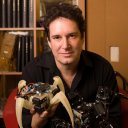
 Hod Lipson
· 6 previous affiliations
- Columbia UniversitySince 2015
- Full Professor · Since 2015
- Cornell University2001–2015
- Professor · 2001–2015
- Cornell Tech2001–2015
- Full Professor · 2001–2015
- Postdoctoral Researcher · 1998–2001
- Brandeis University1998–2001
- Postdoctoral Researcher · 1998–2001
- PhD, Mechnical Engineering · 1994–1998
Research Overview
Hod Lipson focuses on evolutionary robotics, automated scientific discovery, and the interpretability of deep neural networks. His early research explored how evolutionary principles can generate complex physical morphologies and cognitive behaviors in simulated agents. Currently, his work investigates how machine learning models can autonomously uncover physical laws from raw data and how vision-language systems represent visual understanding.
Research Trajectory
In 2009, his research explored the intersection of cognitive modeling and evolutionary robotics. With collaborators, he investigated how simulated agents could develop predictive models of other agents' intentions, detailing a co-evolutionary approach in Towards a "theory of mind" in simulated robots. This system allowed evolved controllers to retrospectively explain observed behaviors and elicit new actions for both cooperation and competition. During this period, he also contributed to human-computer interaction by developing methods for the reconstruction and analysis of three-dimensional objects from freehand drawings in Physical sketching: Reconstruction and analysis of 3D objects from freehand sketches.
Expanding on evolutionary principles, his 2012 work examined the biological mystery of network modularity. In The evolutionary origins of modularity, he demonstrated that selection pressures to minimize connection costs—the energy and material required to wire a network—naturally yield modular structures that significantly enhance evolvability. This finding intersects with the research direction of Recurrent Feedback Mechanisms in Deep Visual Networks. He subsequently applied evolutionary computation to physical design, addressing the complexity ceiling in artificial morphologies. The 2013 paper Unshackling evolution: evolving soft robots with multiple materials and a powerful generative encoding introduced techniques for evolving soft robots using diverse materials, moving beyond the rigid structural elements that had previously limited the design space.
Around 2014, his focus expanded to the internal mechanics of deep neural networks. He investigated the transition of features from general to task-specific across network layers in How transferable are features in deep neural networks?, quantifying how transferability is affected by layer depth and dataset specialization. This effort to demystify neural architectures culminated in the 2015 development of open-source visualization tools in Understanding Neural Networks Through Deep Visualization. This work provided researchers with intuitive methods to interpret complex models, contributing to several broader areas including Mitigating Input Perturbation Sensitivity in Deep Networks, Generalizing Machine Learning Frameworks Across Network Architectures, Texture Bias in Deep Vision Models, and Beyond Hand-Crafted Regularization in Inverse Problems.
Returning to physical systems and dynamics, his 2021 research introduced a data-driven framework for identifying intrinsic dimensionality in complex environments. Discovering State Variables Hidden in Experimental Data utilized predictive deep learning and geometric manifold learning to uncover hidden state variables directly from raw video streams, enabling long-term forecasting without prior physical knowledge. He extended this concept of internal modeling to robotics in Fully body visual self-modeling of robot morphologies (2022), exploring how robots can construct computational self-models to plan and control their actions. In parallel, he continued to refine machine learning fundamentals, proposing a novel multi-task learning paradigm using large binary vectors instead of standard one-hot encodings in Multi Task Learning of Different Class Label Representations for Stronger Models (2023).
By 2024, his research integrated generative AI into data augmentation and mechanical design. Learning Via Imagination: Controlled Diffusion Image Augmentation introduced a compositional approach that conditions diffusion models on existing data to generate fine-grained training examples, bypassing the high costs of fine-tuning. He applied similar generative techniques to physical engineering in Creative Synthesis of Kinematic Mechanisms (2025), framing kinematic synthesis as an image-to-image translation problem using a shared-latent variational autoencoder to generate realistic mechanical designs from motion trajectories. That same year, he explored domestic robotics in Knolling Bot: Teaching Robots the Human Notion of Tidiness, which utilized transformers in a self-supervised framework to teach robots aesthetic organization, advancing work in the area of Training Models via Progressive Task Complexity.
In 2026, his research continued to bridge machine learning interpretability and physical modeling. He developed the Temporally-Informed Dynamics Encoder (TIDE) in Aligning AI-driven Discovery with Human Intuition, a framework that applies time-derivative penalties to force the discovery of smooth, continuous physical state variables. This work contributes to the research directions of Temporal Smoothness Regularization in Sequential Representation Learning and Distilling Neural Networks into Closed Form Expressions. Concurrently, he investigated the visual grounding of multimodal architectures in Mirage Probes: How Vision Models Fake Visual Understanding. By analyzing internal representations, this research revealed how vision-language models often rely on textual biases rather than true visual comprehension, advancing work in the area of Linear Probing of Internal Network Representations.
Current Directions
Recent work investigates the interpretability and reliability of complex machine learning systems, with a dual focus on automated scientific discovery and the evaluation of vision-language models. In the domain of physical dynamics, the most recent research explores how to align AI-driven discovery with human intuition. By developing frameworks that constrain automated discovery processes, the goal is to ensure that the resulting physical state variables are smooth, continuous, and mirror interpretable human concepts such as angles and velocities.
Simultaneously, current investigations address the evaluation of visual grounding in multimodal architectures. This includes analyzing "mirage behavior" in vision-language models, where systems correctly answer visual queries without relying on the actual image content. By utilizing linear probing techniques to examine internal network representations, this ongoing work seeks to distinguish between genuine visual understanding, textual biases, and reliance on spurious image features, ultimately informing strategies for building more robust and grounded AI systems.
Profile updated
| Paper | Venue | Year |
|---|---|---|
| How transferable are features in deep neural networks?GitHubyosinski/ | NeurIPS | 2014 |
Loading new papers…
Other researchers whose papers cluster into the same research directions — a proxy for overlapping technical interests and shared intellectual neighborhoods.
See something wrong? Report a mistake