

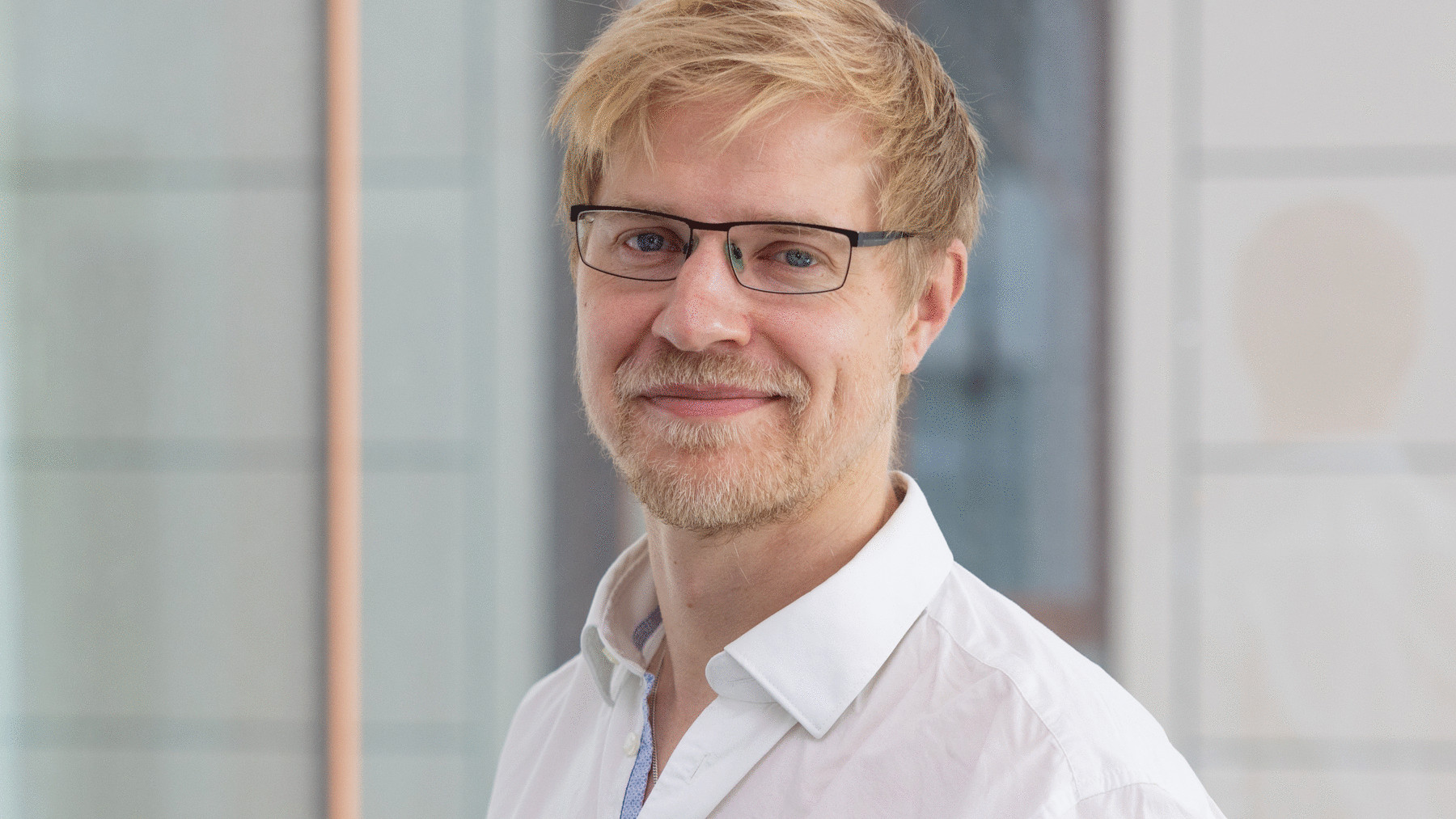
 Henning Wachsmuth
· 3 previous affiliations
- Leibniz University HannoverSince 2022
- Full Professor · Since 2022
- Current
- Paderborn University2009–2022
- Associate Professor · 2018–2022
- PhD student · 2009–2015
- Bauhaus-Universität Weimar2015–2018
- Postdoc · 2015–2018
Research Overview
Henning Wachsmuth focuses on computational argumentation, natural language processing, and the structured representation of reasoning. His early work established foundational taxonomies and datasets for assessing argument quality and reconstructing implicit warrants from text. More recently, his research investigates the integration of large language models into relevance judgments and automated machine learning workflows.
Research Trajectory
Wachsmuth’s early research established core methodologies for mining and evaluating argumentative text. In 2016, he contributed to Cross-Domain Mining of Argumentative Text through Distant Supervision, exploring how distant supervision techniques can identify arguments across diverse textual domains. He subsequently led efforts to formalize the evaluation of argument quality, a notoriously subjective task. He introduced a comprehensive taxonomy that unified existing theories of argumentation and provided a new annotated benchmark corpus in Computational Argumentation Quality Assessment in Natural Language. Expanding on this framework, he published Argumentation Quality Assessment: Theory vs. Practice, which bridged theoretical models with empirical evaluation. This work advanced the broader research direction of Learning from Sparse and Subjective Human Annotations, addressing the inherent challenges of evaluating subjective text quality. It also contributed to foundational areas such as Probabilistic Label Aggregation for Noisy Multi-Annotator Data and the early stages of the research area Granular Preference Optimization for Language Model Alignment.
Moving beyond quality assessment, his research examined the structural and rhetorical dynamics of debates. He collaborated on Before Name-Calling: Dynamics and Triggers of Ad Hominem Fallacies in Web Argumentation, which utilized large-scale annotation studies and neural architectures to investigate the linguistic triggers and underlying causes of fallacious reasoning, such as controversy and reasonableness. Concurrently, he helped develop The Argument Reasoning Comprehension Task: Identification and Reconstruction of Implicit Warrants. This research operationalized a scalable crowdsourcing process to reconstruct the implicit premises—or warrants—that connect claims to their supporting evidence, resulting in a dataset of authentic arguments from news comments and highlighting the necessity of common sense in natural language understanding.
As the field of natural language processing increasingly embraced structured knowledge representations, Wachsmuth’s focus expanded to include the construction and application of knowledge graphs. He participated in the development of CauseNet: Towards a Causality Graph Extracted from the Web, a large-scale, open-domain knowledge base containing over 11 million causal relations extracted from unstructured web sources. In the domain of debate and reasoning, he contributed to End-to-End Argumentation Knowledge Graph Construction. This work proposed a model for encapsulating the elements of arguments, introduced a corpus of approximately 16,000 manual annotations, and developed an automated framework for identifying these instances to support downstream tasks like argument synthesis and exploratory search.
The integration of external knowledge into reasoning systems became a central theme in his subsequent work. He co-authored Scientia Potentia Est - On the Role of Knowledge in Computational Argumentation, which argued that computational models of argumentation require significant common sense and world knowledge, aligning with the broader area of Hierarchical Task Evaluation for Large Models. He directed further research into structured representations, overseeing the development of Syntopical Graphs for Computational Argumentation Tasks. Building on these structured approaches, he collaborated on Employing Argumentation Knowledge Graphs for Neural Argument Generation, demonstrating how encoding conceptual relationships into language models like GPT-2 yields more relevant, plausible, and content-rich arguments.
In recent years, Wachsmuth has investigated the intersection of large language models (LLMs), human-computer collaboration, and automated workflows. He guided research on improving data collection methodologies in Supporting Requesters in Writing Clear Crowdsourcing Task Descriptions Through Computational Flaw Assessment. Addressing the growing capabilities of generative AI, he led the perspective piece Perspectives on Large Language Models for Relevance Judgment. This work categorized strategies for human-machine collaboration in information retrieval, exploring the extent to which human experts can rely on LLMs for automated assessment and including pilot experiments on the correlation between LLM judgments and trained human assessors. Most recently, he contributed to AutoML in the Age of Large Language Models: Current Challenges, Future Opportunities and Risks. This collaborative survey examines how LLMs intersect with automated machine learning, touching upon research directions such as Translating Natural Language Intent into Formal Mathematical Optimization and Efficient Hyperparameter Optimization via Multi Fidelity and Online Tuning.
Current Directions
The most recent papers in the evidence indicate a focus on the evaluation and application of large language models within complex, human-in-the-loop systems. Recent work investigates how LLMs can be utilized for relevance judgments in information retrieval, emphasizing the spectrum of human-machine collaboration and the reliability of automated assessments compared to human experts. Additionally, his research addresses the integration of language models into automated machine learning (AutoML) pipelines, exploring the challenges and opportunities of using generative AI to streamline hyperparameter optimization and translate natural language intents into formal optimization tasks. He also continues to explore methodologies for improving crowdsourcing processes through computational assessment, ensuring high-quality data collection for complex semantic tasks.
Profile updated
Loading new papers…
Other researchers whose papers cluster into the same research directions — a proxy for overlapping technical interests and shared intellectual neighborhoods.
See something wrong? Report a mistake