

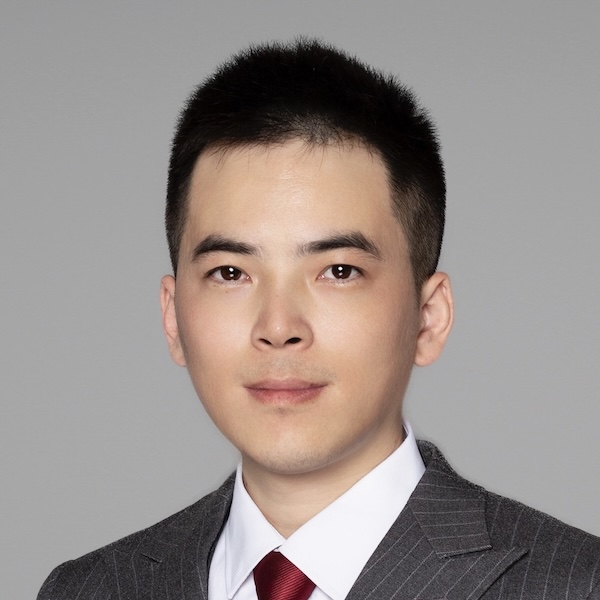
 Henghui Ding
· 5 previous affiliations
- Fudan UniversitySince 2024
- Full Professor · Since 2024
- Nanyang Technological University2016–2024
- Postdoc · 2022–2024
- PhD · 2016–2020
- ETH Zurich2021–2022
- Postdoc · 2021–2022
- ByteDance (China)2020–2021
- Researcher · 2020–2021
- Xi'an Jiaotong University2012–2016
- Undergrad student · 2012–2016
Research Overview
Henghui Ding focuses on computer vision, specifically advancing semantic segmentation, video object tracking, and vision-language grounding. His research trajectory spans from foundational image parsing and interactive segmentation to complex video understanding and 3D scene representation. Most recently, his work addresses multimodal tracking, active visual exploration, and controllable multi-object generation in dynamic environments.
Research Trajectory
Henghui Ding’s early research concentrated on overcoming the core challenges of scene and semantic segmentation in static images, particularly the need to effectively aggregate context and delineate object boundaries. In Context Contrasted Feature and Gated Multi-Scale Aggregation for Scene Segmentation (2018), he introduced a method to leverage informative context while highlighting local features, utilizing a gated sum scheme to selectively aggregate multi-scale features. Building on this, he explored how structural boundaries could guide feature propagation in Boundary-Aware Feature Propagation for Scene Segmentation (2019). By learning boundaries as an additional semantic class and employing unidirectional acyclic graphs, this approach improved feature similarity within objects while maintaining discrimination across different classes. Recognizing that predefined contextual regions are often inefficient due to the diverse shapes of objects, he subsequently developed a scale- and shape-variant semantic mask in Semantic Correlation Promoted Shape-Variant Context for Segmentation. (2019) to dynamically confine contextual regions for individual pixels.
As his focus expanded toward more flexible and user-guided segmentation paradigms, Ding began integrating natural language and interactive elements into his models. To reduce the excessive user interactions typically required in click-based systems, he developed PhraseClick: Toward Achieving Flexible Interactive Segmentation by Phrase and Click (2020), which incorporated phrase expressions to explicitly define target attributes. This interest in semantic flexibility naturally extended to handling unseen object categories. In Prototypical Matching and Open Set Rejection for Zero-Shot Semantic Segmentation (2021), he participated in designing an open-aware prototypical matching approach that maps semantic word embeddings to visual prototypes, allowing models to identify novel classes without pixel-wise annotations. He further advanced vision-language integration in Vision-Language Transformer and Query Generation for Referring Segmentation (2021), reformulating the task as a direct attention problem where an encoder-decoder architecture queries the image using language expressions.
By 2023, Ding’s research shifted significantly toward the temporal domain, addressing the complexities of video object segmentation (VOS) and generalized referring expressions. Recognizing that existing datasets often relied on static attributes rather than temporal dynamics, he introduced MeViS: A Large-scale Benchmark for Video Segmentation with Motion Expressions, which grounds and segments objects based on sentences describing their motion. He also sought to push VOS beyond salient, isolated objects by collecting MOSE: A New Dataset for Video Object Segmentation in Complex Scenes, focusing on tracking targets in crowded and occluded environments. Concurrently, he addressed limitations in referring expression segmentation by co-developing GRES: Generalized Referring Expression Segmentation, a benchmark that accommodates multi-target and no-target expressions. Alongside these large-scale benchmarks, he continued to refine data-efficient learning, proposing a Self-regularized prototypical network for few-shot semantic segmentation and extending these principles to spatial data in Prototype Adaption and Projection for Few- and Zero-Shot 3D Point Cloud Semantic Segmentation, which mitigates the high cost of 3D annotation by adapting features for few-shot point cloud parsing.
In his most recent work, Ding has tackled highly complex 3D, generative, and multimodal environments. In the area of 3D Gaussian Splatting for Photorealistic Scene Representation, he led the development of ReferSplat: Referring Segmentation in 3D Gaussian Splatting (2025). This work introduces a contrastive learning approach to segment specific objects in 3D scenes using free-form natural language, contributing to broader efforts in Cross Modal Contrastive Alignment for 3D Learning and Resolving Instance Ambiguity in 3D Scene Grounding. In the generative space, he addressed challenges related to Preventing Identity Leakage in Multi-Subject Text-to-Image Generation with SceneDesigner: Controllable Multi-Object Image Generation with 9-DoF Pose Manipulation (2025), enabling precise scaling and orientation of multiple objects without attribute bleeding.
His recent temporal research continues to emphasize motion and multimodal integration. He introduced MOVE: Motion-Guided Few-Shot Video Object Segmentation (2025), which shifts the focus of few-shot VOS from object categories to motion patterns, advancing the area of Overcoming the Limits of Textual Motion Descriptions. Expanding into audio-visual domains, he developed AVTrack: Audio-Visual Tracking in Human-centric Complex Scenes (2026), providing a modular baseline to address Overcoming the Deaf Response in Multimodal AI. Furthermore, he has moved beyond passive video analysis with RVAS: Referring Video Active Exploration and Segmentation (2026), proposing a framework for goal-driven exploration in egocentric environments, which intersects with Hierarchical Temporal Modeling for Long Video Understanding. Finally, he addressed the practical challenge of shot discontinuities in real-world video with Segment Anything Across Shots: A Method and Benchmark (2026), utilizing transition-mimicking data augmentation to enable cross-shot generalization.
Continuing into 2026, Ding's group has broadened their focus on video and multimodal foundation models to address robustness, hallucinations, and training-free adaptation. In Attack-Inference Aligned Universal Adversarial Attacks on Video Object Segmentation, Ding led the development of AUV, an adversarial attack framework tailored to the two-stage initialization and propagation paradigm of VOS models by targeting their shared latent memory space across arbitrary prompt modalities. To tackle hallucination issues in large vision-language models, Ding oversaw VidHalluDoctor: Learning Video Differences to Mitigate Hallucinations in Vision-Language Models, introducing video difference and counterfactual training combined with consistency-aware reinforcement learning alongside the VidHalluEva benchmark. Addressing foundation model adaptation, Ding also directed eSAM: Editing SAM3 Attention for Training-Free Referring Segmentation, a training-free framework that resolves attention sinks in SAM 3's multimodal fusion encoder through cross-attention mask and value editing.
Current Directions
Ding’s most recent papers indicate a strong focus on multimodal, active, and 3D-aware computer vision systems. A major current direction is the transition from passive observation to active, goal-driven visual exploration, particularly in complex egocentric environments where systems must plan and localize targets dynamically. This is complemented by an increasing emphasis on multimodal tracking, where audio cues are integrated with visual data to maintain robust tracking of human-centric subjects in cluttered scenes.
Additionally, his recent work investigates advanced 3D scene representation and controllable generation. He is actively exploring how to ground complex, free-form natural language queries within 3D Gaussian Splatting frameworks, allowing for high-speed, open-vocabulary 3D segmentation. In parallel, he is addressing the limitations of current text-to-image models by developing techniques for precise 9-DoF pose manipulation, ensuring that multi-object generations maintain strict spatial and orientational fidelity without identity leakage. Finally, their ongoing research in video object segmentation and multimodal models examines foundation model vulnerabilities under universal adversarial perturbations, training-free cross-attention editing for referring segmentation, and mitigating hallucinations in large vision-language models.
Profile updated
Loading new papers…
Other researchers whose papers cluster into the same research directions — a proxy for overlapping technical interests and shared intellectual neighborhoods.
See something wrong? Report a mistake