

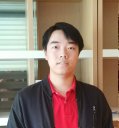
 Zhaofan Qiu
· 2 previous affiliations
- Jingdong (China)Since 2020
- Researcher · Since 2020
- PhD student · 2015–2020
Research Overview
Zhaofan Qiu focuses on video understanding, multi-modal representation learning, and generative artificial intelligence. His trajectory spans from foundational spatio-temporal network architectures and self-supervised video representations to recent advancements in diffusion models and consistent video generation. He currently investigates efficient sampling and precise editing constraints for generative video models.
Research Trajectory
Early in his career, Qiu explored deep feature representations and vision-language integration. With collaborators, he developed frameworks to enhance image captioning by explicitly integrating high-level semantic attributes into CNN-RNN pipelines, as detailed in Boosting Image Captioning with Attributes. This work advanced the research areas of Semantic Attribute Bridging for Vision-Language Tasks and Persistent Semantic Guidance for Sequence Generation. Concurrently, he investigated the broader direction of Feature Extraction through Model Parameter Gradients by introducing FV-VAE in Deep Quantization: Encoding Convolutional Activations with Deep Generative Model, an architecture that quantizes local convolutional activations within an end-to-end deep generative model.
A major focus of Qiu's early trajectory was the efficient modeling of video data. In Learning Spatio-Temporal Representation with Pseudo-3D Residual Networks, he addressed the high computational cost of 3D convolutional neural networks by devising bottleneck building blocks that recycle off-the-shelf 2D networks to capture both spatial and temporal dimensions. He continued to refine spatio-temporal representations in Learning Spatio-Temporal Representation With Local and Global Diffusion, presenting a neural network architecture composed of blocks that learn local and global dependencies in parallel to handle complex temporal variations.
During this period, Qiu also addressed the domain shift problem in computer vision. He introduced the Fully Convolutional Adaptation Networks (FCAN) framework in Fully Convolutional Adaptation Networks for Semantic Segmentation, combining pixel-level style transfer with feature-level adversarial learning to adapt models trained on synthetic data to real-world images. He further expanded on this in Transferring and Regularizing Prediction for Semantic Segmentation, proposing a label-free framework that enforces patch consistency, cluster similarity, and spatial logic to bridge the domain gap without requiring manual labels for target images.
Moving into the early 2020s, Qiu's research shifted toward self-supervised learning for video. He participated in developing SeCo, a framework detailed in SeCo: Exploring Sequence Supervision for Unsupervised Representation Learning, which leverages spatial, spatiotemporal, and sequential supervision to learn powerful video features, contributing significantly to the area of Multi-Task Synergy for Self-Supervised Video Representation. He also collaborated on Motion-Focused Contrastive Learning of Video Representations, a self-supervised approach that uses motion maps to guide data augmentation and align network gradients with actual movement.
In 2022, Qiu explored novel architectures and attention mechanisms to improve video and 3D recognition efficiency. He contributed to MLP-3D: A MLP-like 3D Architecture with Grouped Time Mixing, adapting the efficiency of 2D MLP-Mixers to video by introducing Grouped Time Mixing. To address the assumption of perfect pixel alignment across frames, he developed the Stand-Alone Inter-Frame Attention block in Stand-Alone Inter-Frame Attention in Video Models, combining deformable sampling with local self-attention guided by motion saliency. He also proposed MUSLE in Representing Videos as Discriminative Sub-graphs for Action Recognition, a framework that decomposes complex video graphs into multi-scale sub-graphs to filter out environmental noise and focus on core interactions. Expanding his architectural work to 3D point clouds, he participated in the development of SPE-Net: Boosting Point Cloud Analysis via Rotation Robustness Enhancement.
Continuing his work on 3D and video modeling in 2023, Qiu introduced Selective Volume Mixup in Selective Volume Mixup for Video Action Recognition, an attention-based data augmentation strategy that intelligently combines informative volumes from different videos to reduce overfitting. He also addressed 3D reconstruction in Learning Neural Implicit Surfaces with Object-Aware Radiance Fields, developing a framework that reconstructs high-quality object surfaces from multi-view images without manual silhouette masks. For human pose estimation, he designed STCFormer, detailed in 3D Human Pose Estimation with Spatio-Temporal Criss-Cross Attention, which decomposes complex joint relationships into parallel spatial and temporal attention pathways to reduce computational costs.
Most recently, as a researcher at HiDream.ai, Qiu has focused on generative artificial intelligence, specifically diffusion models and video synthesis. In VideoStudio: Generating Consistent-Content and Multi-scene Videos, he introduced a framework that uses large language models as directors and diffusion models as cinematographers to generate multi-scene videos with high content consistency. He also collaborated on Distillation Models are Good Samplers for Diffusion Reinforcement Learning, addressing the computational bottlenecks of reinforcement learning in diffusion models. Further advancing video editing capabilities, he participated in the development of ReCo, presented in In-Context Generation with Regional Constraints for Instructional Video Editing, which treats instructional video editing as an in-context generation problem by applying regional constraints in latent and attention spaces.
Current Directions
The most recent papers in the evidence indicate a strong focus on generative artificial intelligence, particularly the control, efficiency, and consistency of diffusion models for video synthesis. Recent work investigates how to maintain visual consistency across multiple scenes and camera angles by anchoring generation to explicit reference images. Additionally, Qiu is exploring the intersection of reinforcement learning and diffusion models to improve sampling efficiency, as well as developing regional constraint modeling techniques to enable precise, object-level edits in instructional videos without compromising background consistency.
Profile updated
Loading new papers…
Other researchers whose papers cluster into the same research directions — a proxy for overlapping technical interests and shared intellectual neighborhoods.
See something wrong? Report a mistake