

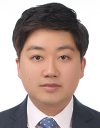
 Heechul Jung
· 3 previous affiliations
- Kyungpook National UniversitySince 2019
- Associate Professor · Since 2019
- PhD student · 2011–2018
- MS student · 2008–2010
Research Overview
Heechul Jung focuses on computer vision, deep learning architectures, and the safety of generative models. His trajectory spans early work in facial analysis and domain adaptation to recent advancements in 3D object detection and data-efficient training methodologies. Currently, he investigates robust defense mechanisms for diffusion models and stable baselines for deepfake detection.
Research Trajectory
Jung’s early research concentrated on foundational problems in computer vision and facial analysis. In 2014, he contributed to Rigid Motion Segmentation Using Randomized Voting, developing an algorithm based on epipolar geometry that computes scores via feature point distances to corresponding epipolar lines, achieving high accuracy on the Hopkins 155 dataset. Building on this vision expertise, his focus shifted toward deep learning applications for facial recognition. In Joint Fine-Tuning in Deep Neural Networks for Facial Expression Recognition (2015), he introduced an integration method that combines temporal appearance features from image sequences with geometry features extracted from facial landmarks. This period of his work significantly advanced the research direction of Fusing Facial Texture and Landmark Geometry. Concurrently, he explored multi-task learning frameworks, as demonstrated in Rotating your face using multi-task deep neural network (2015). By employing an auxiliary reconstruction task and a remote code to specify angles, this model successfully rotated 2D face images to target poses while strictly preserving identity, contributing to the broader area of Unified Loss Functions for Multi-Task Learning.
As deep neural networks became more ubiquitous, Jung began investigating their internal representations and limitations. In Can Deep Neural Networks Match the Related Objects?: A Survey on ImageNet-trained Classification Models (2017), he utilized cognitive psychology datasets to demonstrate that while ImageNet-trained models successfully group objects by visual similarity, they struggle to comprehend associative semantic relationships. This interest in how models learn and retain information led to Less-Forgetful Learning for Domain Expansion in Deep Neural Networks (2018). Addressing the challenge of catastrophic forgetting, he proposed a method allowing networks to expand their learned domains without requiring access to old data or explicit domain labels, aligning with his broader interest in the area of Representation Drift in Continual Learning.
In the early 2020s, Jung’s research expanded into data efficiency and generative synthesis. He addressed the manual annotation bottleneck in Extending Contrastive Learning to Unsupervised Coreset Selection (2022). By tracking the cosine similarity of different views of the same image, this work identified the most informative samples in a dataset, advancing the research direction of Label-Free Coreset Selection for Efficient Training. Applying generative models to specialized domains, he guided the development of Semantic Map Guided Synthesis of Wireless Capsule Endoscopy Images using Diffusion Models (2023). This method utilized semantic segmentation maps to control the generation of realistic medical images, mitigating training data scarcity and contributing to the area of Clinical Indistinguishability of Synthetic Medical Data.
Jung has also made significant contributions to 3D perception for autonomous systems. In Re-VoxelDet: Rethinking Neck and Head Architectures for High-Performance Voxel-based 3D Detection (2024), he and his collaborators tackled spatial information loss in LiDAR processing. By introducing a multi-view backbone and a hierarchical auxiliary neck, the Re-VoxelDet architecture achieved state-of-the-art accuracy on major benchmarks like Argoverse2 and nuScenes while improving inference speed.
Most recently, his work has focused on model distillation, safety, and forensic detection. In Feature-Level Knowledge Distillation from LMM for Enhanced Image Classification (2025), he explored transferring knowledge from Large Multimodal Models (LMMs) to smaller, specialized vision models, leveraging rich textual descriptions to boost the performance of standard architectures like ResNet-50. Addressing the critical need for generative safety, he authored Distorting Embedding Space for Safety: A Defense Mechanism for Adversarially Robust Diffusion Models (2025). This research introduced an efficient defense mechanism to prevent the generation of unsafe content, contributing to the broader area of Controlling Language Models Through Latent Space Interventions. Continuing this focus on security, he led the development of PlainProbe: A Stable Cross-Entropy Baseline for Data-Scarce Deepfake Detection (2026), demonstrating that stripping away complex auxiliary objectives in favor of standard cross-entropy significantly improves training stability and reliability when detecting AI-generated forgeries.
Current Directions
Recent work investigates the security, efficiency, and forensic evaluation of modern generative architectures. The most recent papers in the evidence address the vulnerabilities of diffusion models, proposing embedding distortion techniques to prevent the generation of adversarial or unsafe content. Additionally, Jung is exploring stable, data-efficient baselines for deepfake detection, emphasizing simplified training objectives over complex auxiliary tasks to improve reliability in data-scarce environments. His ongoing research also examines knowledge distillation, specifically how the rich semantic understanding of Large Multimodal Models can be effectively transferred to smaller, deployable vision architectures.
Profile updated
Loading new papers…
Other researchers whose papers cluster into the same research directions — a proxy for overlapping technical interests and shared intellectual neighborhoods.
See something wrong? Report a mistake