

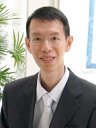
 Hau-San Wong
· 1 previous affiliation
- City University of Hong KongSince 2001
- Full Professor · Since 2001
Research Overview
Hau-San Wong focuses on computational intelligence, computer vision, and bioinformatics, with an emphasis on developing advanced machine learning frameworks for complex data. His trajectory spans early work in evolutionary algorithms and image restoration to modern deep learning approaches for video processing and single-cell transcriptomics. Recently, his research investigates the integration of large language models into visual reasoning and the application of diffusion models to spatial gene expression.
Research Trajectory
Wong’s early research focused on computational approaches to image processing and computer vision. He developed adaptive regularization techniques using evolutionary programming in Application of evolutionary programming to adaptive regularization in image restoration (2000) and subsequently introduced a fuzzy model-based network architecture for image restoration in A neural learning approach for adaptive image restoration using a fuzzy model-based network architecture (2001). Expanding into three-dimensional computer vision, he collaborated on methods for identifying 3D objects from single views, as detailed in Polyhedral Object Localization in an Image by Referencing to a Single Model View. (2003), and later extended this paradigm to facial recognition with 3-D Head Model Retrieval Using a Single Face View Query (2007).
During the late 2000s and early 2010s, Wong’s focus broadened to include bioinformatics and complex optimization problems. He contributed to the analysis of microarray data, participating in the development of cluster ensemble techniques in Graph-based consensus clustering for class discovery from gene expression data (2007). His work in optimization included applying neighborhood knowledge to evolutionary algorithms in Neighborhood Knowledge-Based Evolutionary Algorithm for Multiobjective Optimization Problems (2011), which aligns with his broader interest in the research direction of The Sensitivity of Multi-Objective Loss Balancing. He continued to advance bioinformatics methodologies, collaborating on spectral clustering frameworks for cancer gene expression profiling in SC³: Triple Spectral Clustering-Based Consensus Clustering Framework for Class Discovery from Cancer Gene Expression Profiles (2012).
The most recent phase of Wong’s trajectory demonstrates a significant expansion into modern deep learning, generative models, and single-cell biology. In the biomedical domain, he has directed substantial work in the area of Multimodal Foundation Models for Single Cell Biology. To address the challenges of noise and dropout in single-cell RNA sequencing (scRNA-seq) data, his group proposed a deep subspace clustering framework utilizing Optimal Transport in Robust subspace structure discovery for cell type identification in scRNA-seq data (2025). This contributes directly to the broader area of Overcoming Data Sparsity in Single Cell Sequencing. He further advanced unsupervised cell type identification by modeling complex cell-gene associations in Refinement Contrastive Learning of Cell-Gene Associations for Unsupervised Cell Type Identification (2025). Bridging spatial and single-cell transcriptomics, he led the development of a multi-modal diffusion model for spatial gene expression imputation in SpotDiff: Spatial Gene Expression Imputation Diffusion with Single-Cell RNA Sequencing Data Integration (2025).
Concurrently, Wong has overseen advanced research in computer vision and generative artificial intelligence. In the domain of video restoration, his team addressed temporal flickering in blind face video restoration through discrete visual codebooks in Discrete Prior-Based Temporal-Coherent Content Prediction for Blind Face Video Restoration (2025) and motion-aware semantic dictionaries in Dynamic Content Prediction with Motion-aware Priors for Blind Face Video Restoration (2025). He also explored the integration of Large Language Models (LLMs) into visual tasks, directing the development of an interactive, instruction-based face retouching framework in RetouchGPT: LLM-based Interactive High-Fidelity Face Retouching via Imperfection Prompting (2025), and leveraging LLM reasoning for precise visual grounding and segmentation in Task-aware Cross-modal Feature Refinement Transformer with Large Language Models for Visual Grounding (2025).
Most recently, Wong's research encompasses graph neural networks and the optimization of language models. He directed work on homophily-aware contrastive learning for graph clustering in Trustworthy Neighborhoods Mining: Homophily-Aware Neutral Contrastive Learning for Graph Clustering (2026). Additionally, he has participated in collaborative efforts to enhance the reasoning capabilities of generative models, including optimizing token generation order in DPRM: A Plug-in Token-Ordering Module for Diffusion Language Models (2026) and exploring reinforcement learning post-training strategies in Provable Sample Efficiency of Curriculum Post-Training for Transformer Reasoning (2026).
Current Directions
The most recent papers in the evidence indicate a dual focus on advanced generative modeling for visual media and the application of deep learning to complex biological data. In computer vision, current work investigates the use of diffusion models and Large Language Models to achieve temporally coherent video restoration and interactive, instruction-guided image editing. Simultaneously, in the biomedical domain, ongoing research addresses the challenges of single-cell and spatial transcriptomics, utilizing contrastive learning, optimal transport, and multi-modal diffusion techniques to recover biological signals from sparse, noisy datasets and improve unsupervised cell type identification. Furthermore, recent collaborative efforts explore the optimization of reasoning and token generation in large language and diffusion models.
Profile updated
Loading new papers…
Other researchers whose papers cluster into the same research directions — a proxy for overlapping technical interests and shared intellectual neighborhoods.
See something wrong? Report a mistake