

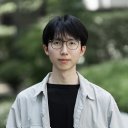
 Andi Han
· 2 previous affiliations
- The University of SydneySince 2025
- Lecturer · Since 2025
- PhD student · 2020–2023
- RIKEN2023–2025
- Postdoc · 2023–2025
Research Overview
Andi Han focuses on Riemannian optimization, geometric deep learning, and the theoretical foundations of neural network training. His early work established highly efficient optimization algorithms for non-Euclidean spaces, particularly symmetric positive definite matrices and differentially private manifolds. Recently, his research has expanded to address memory-efficient large language model pretraining, diffusion models, and advanced neural differential equations.
Research Trajectory
Beginning in 2021, Han established foundational improvements for optimization over curved parameter spaces. He introduced On Riemannian Optimization over Positive Definite Matrices with the Bures-Wasserstein Geometry, demonstrating that the optimal-transport-derived Bures-Wasserstein geometry offers a better-conditioned Riemannian Hessian and strictly faster convergence than the default Affine-Invariant metric for symmetric positive definite (SPD) matrices. He expanded on these geometric optimization frameworks by developing variance reduction techniques, detailing high-performance algorithms in Riemannian Stochastic Recursive Momentum Method for non-Convex Optimization and subsequently in Improved Variance Reduction Methods for Riemannian Non-Convex Optimization.
Building on these optimization frameworks, he connected geometric methods to privacy in 2023, contributing to the broader area of Differential Privacy on Riemannian Manifolds. His work Improved Differentially Private Riemannian Optimization: Fast Sampling and Variance Reduction introduced a fast sampling technique and a variance-reduced algorithm (DP-RSVRG) that balanced noise across iterations, making private machine learning practically viable on complex geometric spaces like spheres and symmetric matrices. Around the same time, Han explored the continuous dynamics of message passing in graph neural networks (GNNs). In From Continuous Dynamics to Graph Neural Networks: Neural Diffusion and Beyond, he analogized GNN propagation to heat diffusion to better understand the architecture's theoretical limits. This physics-informed perspective later culminated in Design your own universe: a physics-informed agnostic method for enhancing graph neural networks (2025), which modeled GNN propagation as a particle system with attractive and repulsive forces to simultaneously address over-smoothing, over-squashing, and heterophily.
Returning to manifold optimization in 2024, Han developed A Framework for Bilevel Optimization on Riemannian Manifolds, extending techniques essential for meta-learning and neural architecture search to curved surfaces. He also advanced optimal transport with Riemannian block SPD coupling manifold and its application to optimal transport, creating a robust framework for balanced transport that preserves complex structural correlations, and introduced specialized algorithms in Riemannian coordinate descent algorithms on matrix manifolds.
Han's focus also broadened to include the efficiency of large-scale model training. To address the challenge of Reducing Optimizer State Memory Overhead in Training, he introduced SLTrain: a sparse plus low rank approach for parameter and memory efficient pretraining. By representing weight matrices as a sum of a low-rank component and a fixed random sparse mask, the approach drastically reduced memory requirements for large language models while maintaining full-rank performance.
In 2025, Han tackled fundamental questions in feature learning. Contributing to the research direction of Signal-Noise Weight Decomposition in Neural Network Training, his paper On the Role of Label Noise in the Feature Learning Process provided a theoretical characterization of how models learn generalizable signals before eventually pivoting to memorize noise. He also analyzed representation learning in generative models, providing theoretical grounding for their robustness and transferability in On the Feature Learning in Diffusion Models.
Simultaneously, he continued to push the boundaries of geometric optimization. He extended SPD geometries to infinite dimensions in Generalized infinite dimensional Alpha-Procrustes based geometries, creating robust tools for shape analysis and functional data comparison. Crucially, he addressed the computational cost of manifold retractions—contributing to the research direction of Bypassing Retraction Bottlenecks in Riemannian Optimization—with Efficient Optimization with Orthogonality Constraint: a Randomized Riemannian Submanifold Method. This scalable algorithm restricts updates to low-dimensional random submanifolds, enabling faster convergence for high-dimensional tasks.
In his most recent 2026 work, Han has led research into complex dynamical systems and molecular modeling. He directed the development of Branched Neural Rough Differential Equations in Learning Manifold and Itô Dynamics with Branched Neural Rough Differential Equations, leveraging a Hopf-algebraic approach to model Itô dynamics on curved state spaces. He also oversaw the creation of ATOM: A Pretrained Neural Operator for Multitask Molecular Dynamics, a transformer-based operator that shifts molecular dynamics toward parallel trajectory modeling with zero-shot generalization capabilities. Finally, he collaborated on Provable Sample Efficiency of Curriculum Post-Training for Transformer Reasoning, which investigates reinforcement learning curricula to address the broader area of Overcoming the Sparse Reward Bottleneck in Language Model Reasoning.
Current Directions
The most recent papers in the evidence address the intersection of geometric deep learning, complex dynamical systems, and the post-training of large language models. Recent work investigates the use of neural operators for multitask molecular dynamics, moving away from step-by-step predictions toward parallel trajectory modeling. Additionally, Han is exploring the modeling of Itô dynamics on curved state spaces using Branched Neural Rough Differential Equations. Broader themes in his recent research also include the design of non-dissipative architectures, contributing to the area of Non-Dissipative Neural Networks via Antisymmetric Weights, as well as theoretical investigations into the sample efficiency of curriculum-based reinforcement learning to improve the reasoning capabilities of transformer models.
Profile updated
Loading new papers…
Other researchers whose papers cluster into the same research directions — a proxy for overlapping technical interests and shared intellectual neighborhoods.
See something wrong? Report a mistake