

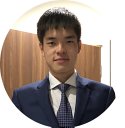
 Haoqin Tu
· 2 previous affiliations
- University of California, Santa CruzSince 2024
- PhD student · Since 2024
- MS student · 2021–2024
Research Overview
Haoqin Tu focuses on natural language processing, multimodal learning, and the safety alignment of large language models. His research trajectory spans from controllable text generation to the holistic evaluation and reinforcement of reasoning capabilities in vision-language systems. Currently, he investigates data-efficient safety alignment and spatial reasoning mechanisms for multimodal foundation models.
Research Trajectory
Tu's early research explored controllable text generation, contributing to the area of Latent Variable Injection in Transformer Decoders. In PCAE: A framework of plug-in conditional auto-encoder for controllable text generation, he introduced a framework designed to guide language model outputs through plug-and-play mechanisms. Expanding into multimodal interactions, he investigated how visual knowledge can enhance text-only dialogue systems. The publication ReSee: Responding through Seeing Fine-grained Visual Knowledge in Open-domain Dialogue proposed a paradigm for constructing multimodal dialogues by explicitly splitting visual knowledge into turn-level and entity-level granularities, aiming to improve the accuracy and diversity of augmented visual information.
During this period, he also uncovered unexpected benefits of visual instruction tuning on pure natural language tasks. In Sight Beyond Text: Multi-Modal Training Enhances LLMs in Truthfulness and Ethics, later formalized in a subsequent publication, Tu demonstrated that integrating vision knowledge into large language models inadvertently improves their truthfulness and ethical alignment, advancing the broader research direction of Scalable Alignment via Automated Preference Feedback.
In 2024, his focus broadened to encompass comprehensive model evaluation and data synthesis. Collaborating on VHELM: A Holistic Evaluation of Vision Language Models, he helped extend the HELM framework to assess vision-language models across dimensions such as fairness, robustness, and toxicity, moving beyond standard perception metrics. Concurrently, he explored high-fidelity data synthesis in What If We Recaption Billions of Web Images with LLaMA-3?, which utilized an open-source pipeline to semantically enrich noisy web-crawled image-text pairs, demonstrating significant enhancements in downstream vision-language training. Parallel to his multimodal work, Tu investigated the vulnerabilities of aligned models. His research in AttnGCG: Enhancing Jailbreaking Attacks on LLMs with Attention Manipulation analyzed how optimization-based jailbreaking strategies interact with a model's internal attention mechanisms, revealing that manipulating attention scores can bypass safety alignments.
By 2025, Tu's research increasingly emphasized complex reasoning and process-based evaluation. He continued his work on holistic benchmarks with AHELM: A Holistic Evaluation of Audio-Language Models, standardizing the assessment of audio-language systems. In the visual domain, he introduced When Visualizing is the First Step to Reasoning: MIRA, a Benchmark for Visual Chain-of-Thought, evaluating scenarios where models must generate intermediate images—such as sketches or structural diagrams—to solve complex spatial problems.
This interest in spatial and procedural reasoning led to SpatialThinker: Reinforcing 3D Reasoning in Multimodal LLMs via Spatial Rewards, where he applied dense reinforcement learning and structured scene graphs to boost 3D spatial reasoning using a compact, high-quality dataset. Further advancing the area of Shifting from Static Benchmarks to Dynamic Evaluation, he developed ViLBench: A Suite for Vision-Language Process Reward Modeling, curating a dataset to train process-supervised reward models specifically for step-wise reasoning verification in vision-language tasks. Addressing the safety of these advanced reasoning systems, Tu contributed to the research direction of Mitigating the Alignment Tax in Large Language Models. In STAR-1: Safer Alignment of Reasoning LLMs with 1K Data, he demonstrated that large reasoning models can be effectively aligned using a highly curated, 1,000-sample dataset based on deliberative reasoning and rigorous filtering.
In 2026, Tu contributed to scalable agentic architectures and visual generation frameworks. They participated in the development of Nemotron 3.5 Super and Lightning: Open, Efficient Mixture-of-Experts Hybrid Mamba-Transformer Models for Agentic AI, introducing open hybrid Mamba-Transformer mixture-of-experts models optimized through distillation, speculative decoding, and agentic post-training for multimodal and software-engineering tasks. Furthermore, in Nemotron-Labs-VisualCreation: Pixel as Code for Agentic Visual Creation, Tu helped introduce an agentic visual creation system unifying discrete visual token representations for raster images with programmatic code for structured visual artifacts.
Current Directions
The most recent papers in the evidence address agentic foundation models, visual creation pipelines, the efficiency of pretraining, and the security of autonomous AI agents. Recent work investigates training-free methods for data selection, such as identifying critical neural pathways to select pretraining documents that maximize compute efficiency, as detailed in Target-Oriented Pretraining Data Selection via Neuron-Activated Graph. Additionally, Tu is exploring the vulnerabilities of personal AI agents that update their own memories. In Your Agent, Their Asset: A Real-World Safety Analysis of OpenClaw, he and his collaborators analyze "state poisoning" attacks, demonstrating how malicious actors can hijack evolving agents in real-world scenarios.
Profile updated
Loading new papers…
Other researchers whose papers cluster into the same research directions — a proxy for overlapping technical interests and shared intellectual neighborhoods.
See something wrong? Report a mistake