

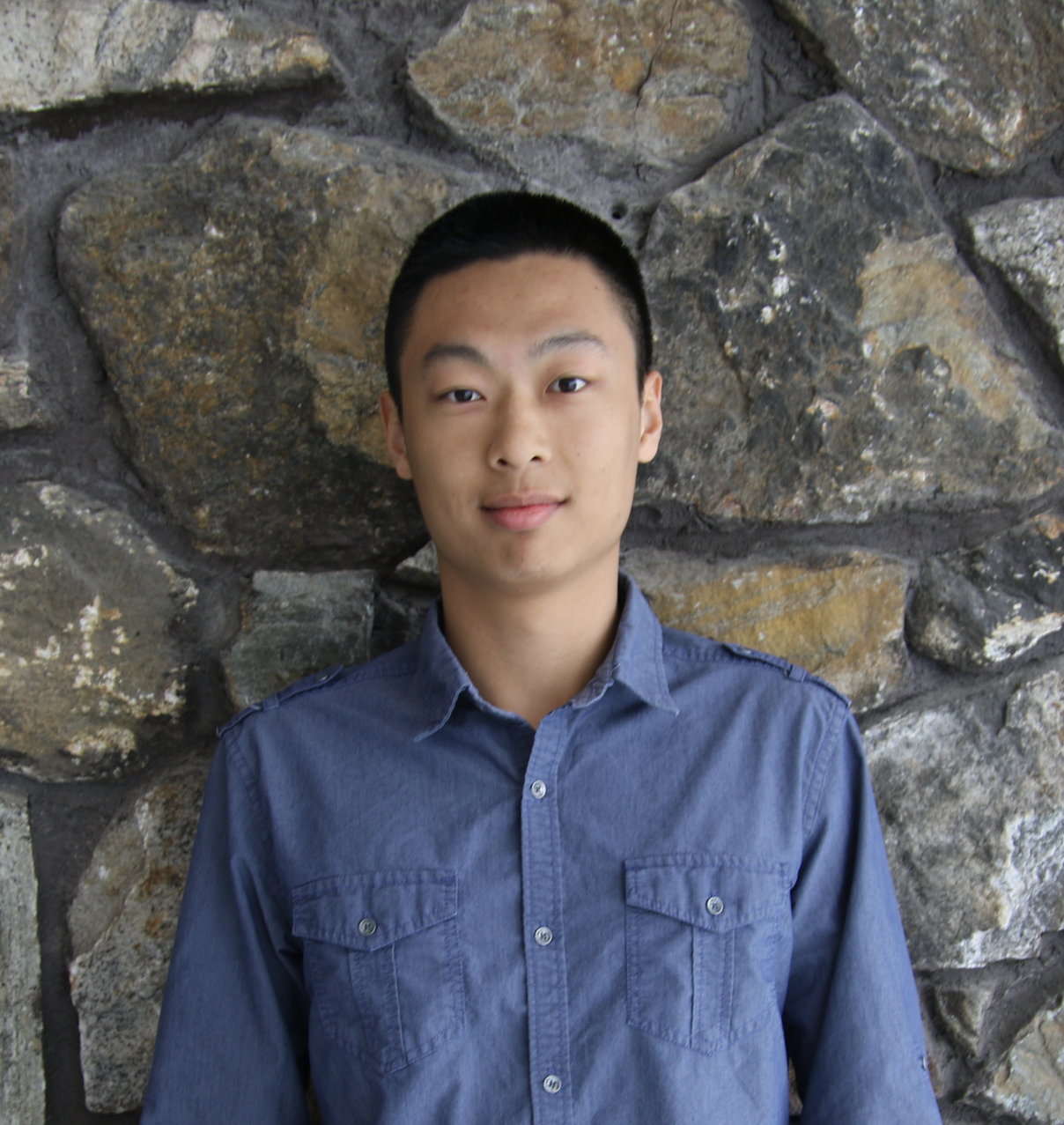
 Hao Wang
· 4 previous affiliations
- Red HatSince 2024
- Researcher · Since 2024
- Researcher · 2022–2024
- Harvard University2016–2022
- PhD student · 2016–2022
- Undergrad student · 2012–2016
54 other authors named Hao Wang: Hao Wang (Leiden University · LIACS · 178 papers), Hao Wang (Stevens Institute of Technology · Scholera · United States Air Force Research Laboratory · 162 papers), Hao Wang (Monash University · 149 papers), Hao Wang (University of Science and Technology of China · 128 papers), Hao Wang (University of Illinois Urbana-Champaign · 117 papers), and 49 more
Research Overview
Hao Wang focuses on trustworthy machine learning, algorithmic fairness, and privacy-preserving data sharing through the lens of information theory. His trajectory spans fundamental theoretical limits in optimization and fairness to practical interventions for handling missing data and synthetic data generation. Most recently, his work addresses efficient foundation models and contextual privacy in conversational agents.
Research Trajectory
Wang’s early research established information-theoretic foundations for data privacy and algorithmic fairness. He introduced an estimation-theoretic analysis of the privacy-utility trade-off in An estimation-theoretic view of privacy, demonstrating how chi-square information measures can characterize the balance between data utility and reconstruction distortion. This framework was further formalized in Privacy With Estimation Guarantees, which proposed convex programs to compute privacy-assuring mappings. Concurrently, he applied information-theoretic principles to algorithmic fairness. In On the Direction of Discrimination: An Information-Theoretic Analysis of Disparate Impact in Machine Learning, he developed a correction function to identify features contributing to discriminatory outcomes, advancing the study of multi-class classification frameworks and the failure of fairness through unawareness. He also explored practical interventions, such as learning counterfactual distributions to reduce disparate impact without retraining black-box models in Repairing without Retraining: Avoiding Disparate Impact with Counterfactual Distributions, contributing to the broader area of Post-Hoc Fairness Adjustment for Machine Learning.
Moving into optimization and generalization, Wang investigated the impact of disparate treatment in classification systems in To Split or not to Split: The Impact of Disparate Treatment in Classification. He also connected stochastic gradient Langevin dynamics (SGLD) with Gaussian channels to derive new generalization bounds in Analyzing the Generalization Capability of SGLD Using Properties of Gaussian Channels. This work provided insights into the sharpness of the loss landscape and contributed to research directions involving differentially private training and information-theoretic generalization.
A major theme in Wang's subsequent work is the intersection of algorithmic fairness and missing data. Recognizing that standard impute-then-classify pipelines can inadvertently exacerbate bias, he developed Fair MIP Forest in Fairness without Imputation: A Decision Tree Approach for Fair Prediction with Missing Values. This end-to-end ensemble handles missing values natively while optimizing for fairness, advancing areas like uncertainty-aware imputation and native missingness handling in tree-based models. He deepened this focus with collaborators in Adapting Fairness Interventions to Missing Values, proving that missingness patterns contain valuable signals and proposing adaptive algorithms that treat missingness as a feature rather than a defect. Together, these papers significantly advanced the research direction of The Fairness Pareto Frontier with Missing Data. Wang also formalized the theoretical limits of fairness interventions in Aleatoric and Epistemic Discrimination: Fundamental Limits of Fairness Interventions, decomposing bias into data-inherent (aleatoric) and model-induced (epistemic) components to calculate the absolute best accuracy achievable for a given fairness level.
Continuing his work on theoretical bounds, Wang introduced a framework connecting noisy iterative learning algorithms to additive noise channels in Generalization Bounds for Noisy Iterative Algorithms Using Properties of Additive Noise Channels, contributing to the study of generalization in overparameterized deep learning models. In parallel, he addressed the utility of differentially private (DP) synthetic data. He developed a model-agnostic post-processing technique to align synthetic datasets with real-world statistics in Post-processing Private Synthetic Data for Improving Utility on Selected Measures. He also led research on an ensemble strategy that splits privacy budgets to generate multiple synthetic datasets in Private Synthetic Data Meets Ensemble Learning, improving downstream model calibration and contributing to the direction of Privacy Budget Fragmentation in Ensemble Learning.
Most recently, as a Senior Principal Research Scientist at RedHat AI and the MIT-IBM Watson AI Lab, Wang's research has expanded to the efficiency and safety of large language models (LLMs). He participated in developing frameworks for cost-optimal reasoning in Instance-Adaptive Inference-Time Scaling with Calibrated Process Reward Models, which dynamically adjusts inference budgets based on partial reasoning trajectories, contributing to the area of Difficulty-Adaptive Test-Time Scaling for Reasoning Models. To address memory bottlenecks in long-context inference, he introduced a novel KV cache quantization method in SQuat: Subspace-orthogonal KV Cache Quantization, preserving task-related information without requiring model fine-tuning. Alongside efficiency, he investigated the privacy risks of conversational agents in Protecting Users From Themselves: Safeguarding Contextual Privacy in Interactions with Conversational Agents, addressing how models memorize sensitive user inputs. This work contributes to the broader areas of Eliminating Overprivilege in Modern Software Systems and Moving Beyond Heuristic Defenses to Formal Privacy Guarantees.
Current Directions
The most recent papers in the evidence indicate a focus on the efficiency, scalability, and safety of large language models. One primary direction involves optimizing inference-time compute, including dynamic budget allocation for reasoning models and advanced KV cache quantization techniques that reduce memory overhead without sacrificing performance. A parallel focus addresses contextual privacy in generative AI, specifically developing safeguards to prevent conversational agents from memorizing and leaking sensitive user information shared during multi-turn interactions.
Profile updated
Loading new papers…
Other researchers whose papers cluster into the same research directions — a proxy for overlapping technical interests and shared intellectual neighborhoods.
See something wrong? Report a mistake