

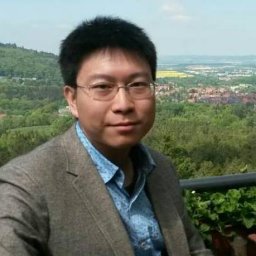
 Hao Wang
· 6 previous affiliations
- Leiden UniversitySince 2011
- Assistant Professor · Since 2020
- PhD student · 2018–2020
- Postdoc · 2018–2019
- PHD Candidate · 2014–2018
- Master's degree, Computer Science · 2011–2013
- LIACSSince 2020
- Assistant Professor · Since 2020
- 上海谱时昊唯数据科技有限公司2020–2023
- Co-Founder & Chief Scientist · 2020–2023
- Postdoctoral Researcher · 2020
- LIP62020
- Postdoc · 2020
- Bachelor, Computer Science · 2007–2011
54 other authors named Hao Wang: Hao Wang (Stevens Institute of Technology · Scholera · United States Air Force Research Laboratory · 162 papers), Hao Wang (Monash University · 149 papers), Hao Wang (University of Science and Technology of China · 128 papers), Hao Wang (University of Illinois Urbana-Champaign · 117 papers), Hao Wang (Northeastern University · 104 papers), and 49 more
Research Overview
Hao Wang focuses on the intersection of evolutionary computation, multi-criteria optimization, and machine learning, with a particular emphasis on surrogate-assisted global optimization and the analysis of complex fitness landscapes. His work addresses the computational challenges inherent in black-box optimization, where objective functions are expensive to evaluate or lack analytical forms. By developing robust benchmarking frameworks and hybridizing classical optimization techniques with dimensionality reduction and generative modeling, he seeks to improve the efficiency and scalability of algorithms applied to industrial design, production processes, and, more recently, quantum machine learning.
Research Trajectory
The early stages of Wang’s research trajectory were centered on enhancing the efficiency of global optimization algorithms, particularly for computationally expensive problems. A primary focus was the adaptation of Efficient Global Optimization (EGO) for modern computing environments. In Multi-point Efficient Global Optimization Using Niching Evolution Strategy, Wang addressed the inherent sequential nature of the EGO framework, which typically limits its utility in parallel computing architectures. By integrating a niching evolution strategy, he proposed a method to identify multiple promising points for evaluation within a single optimization cycle, thereby facilitating parallelization without sacrificing the surrogate model's ability to locate global optima.
As the field of evolutionary computation expanded, Wang identified a critical need for more sophisticated performance analysis tools. This led to a significant focus on benchmarking and the internal dynamics of iterative heuristics. He led the development of IOHprofiler: A Benchmarking and Profiling Tool for Iterative Optimization Heuristics, an open-source platform designed to move beyond the "black-box" evaluation of final results. The tool tracks the trajectory of algorithm parameters and state variables over time, providing a granular view of how different heuristics navigate search spaces. This work reflects a shift toward a more analytical understanding of algorithm behavior, enabling researchers to diagnose why specific methods succeed or fail on diverse problem classes.
In the late 2010s, Wang’s work evolved to address the complexities of multi-objective and high-dimensional landscapes. He investigated the topological features of multimodal multi-objective problems, moving beyond traditional diversity maintenance to examine how landscape geometry influences search dynamics. This period also saw a focus on the "curse of dimensionality" in Bayesian Optimization (BO). To mitigate the computational overhead and slow convergence of BO in high-dimensional spaces, he contributed to the development of hybrid methods that utilize dimensionality reduction. This trajectory is exemplified by work on PCA-assisted Bayesian Optimization, which projects high-dimensional search spaces into lower-dimensional manifolds to make surrogate modeling more tractable.
Recently, Wang has expanded his research into the domains of generative AI and quantum computing. His work in generative modeling focuses on the "plausibility" of automated designs, ensuring that generated structures meet physical or semantic constraints. Simultaneously, he has begun exploring the optimization landscapes of variational quantum circuits. This transition represents a move toward applying his expertise in landscape analysis and iterative heuristics to the emerging challenges of quantum-classical hybrid systems, specifically focusing on the trainability and universality of quantum generative models.
Current Directions
Wang’s current research is characterized by two primary pillars: the refinement of deep generative models for industrial design and the foundational development of quantum machine learning. In the realm of generative AI, he is investigating the internal mechanics of diffusion models, specifically how noise scheduling affects the structural integrity and plausibility of generated outputs. This work aims to bridge the gap between high-quality image generation and the rigorous requirements of engineering and manufacturing.
In the quantum domain, Wang is participating in efforts to establish the mathematical foundations of quantum-deployed generative models. This involves proving the universality of specific quantum circuit architectures and developing adaptive training methods to overcome common pitfalls like barren plateaus in quantum landscapes. His work continues to be informed by his background in optimization, as he applies information-theoretic approaches to analyze the complexity of variational quantum landscapes.
Representative Work
In Multi-point Efficient Global Optimization Using Niching Evolution Strategy, Wang proposed a significant modification to the EGO algorithm to support parallel function evaluations. Traditional EGO relies on an infill criterion, such as Expected Improvement, to select one point at a time. Wang’s approach utilizes a niching evolution strategy to maintain diversity in the search for multiple infill points, allowing the algorithm to exploit parallel computing resources effectively. This work demonstrated that niching can serve as a robust alternative to existing strategies like the "Constant Liar" method, particularly when dealing with costly computer codes in industrial settings.
The development of IOHprofiler: A Benchmarking and Profiling Tool for Iterative Optimization Heuristics represents Wang’s contribution to the standardization of experimental research in optimization. The tool addresses the limitations of static benchmarking by providing a dynamic profiling environment that captures the interplay between algorithm components and problem features. By facilitating the comparison of diverse heuristics—ranging from local search to complex evolutionary algorithms—IOHprofiler has become a foundational resource for the community to understand the empirical performance of iterative solvers.
Wang’s research into multi-objective optimization is represented by Search Dynamics on Multimodal Multiobjective Problems. This study explored the landscape topology induced by conflicting objective functions, specifically focusing on how multimodality affects the search process. By analyzing algorithms based on hypervolume gradients and local search, the work provided insights into how different search strategies interact with the underlying geometry of the Pareto set. This research is critical for designing algorithms that can navigate complex trade-offs in real-world engineering problems.
To address the scalability limits of surrogate-assisted methods, Wang co-authored High Dimensional Bayesian Optimization Assisted by Principal Component Analysis. The paper introduces PCA-BO, an algorithm that integrates Principal Component Analysis with Gaussian Process regression. By performing optimization in a reduced latent space, the method significantly reduces the computational cost of the surrogate model and improves convergence rates in high-dimensional search spaces. This approach proved particularly effective for automated machine learning and design optimization tasks where the number of parameters often exceeds the capacity of standard BO.
In the field of generative design, Wang served as the senior author on On the Noise Scheduling for Generating Plausible Designs with Diffusion Models. This research delved into the impact of noise schedules on the "plausibility" of designs generated by diffusion models. The study identified specific noise levels where the model's performance determines whether the resulting design contains structural errors, such as missing parts or floating material. Wang’s group proposed techniques to identify these critical ranges, providing a methodological framework for improving the reliability of generative models in industrial applications.
Finally, Wang has contributed to the theoretical advancement of quantum machine learning in Universality and kernel-adaptive training for classically trained, quantum-deployed generative models. This work addresses the limitations of the Instantaneous Quantum Polynomial (IQP) circuit Born machine. Wang participated in research that mathematically proved that the addition of "hidden" qubits can grant these models the capacity to represent arbitrary data distributions. Furthermore, the paper introduced a kernel-adaptive training method to prevent the model from becoming trapped in sub-optimal regions of the landscape, providing a more robust foundation for scaling quantum generative models toward practical utility.
Profile updated
Loading new papers…
Other researchers whose papers cluster into the same research directions — a proxy for overlapping technical interests and shared intellectual neighborhoods.
See something wrong? Report a mistake